Best Paddleboards for Older Adults That Feel Stable
Explore our collection of inflatable and recreational paddleboards designed for stability, comfort, and easy transport. Whether you're planning peaceful lake paddles, family outings, fitness, or fishing, Open Air Lifestyles can help you choose the right board for your experience level and outdoor lifestyle.
👉 Browse Our Paddleboard Collection
A paddleboard should make a quiet morning on the lake feel more inviting, not like a balance test. The best paddleboards for older adults prioritize a stable platform, manageable weight, comfortable accessories, and an easy path from the car to the water. Age alone does not determine the right board, of course. Your balance, strength, paddling goals, launch conditions, and storage space matter far more.
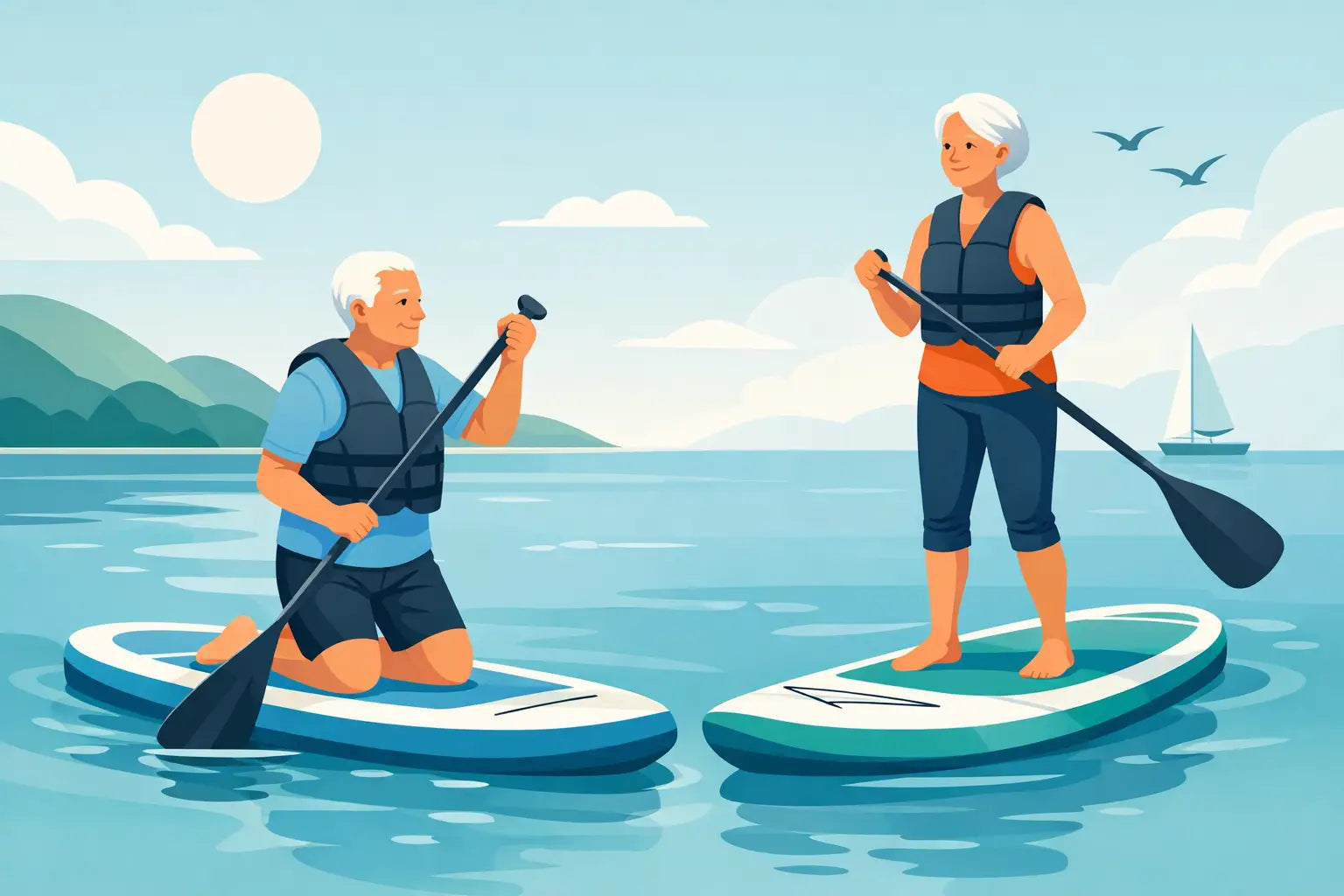
For many active adults and retirees, stand-up paddleboarding is a rewarding way to enjoy fresh air, light exercise, fishing, wildlife viewing, or time with family. The key is choosing equipment that inspires confidence from the first outing. A narrow, fast board may suit an experienced fitness paddler, but a wider all-around board is usually the better choice for relaxed recreation.
What Makes a Paddleboard Easier to Enjoy
Stability is the first consideration. A board with more width and volume sits securely on the water and gives you more room to adjust your stance. For most recreational paddlers, a board between 32 and 34 inches wide offers an excellent balance of confidence and glide. Wider boards can feel even steadier, particularly for anglers, paddlers with a dog, or anyone who expects to spend substantial time kneeling or seated.
Length influences how the board tracks, or holds a straight course. A 10-foot-6-inch to 11-foot-6-inch board is often a comfortable all-around range for calm lakes, protected bays, and slow-moving rivers. Shorter boards turn more easily, while longer boards tend to glide farther with each stroke. There is no need to choose the longest board just because it sounds more capable. A size that feels easy to control is more valuable than extra speed.
Board thickness and weight capacity deserve a close look, too. Many quality inflatable boards are six inches thick and provide sufficient volume for a wide range of adult paddlers. Choose a stated capacity that comfortably exceeds your body weight plus the weight of a life jacket, water, dry bag, cooler, and other gear. Capacity is not the same as stability, but an overloaded board will sit lower in the water and feel less predictable.
Inflatable or Hard Board? The Right Choice Depends on Your Routine
For many older adults, a premium inflatable paddleboard is the practical answer. When properly inflated, quality models feel impressively firm, yet they roll into a storage bag for a closet, garage shelf, RV, or car trunk. They are also more forgiving if they bump into a dock or get dropped during transport.
The trade-off is setup. You will need to inflate the board before each outing and rinse, dry, and pack it afterward. An electric pump can make a major difference, especially for anyone who does not want a strenuous warm-up before paddling. Look for a pump with an automatic shutoff at the recommended pressure, typically around 12 to 15 PSI. It lets you handle other preparation while the board fills.
A hard board is ready to use as soon as it reaches the shoreline, and it can offer a slightly more direct, responsive feel on the water. However, it requires dedicated storage and roof-rack transport, and its size can make it awkward for one person to carry. It is often a strong option for homeowners who live near the water or have easy access to a rack, shed, or garage.
The Best Paddleboards for Older Adults by Paddling Style
The most suitable board is usually an all-around recreational design, but different outings call for different features.
Calm-water cruising
A wide all-around inflatable board is ideal for sightseeing, gentle fitness paddles, and sharing the water with grandchildren. Look for a broad deck pad, a centered carry handle, a removable center fin, and a practical deck-bungee area for a light dry bag. This style is the most forgiving place to start.
Fishing and seated paddling
A board built with extra width, a higher capacity, and a large open deck gives anglers room to move and organize gear. Some paddlers also prefer a compatible raised seat and a kayak-style paddle for longer outings. Sitting periodically reduces leg fatigue and makes paddling accessible for people who may not be comfortable standing the entire time.
Longer lake or coastal excursions
If you already have good balance and want more efficient glide, consider a touring-style board. These are usually longer and have a more pointed nose, which helps them travel straighter. They are less forgiving than broad all-around boards, so they are best for paddlers who have tried the sport or plan to take a lesson first.
Waterfront homes, docks, and easy access
A stable hard board can be a pleasure when carrying distance is short. If you can keep it near the water and safely transport it only a few steps, the convenience of no inflation or packing can outweigh the storage demands.
Features Worth Paying For
Premium details are not just cosmetic when comfort and convenience are the goal. Before selecting a board, pay attention to these four features:
- A wide, cushioned deck pad provides secure footing and is kinder on bare feet, knees, and joints when kneeling.
- Multiple padded carry handles make a board easier to lift, especially when loading it with a partner or walking down a dock.
- An adjustable fiberglass or carbon-blend paddle can reduce swing weight compared with a basic aluminum paddle, helping minimize shoulder and arm fatigue.
- A complete, well-designed package with a leash, fin, repair kit, pump, and durable travel bag eliminates the frustration of discovering you need another essential item before your first outing.
The paddle is especially easy to overlook. Set it roughly 6 to 10 inches taller than your height for standing paddling, then fine-tune based on comfort. A paddle that is too long can strain the shoulders; one that is too short encourages hunching. For seated use, a shorter kayak-style paddle is generally more comfortable.
Do Not Underestimate Carrying and Launching
The board may feel light in a product description, but the real question is whether it feels manageable after a walk across sand, grass, or a parking lot. Check the board's packed weight, not only its on-water performance. If lifting is a concern, choose a lighter-quality inflatable and plan to use a folding cart or ask a paddling partner for help.
Launching deserves the same thought. A gradual, firm shoreline is simpler than a steep bank, slippery rocks, or a busy boat ramp. Start in water deep enough that the fin will not hit bottom, but shallow enough to stand comfortably. Many beginners find it easiest to begin on their knees, take a few strokes to clear the shoreline, and stand only when the board is moving calmly in open water.
A personal flotation device is essential, and a properly fitted leash is valuable on calm, protected water where the board could drift away after a fall. Conditions matter. Avoid offshore winds, strong current, boat-heavy channels, and open-water chop until you have experience and the right equipment. If you have a medical condition, recent surgery, or balance concerns, a conversation with your healthcare professional can help you decide how to begin safely.
How to Choose With Confidence
Rather than shopping by price alone, think about the complete ownership experience. A premium board from an authorized dealer typically brings better materials, clearer manufacturer support, and warranty protection that matters if you need assistance later. It also helps to buy from a retailer that can answer practical questions about capacity, setup, storage, and compatible accessories before you commit.
At Open Air Lifestyles, real customer support is part of helping customers choose equipment that fits the way they actually spend time outdoors. The right paddleboard is not necessarily the fastest, lightest, or most expensive one. It is the one you can transport, set up, launch, and enjoy often enough to make every calm day on the water feel like an opportunity to keep living your best outdoor life.