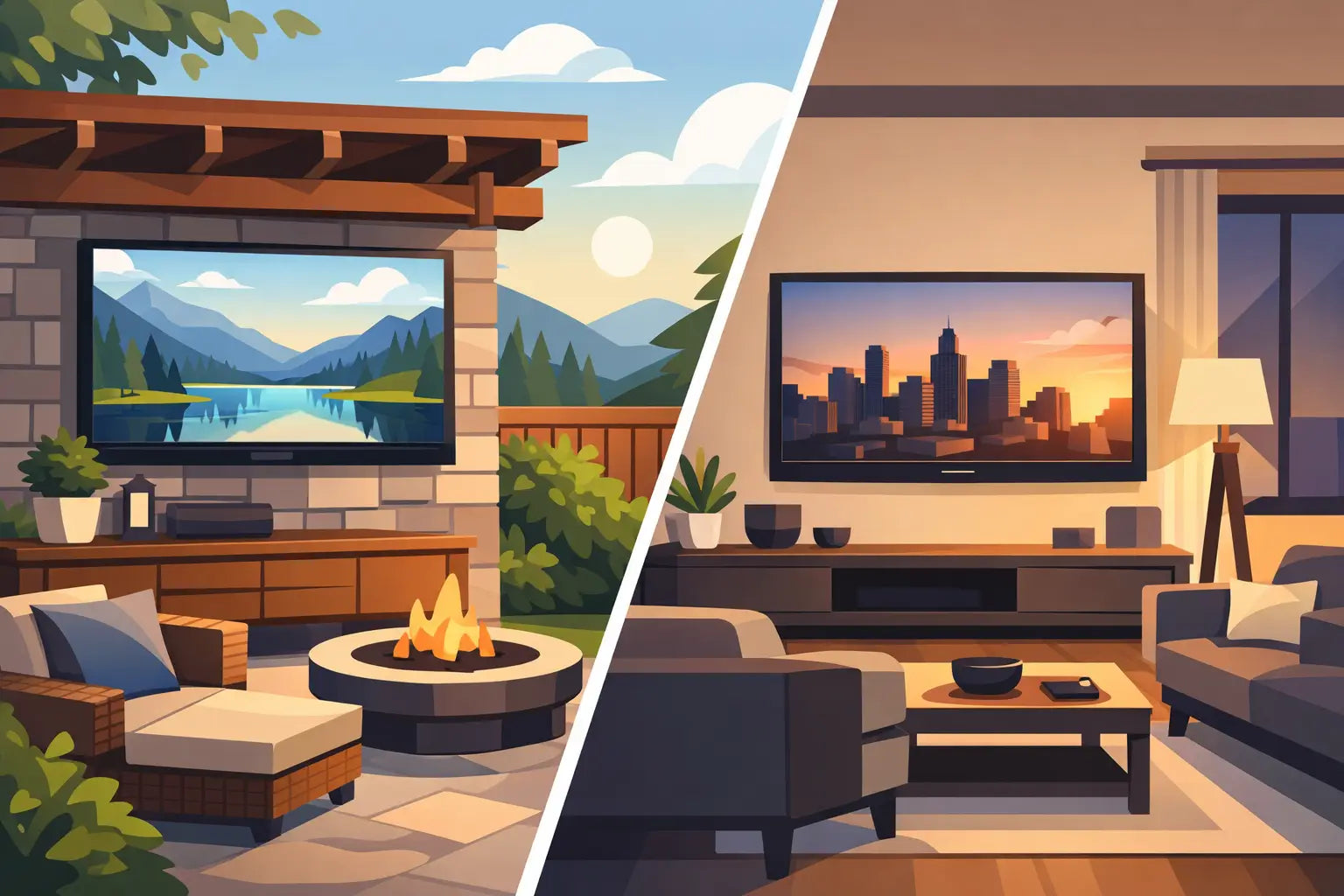
Outdoor TV vs Indoor TV for Your Backyard
Explore our collection of outdoor televisions designed for covered patios, partial-sun areas, full-sun spaces, pool decks, and outdoor kitchens. As an authorized dealer, Open Air Lifestyles offers trusted brands backed by knowledgeable customer support to help you choose the right TV for your actual outdoor conditions.
👉 Browse Our Outdoor TV Collection
The game is about to start, dinner is coming off the grill, and the patio is where everyone wants to be. That is when the outdoor TV vs indoor TV question becomes more than a spec-sheet comparison. A television that performs beautifully in a climate-controlled living room can struggle quickly when exposed to glare, heat, moisture, dust, and changing temperatures.
For homeowners who want a dependable screen on a patio, deck, pool area, porch, or outdoor kitchen, an outdoor-rated TV is usually the better long-term choice. But it is not automatically the right answer for every covered space or every budget. The best decision depends on where the TV will live, how often you will use it, and how much weather it will truly face.
Outdoor TV vs Indoor TV: The Core Difference
An indoor TV is designed for a stable environment. It expects moderate temperatures, low humidity, clean air, and protection from direct rain or sun. Its display, ports, ventilation, power components, and internal circuit boards are built around those assumptions.
An outdoor TV is built for conditions that indoor electronics are not meant to handle. Depending on the model and installation location, that may include humidity, rain, blowing dust, insects, temperature swings, and bright ambient light. Outdoor models also use weather-resistant materials and sealed or protected connections to reduce the risks that come with life outside.
This does not mean every outdoor TV can sit uncovered in a storm. Outdoor-rated televisions are commonly made for specific locations, such as full shade, partial sun, or full sun. Matching the screen to its environment matters as much as choosing the screen itself.
Why Brightness Changes the Viewing Experience
Brightness is often the first difference people notice. Indoor TVs can look excellent after sunset, under a covered porch, or in a screened room with deep shade. During the day, though, sunlight and reflected light can wash out the picture. Even a bright indoor model may look dim when facing an open yard, a light-colored patio, water, or a pool.
Outdoor TVs generally offer higher brightness levels so the image remains visible in daylight. A partial-sun or full-sun model can make a major difference for a west-facing patio or a poolside viewing area where glare is unavoidable. Higher brightness is not just about a more vivid picture. It helps viewers see the score, read menus, and enjoy a movie without moving chairs to find a better angle.
More brightness also brings a trade-off: outdoor TVs tend to cost more and may use more power. For a TV that will only be used after dark on a fully covered porch, that premium may not be necessary. For regular afternoon sports, family gatherings, or daytime entertaining, it is often money well spent.
Consider the Sun at Different Times of Day
Before selecting a TV, stand where it will be mounted at morning, midday, and late afternoon. Notice whether the screen will face direct sun, reflected glare, or a bright open sky. A shaded patio can still be surprisingly bright, especially near water or pale concrete.
A wall mount that allows some tilt and swivel can improve the view, but it cannot solve every glare problem. Choosing the right brightness category from the start is the more dependable approach.
Weather Resistance Is About More Than Rain
Rain is the obvious concern, but humidity and temperature changes can be just as damaging. Moisture can enter openings around ports and ventilation areas, while condensation may form when a cool evening follows a hot, humid day. In coastal settings, salt air adds another challenge because it can accelerate corrosion.
Outdoor TVs are engineered with weather-resistant enclosures, protected connection areas, and components better suited to outside conditions. Many use an IP rating to indicate the level of protection against solids and water. Higher protection is useful, but it should never replace thoughtful placement and a proper installation.
An indoor TV under a roofline may avoid direct rainfall, yet it can still be exposed to wind-driven moisture, high humidity, pollen, dust, and extreme heat. Using a cover on an indoor television can provide some protection when it is turned off, but it does not change the TV's intended operating environment. Covers can also trap moisture if they are installed while the television is warm or if the area is humid.
Temperature Is a Serious Consideration
Most indoor televisions have a narrower operating temperature range than outdoor models. A hot summer afternoon inside a partially enclosed cabinet can push an indoor TV beyond its limits. Cold winter temperatures can also affect performance and shorten the life of electronics.
Outdoor televisions are designed to operate across wider temperature ranges, although every model has its own specifications. This is especially valuable for homeowners in regions with hot summers, freezing winters, or sharp day-to-night temperature changes.
If your TV will be installed near a grill, fire feature, hot tub, or outdoor heater, leave appropriate distance and ventilation. Heat, smoke, grease, and steam are hard on any television, including an outdoor-rated one. The right location protects your investment and makes the area safer and more enjoyable.
Safety and Installation Matter as Much as the Screen
A quality television deserves a secure installation. Outdoor mounting surfaces, power, cable connections, and streaming equipment all need planning before the TV arrives.
Use a mount rated for the television's size and weight, and make sure it is secured to solid framing, masonry, or another suitable structural surface. Outdoor-rated mounts and hardware are a smart choice because ordinary hardware can corrode over time. Position the TV where it is less likely to be bumped by guests, patio furniture, or active children and pets.
Power should come from a properly protected outdoor electrical setup. A GFCI-protected outlet is commonly used for exterior locations, but local codes and the manufacturer's instructions should guide the installation. Avoid running extension cords as a permanent solution. For a clean, dependable setup, consider professional help with mounting, power, cable management, and weather-protected connections.
Streaming devices, cable boxes, and game consoles also need protection. Some outdoor TVs include smart features that reduce the need for extra equipment. If you plan to use external devices, install them in a suitable weather-protected location with enough ventilation to prevent overheating.
When an Indoor TV Can Make Sense Outside
There are situations where an indoor television can be a reasonable short-term or limited-use option. A fully enclosed three-season room, a screened porch with excellent weather protection, or a covered area used only occasionally after dark may offer conditions close enough to indoors for some homeowners.
The key is to be realistic about the risk. An indoor TV placed outside may have limited or no manufacturer warranty coverage for weather-related damage. If it fails due to moisture, heat, or corrosion, replacement costs can erase the initial savings. It also may not deliver the daylight picture quality you expected.
An indoor TV is best treated as a compromise for a protected, low-exposure setting, not as a substitute for an outdoor TV on an open patio, pergola, deck, pool area, or waterfront space.
Choosing the Right Outdoor TV for Your Space
Start with the location, not the screen size. A full-shade outdoor TV is intended for covered porches and protected areas without direct sunlight. A partial-sun model fits spaces that receive ambient daylight and occasional sun. Full-sun models are designed for bright, exposed locations where a standard screen would be difficult to see.
Then consider viewing distance. A larger screen can be enjoyable for a group watching sports from across the patio, but it should not overwhelm a compact seating area. Think about where guests naturally sit, where food is prepared, and whether the TV will be watched from a pool, dining table, or lounge seating.
Also look at the details that support years of use: weather protection rating, operating temperature range, brightness, anti-glare display treatment, built-in smart platform, warranty coverage, and service support. Buying from an authorized dealer helps ensure that the product is backed by the manufacturer's warranty and that knowledgeable assistance is available if questions arise before or after installation.
At Open Air Lifestyles, the goal is to help homeowners choose outdoor entertainment products with the same confidence they bring to a new kayak, e-bike, or boating upgrade. The right advice can prevent an expensive mismatch between a TV and the environment where it will be used.
Is an Outdoor TV Worth the Extra Cost?
For a truly outdoor location, the answer is often yes. You are paying for better daytime viewing, greater resistance to moisture and temperature changes, and a design intended to live outside. That can mean fewer worries when the forecast changes and a better experience when friends and family gather during the day.
For a protected porch used mostly at night, the decision is more flexible. Weigh the lower upfront price of an indoor TV against its shorter expected life outdoors, possible warranty limitations, and the cost and effort of replacing it if conditions take their toll.
Your outdoor space should invite you to stay a little longer, whether that means catching the late game after a day on the water or sharing a movie with family under the stars. Choose the television that fits the real conditions of your space, install it thoughtfully, and you can enjoy more comfortable outdoor time with confidence and ease.