Best Electric Trikes for Adults for Easy Riding
Explore our collection of electric trikes designed for stable handling, easy mounting, practical cargo space, and relaxed everyday riding. As an authorized dealer, Open Air Lifestyles offers trusted brands backed by knowledgeable customer support to help you choose the right trike for your comfort, terrain, and lifestyle.
👉 Browse Our Electric Trike Collection
A three-wheel electric bike can turn the ride you have been putting off into the ride you take before breakfast. For shoppers looking for the best electric trikes adults can comfortably ride, the appeal is simple: more stability at low speeds, a supportive place to sit, room for essentials, and electric assistance when the route gets longer or hillier than expected.
The right trike is not automatically the one with the biggest battery or the flashiest feature list. It is the one that fits your body, your riding environment, and the way you actually want to spend time outdoors. Whether you picture neighborhood loops, paved trail rides, campground exploring, or easy trips to local shops, a thoughtful comparison helps you choose with confidence.
What Makes an Electric Trike a Good Choice?
Electric trikes are especially appealing to adults who want to stay active without feeling rushed, unsteady, or limited by a two-wheel bike. The third wheel creates a stable platform when starting, stopping, loading cargo, or waiting at an intersection. That can make a meaningful difference for riders with balance concerns, reduced flexibility, joint discomfort, or simply a preference for a more relaxed experience.
Pedal assist adds power as you pedal, helping reduce the effort needed to maintain speed or climb moderate grades. Many models also include a throttle, which can move the trike without pedaling or provide a helpful boost when pulling away from a stop. Exact throttle operation varies by model and local regulations, so it is worth checking before you buy.
A trike does have a different riding feel than a bicycle. It is wider, generally heavier, and requires a little more care in turns. Instead of leaning into a corner, you steer through it and slow down beforehand. Most riders become comfortable quickly, but it is a real trade-off to understand rather than overlook.
Best Electric Trikes for Adults Start With the Right Style
There is no single best configuration for every rider. The major decision is usually between an upright trike, a semi-recumbent design, and a fully recumbent trike.
Upright trikes for familiar, practical riding
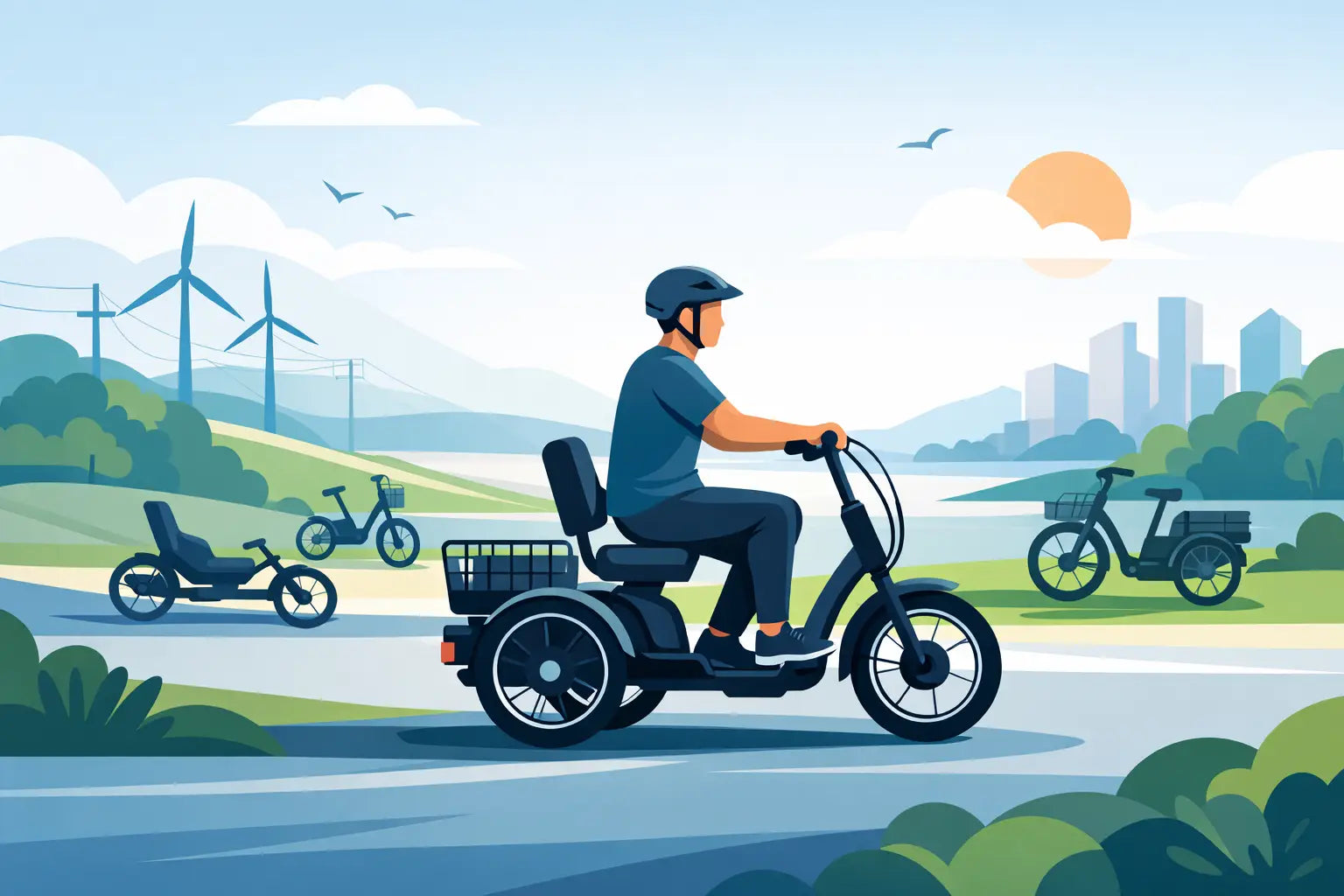
An upright electric trike places the rider in a traditional bicycle-like position, usually with a broad saddle, swept-back handlebars, and a rear basket or cargo area. It is a sensible choice for neighborhood riding, errands, and riders who want easy entry and a familiar view of the road ahead.
Look closely at the step-through height. A low, open frame makes mounting and dismounting easier, particularly when wearing casual clothes or dealing with limited hip or knee mobility. For many active adults, this one feature matters more than an extra few miles of claimed range.
Semi-recumbent trikes for added comfort
Semi-recumbent models position the pedals slightly forward and often use a more supportive seat with a backrest. This riding position can ease pressure on the wrists, shoulders, and lower back while still keeping the rider relatively upright. It is a strong option for longer paved rides and for people who find a standard bike saddle uncomfortable.
The seat should be adjustable enough to achieve a comfortable pedaling extension. You should not feel cramped at the knee or have to reach too far for the pedals. A supportive backrest is helpful, but it should not prevent you from getting on and off easily.
Recumbent trikes for long, relaxed miles
A fully recumbent trike offers the most laid-back position, with a supportive seat and pedals out front. Riders who prioritize back comfort, stability, and long-distance trail use often appreciate this design. The lower seat height can also be reassuring, although getting into and out of the seat may take more effort than on a step-through upright model.
Recumbent trikes are often longer and may be less convenient to transport or store. If you plan to carry one in a vehicle, measure carefully and consider whether a hitch-mounted rack rated for the trike’s weight and dimensions is available.
Choose Comfort Before You Compare Speed
A comfortable trike gets ridden. An uncomfortable trike becomes expensive garage equipment. Start with the contact points: the seat, handlebars, pedals, and frame access.
A wide, well-padded saddle may feel inviting at first, but fit and support matter more than softness alone. Some riders prefer an adjustable seat with a backrest, while others value a traditional saddle that allows easier mounting. Ergonomic grips and adjustable handlebars can reduce strain on hands and shoulders during longer rides.
Suspension is another consideration. Front suspension can take the sharp edge off cracked pavement and packed paths, while a suspension seat post may improve comfort on an upright model. Neither is mandatory for smooth neighborhood streets, but both can be worthwhile when routes include rough pavement, trail connectors, or uneven campground roads.
Also consider the trike’s total weight capacity. This figure should include the rider, clothing, accessories, and cargo. A sturdy rear basket is useful for a jacket, water, groceries, or a small picnic, but cargo capacity and basket design vary substantially between models.
Motor Power and Battery Range: Match Them to Your Route
Motor ratings can be confusing because advertised wattage does not tell the entire story. For most casual paved riding, a properly tuned motor with moderate power can provide ample assistance. Riders who live in hilly areas, carry heavier loads, or want stronger acceleration may benefit from more power and torque.
Battery capacity, commonly measured in watt-hours, is the better starting point for thinking about range. A larger battery can generally support longer rides, but actual mileage depends on rider weight, terrain, wind, tire pressure, temperature, cargo, and how much assistance you use. A manufacturer’s maximum range is typically achieved under favorable conditions with conservative assist settings.
Instead of buying around the highest range claim, consider your normal outing. If your favorite route is a 10-mile neighborhood loop, a trike that can comfortably cover 20 to 30 real-world miles gives you useful breathing room. If you want extended rail-trail days or several days of campground use without charging, a larger battery or a model with a removable battery may make more sense.
A removable battery is particularly convenient for homeowners who store their trike in a shed or garage without nearby power. You can bring the battery indoors for charging and avoid lifting the entire trike near an outlet.
Brakes, Tires, and Visibility Matter More Than Fancy Extras
Because electric trikes can be heavier than standard bicycles, dependable braking deserves close attention. Disc brakes generally offer stronger, more consistent stopping power than basic rim brakes, especially on hills or in wet conditions. If hand strength is a concern, ask about brake lever reach and how much pressure the brakes require.
Tires influence both comfort and confidence. Wider tires can provide a more planted feel and cushion small bumps, while narrower tires may roll more efficiently on smooth pavement. Keep tires inflated to the recommended pressure, as underinflation can reduce range and make handling feel sluggish.
For road and path use, integrated front and rear lights are a practical safety feature, not just an accessory. Reflective sidewalls, a bright taillight, and a bell or horn can all improve visibility and communication around other trail users. A rearview mirror is also helpful on quiet roads and shared-use paths.
Storage, Transport, and Maintenance Need a Plan
Before choosing among the best electric trikes for adults, measure where the trike will live. Account for its full width, including handlebars and rear wheels, along with room to walk around it. Folding designs can help with storage, but they are not all equally easy to fold or lift, especially because electric trikes are often heavy.
Transport deserves the same careful planning. A traditional bike rack may not have the weight rating, wheel trays, or width needed for a trike. In some cases, a vehicle hitch rack designed specifically for heavier e-bikes is appropriate. In others, a pickup bed, trailer, or local riding from home is the better solution.
Routine maintenance is straightforward but essential. Keep the chain lubricated, inspect tire pressure, test brakes, charge the battery as directed, and have the trike checked by a qualified service provider periodically. Buying from an authorized dealer helps ensure you receive a manufacturer-backed product, clear warranty support, and help finding the right answers if service is needed later.
A Simple Way to Make Your Final Choice
Picture your first five rides, not an idealized future ride. Where will you start? Will you need to maneuver through a narrow gate, cross a sloped driveway, climb a hill, carry groceries, or load the trike into a vehicle? Those details quickly reveal whether you need a low step-through frame, more motor assistance, a higher-capacity basket, or a more compact design.
Whenever possible, review the full specifications instead of relying on photos. Pay attention to dimensions, rider and cargo capacity, battery details, brake type, included accessories, warranty terms, and shipping or assembly requirements. A lower-priced trike can be less appealing if it lacks the comfort features, support, or replacement-part availability you need for long-term ownership.
Open Air Lifestyles believes quality outdoor equipment should make it easier to say yes to another ride. Choose a trike that feels secure, comfortable, and suited to your everyday routes, then give yourself permission to take the scenic way home. That is Living Your Best Outdoor Life.