How to Store Electric Bikes at Home Safely
Explore our collection of electric bikes designed for dependable performance, everyday comfort, and years of reliable riding. As an authorized dealer, Open Air Lifestyles offers trusted brands backed by knowledgeable customer support to help you choose the right e-bike and keep it performing its best.
👉 Browse Our Electric Bike Collection
A well-chosen storage spot does more than keep your e-bike out of the way. It protects the battery, electronics, tires, and finish that make every ride enjoyable. Knowing how to store electric bikes properly is especially useful when a rainy week, a winter season, travel plans, or a busy schedule keeps you off the trail or bike path for a while.
The good news is that most homeowners can create a safe e-bike storage routine without a dedicated workshop. The priorities are simple: keep the bike dry, keep the battery within a reasonable temperature range, prevent theft or accidental damage, and do a few small checks before returning to the road.
Choose a Dry, Temperature-Stable Location
For most riders, the best place to store an electric bike is indoors in a dry garage, finished basement, utility room, mudroom, or ground-floor storage area. A covered porch or shed may work for short periods, but only if it stays dry, secure, and out of temperature extremes.
Moisture is the enemy of chains, brake rotors, connectors, and fasteners. A bike that is merely protected from rain can still suffer in a damp shed or unventilated garage, where condensation forms as temperatures change. If your storage area tends to feel humid, improve airflow and consider a dehumidifier. Never wrap a damp bike tightly in plastic, which can trap moisture against the frame and components.
Temperature matters most for the battery. Avoid leaving an e-bike or removable battery in direct sun, beside a furnace, near a wood stove, or in a location that regularly freezes or becomes very hot. A climate-controlled space is ideal. If the bike must stay in a garage during winter, bringing the battery indoors is usually the better choice.
Store the E-Bike Battery With Care
The battery is the most valuable and sensitive part of an electric bike, so its storage routine deserves extra attention. First, follow the battery instructions in your owner’s manual. Manufacturers may set specific limits for charging, storage temperature, and battery removal, and those directions should always take priority.
For storage longer than a few weeks, avoid leaving a lithium-ion battery at either 100% charge or completely empty. Many manufacturers recommend a partial charge, commonly around 30% to 60%, for longer-term storage. Check the charge level about once a month or every month or two, depending on the manufacturer’s guidance, and recharge only as needed to keep it in the recommended range.
If your e-bike has a removable battery, take it off the bike for extended storage unless your manufacturer says otherwise. Store it indoors on a stable, nonflammable surface away from heat sources, direct sunlight, water, gasoline, paint, solvents, and other flammable materials. Keep it where it cannot be knocked over, stepped on, or reached by children or pets.
Only use the charger supplied or approved by the manufacturer. Do not charge a damaged battery, one that has been dropped hard, or one with a cracked case, swelling, unusual odor, leaking, or excessive heat. If something does not look right, stop using it and contact the manufacturer or an authorized dealer for guidance. Battery care is not an area to guess your way through.
Clean and Dry the Bike Before Storage
A quick cleanup after your last ride pays off when it is time to ride again. Mud, road salt, sand, and trail grit can hold moisture against the bike and accelerate corrosion. Wipe down the frame, wheels, fenders, and drivetrain with a soft cloth. If the bike has been exposed to salt air or winter road treatment, clean it more thoroughly according to the manufacturer’s care instructions.
Let the bike dry completely before putting it away. Pay close attention to the chain, derailleur, charging port cover, display, and battery contacts. Lubricate the chain with a bike-specific lubricant if needed, then wipe away excess oil so it does not attract dust.
Avoid pressure washing an e-bike. High-pressure water can force moisture into bearings, electrical connections, and seals. A gentle rinse, damp cloth, and mild bike-safe cleaner are generally the safer approach.
Support the Bike Without Straining Its Components
An e-bike is heavier than a traditional bicycle, so its storage rack or stand needs to be rated for the load. Before hanging a bike on a wall hook, check both the hook’s capacity and the strength of the wall mounting. Secure mounting into studs or appropriate structural supports is essential.
Vertical storage can save valuable garage floor space, but lifting a heavy e-bike onto a hook may not be comfortable or practical for every rider. A floor stand is often the easiest option for daily use, particularly for step-through models and riders who want less lifting. If you use a cover, choose a breathable one and make sure the bike is dry first.
For storage lasting several months, consider taking some weight off the tires by using a sturdy stand or slightly repositioning the bike occasionally. Keep tires inflated to the pressure range printed on their sidewalls. Tires slowly lose air while sitting, and very low pressure can contribute to flat spots or make the first ride less safe.
Protect Your E-Bike From Theft and Everyday Damage
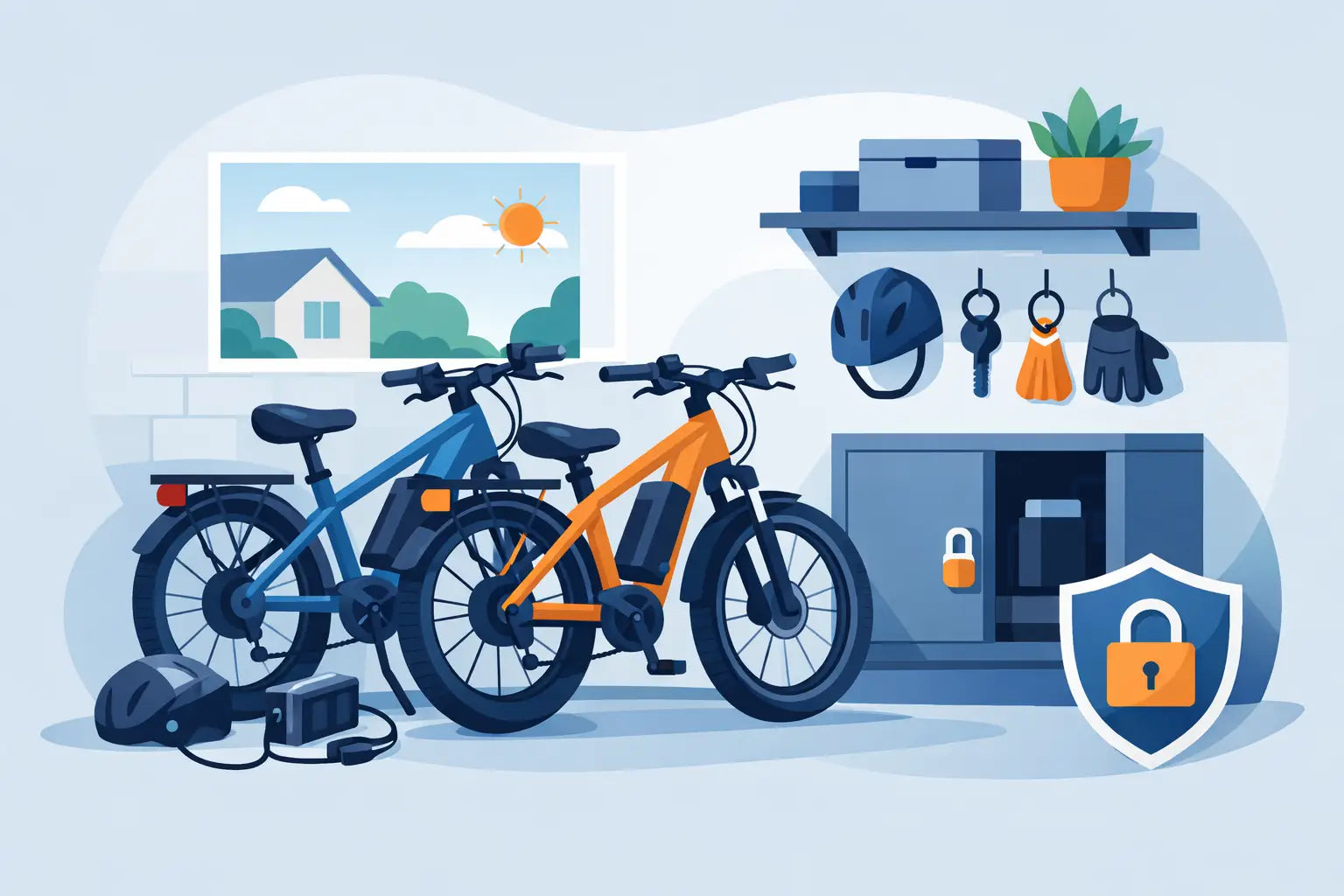
A locked garage is helpful, but it is not the same as securing the bike itself. Use a quality lock to attach the frame to a fixed anchor, especially if the bike is stored in a shared garage, carport, shed, or apartment storage area. Remove the battery, display, or other quick-release accessories if they are easy to take and will be stored separately.
Keep the bike clear of lawn equipment, vehicles, ladders, and household projects. Many storage-related e-bike repairs happen because a car door swings into the frame, a tool falls from a shelf, or the bike is bumped while moving boxes. A designated parking spot gives the bike better protection and makes it easier to grab when the weather turns perfect for a ride.
It is also wise to record the bike’s serial number, save your purchase information, and keep warranty documents in a safe place. Quality e-bikes are long-term outdoor equipment, and good records can help with service, warranty questions, or theft reporting.
How to Store Electric Bikes for Winter
Winter storage calls for a few additional steps, particularly in regions with freezing temperatures, snow, road salt, or long stretches without riding. Clean and dry the bike, partially charge and remove the battery when appropriate, inflate the tires, and keep the bike in the driest space available.
Do not leave a battery in a freezing garage all season. Cold temperatures can reduce battery performance, and charging a battery when it is too cold can cause damage. If you ride in winter, allow a cold battery to warm to the manufacturer’s recommended temperature before charging it indoors.
Every few weeks, take a brief look at the bike. Check for tire pressure loss, moisture, pest activity, and any sign of corrosion. You do not need to start the motor or charge the battery constantly. A calm, consistent routine is better than frequent unnecessary charging.
Get Ready for the First Ride Back
When storage season ends, give your e-bike a short pre-ride inspection. Reinstall the battery securely, inspect the tires for cracks and proper pressure, test the brakes, check that lights and the display work, and look over the chain and connectors. Charge the battery with its approved charger in a dry location, then take an easy first ride close to home.
If you notice weak braking, drivetrain noise, warning messages, unusual battery behavior, or damage from a fall or impact, have the bike checked before heading out. Real customer support from an authorized dealer can make those questions much easier to solve, especially when replacement parts or warranty service may be needed.
A clean, dry, secure home for your e-bike protects your investment and removes one more barrier between you and the next ride. Set up the storage routine once, and you can spend more of the season living your best outdoor life.