How to Transport a Kayak Safely and Easily
Explore our collection of inflatable, recreational, fishing, and tandem kayaks designed for easy transport, dependable performance, and enjoyable days on the water. As an authorized dealer, Open Air Lifestyles offers trusted brands backed by knowledgeable customer support.
A great paddle day can start to feel complicated before you leave the driveway. The good news is that learning how to transport a kayak is mostly about choosing the right setup for your vehicle, lifting within your comfort level, and securing the boat so it cannot shift in traffic or wind. Once your system is dialed in, getting to the water becomes a simple part of Living Your Best Outdoor Life.
Start With Your Kayak, Vehicle, and Physical Comfort
Before choosing racks or straps, look at the practical details. A lightweight 10-foot recreational kayak can be manageable on a small SUV with a basic roof rack. A 14-foot fishing kayak, tandem, or fully rigged pedal kayak may call for a trailer, bed extender, or loading aid instead.
Check your kayak's length, weight, hull shape, and manufacturer recommendations. Then consider your vehicle's roof-load rating, crossbar capacity, hitch rating, and bed length if you drive a pickup. The lowest-rated component in the system sets the limit. A strong roof rack does not override a vehicle roof rating, and a hitch-mounted carrier is only as capable as the hitch and vehicle allow.
Comfort matters just as much as capacity. If lifting a kayak overhead feels awkward or strains your shoulders, do not treat that as something you simply need to push through. A load-assist rack, roller attachment, bed-height carrier, or small trailer can make paddling more accessible and enjoyable for years to come.
How to Transport a Kayak on a Roof Rack
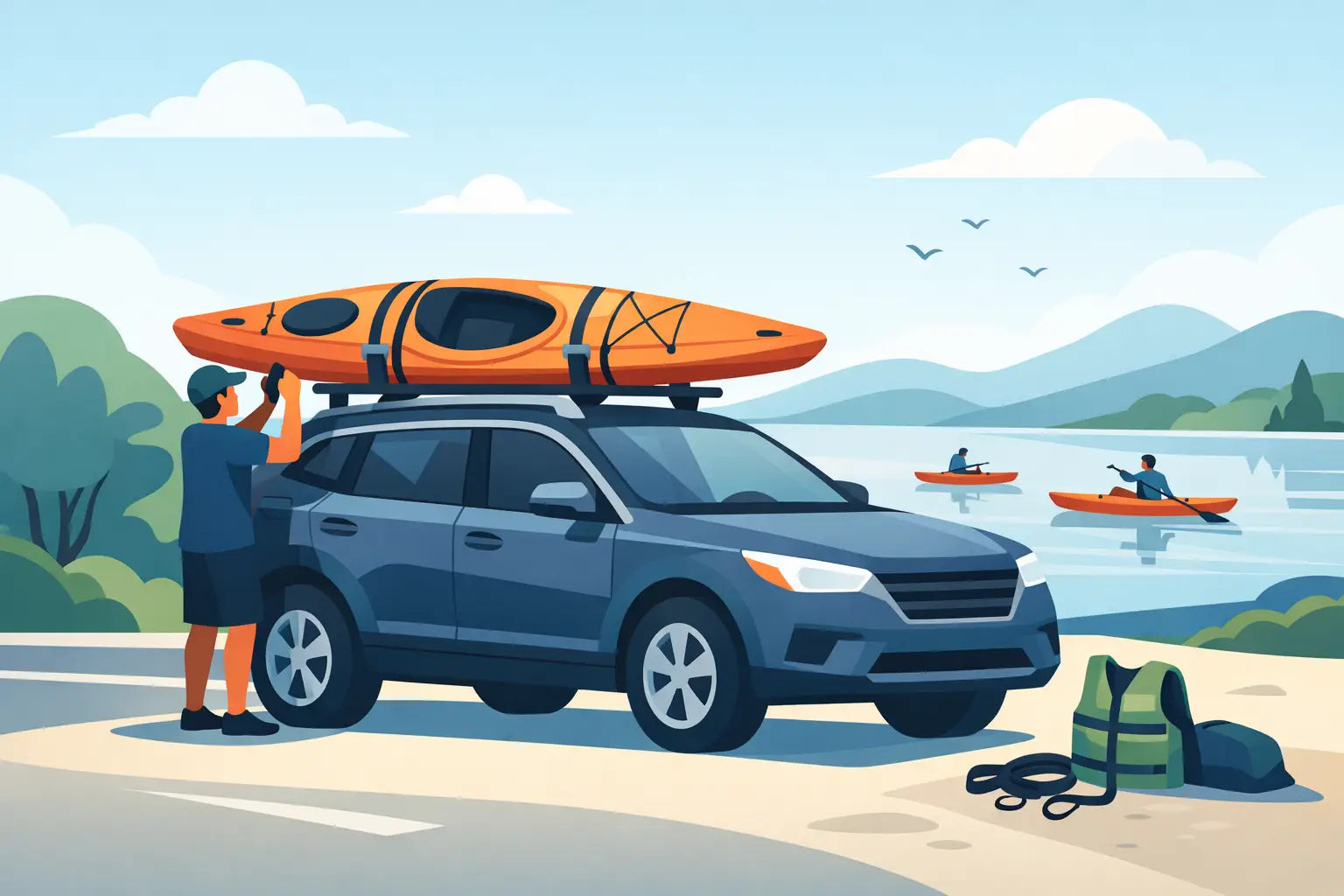
A roof rack is a versatile choice for cars, crossovers, SUVs, and wagons. It keeps the hitch free for other gear and can carry one or more kayaks when the rack system is rated for the combined load. The trade-off is loading height, particularly with taller vehicles.
Install crossbars that are compatible with your vehicle, then use kayak cradles, J-style carriers, saddles, or foam blocks designed for the job. Cradles support the hull in a stable position. J-style carriers save roof space and are useful when transporting two boats. Foam blocks can work for occasional trips, but dedicated bars and carriers are generally more secure and convenient for frequent paddlers.
Place the kayak upside down or on its side according to the carrier and kayak manufacturer's guidance. For many plastic recreational kayaks, transporting upside down on the deck helps avoid hull deformation. Specialized saddles may support the hull correctly in another orientation. Avoid resting the boat on sharp hardware, rudders, or delicate accessories.
Use cam straps around the kayak and crossbars, not around removable rack components alone. Tighten them firmly enough that the kayak cannot move, but not so hard that you dent a plastic hull. Cam buckles are usually a better choice than ratchet straps because ratchets can apply excessive pressure quickly.
Add bow and stern tie-downs whenever a kayak extends substantially beyond the front or rear of the vehicle, and especially for highway travel or windy conditions. These lines reduce lifting and side-to-side movement. Connect them to designated vehicle tow points or secure under-hood loop straps, rather than tying to plastic bumper trim. Use non-stretch line and keep the angle balanced on both ends.
After strapping down, grab the kayak at the bow and stern and give it a firm shake. The vehicle should move slightly before the kayak does. Stop after the first 10 to 15 minutes of driving to recheck all straps, then inspect them at every fuel or rest stop.
Make Roof Loading Easier
A bath mat, loading blanket, or rear roller can protect your vehicle while you slide one end of the kayak into position. Some paddlers lift one end onto the rear crossbar, walk the other end around, and then push the boat forward. Others prefer side-loading with a lift-assist bar or a rack that lowers toward the ground.
Choose the method that feels controlled, not rushed. Wind can turn even a lightweight kayak into an awkward sail, so it is wise to load with the bow facing into the wind whenever possible.
Transporting a Kayak in a Pickup Truck
A pickup is convenient, but an open tailgate does not automatically make every kayak secure. Short recreational kayaks may fit in a long bed with the tailgate down. Longer boats often require a bed extender that slides into the receiver hitch and supports the stern beyond the tailgate.
Center the kayak in the bed or on the extender and secure it at multiple points. Tie the boat to solid bed anchors, not only to the tailgate. A strap near the bow and another near the stern prevent forward and rearward movement, while an additional strap can control side-to-side motion. If the kayak overhangs the rear of the truck, attach a bright red flag during daylight and use a red light at night, following the rules where you travel.
Do not let the hull rest directly on a sharp tailgate edge or drag along the pavement. Padding protects both the kayak and truck. A bed extender is often a worthwhile upgrade for heavier fishing kayaks because it keeps the load stable at a comfortable loading height.
When a Kayak Trailer Is the Best Answer
For multiple kayaks, long touring boats, heavy fishing kayaks, or paddlers who want to avoid overhead lifting, a trailer can be the most practical option. It is also useful for couples or families who regularly travel with gear, coolers, and paddles that compete for space on the roof or inside the vehicle.
A purpose-built kayak trailer supports boats on padded crossbars or cradles and keeps loading low to the ground. Utility trailers can work when fitted with proper supports, but never place a kayak directly on an unpadded metal rail. Secure each boat independently with cam straps and use bow and stern tie-downs to the trailer frame where appropriate.
Trailers introduce a few responsibilities: check tire pressure, lights, coupler connection, safety chains, and license requirements before each trip. Practice backing up in an empty parking lot before heading to a busy launch ramp. For many owners, those small habits are an easy trade for the comfort of loading at waist height.
Protect Your Kayak From Damage on the Road
Road vibration, heat, and overtightened straps cause more kayak damage than most people expect. Keep straps flat and free of twists, then secure loose ends so they do not flap against the paint or hull. A twisted strap can hum loudly at speed and may gradually loosen.
Remove loose accessories before travel. Seats, electronics, fishing rods, paddles, dry bags, and removable drive systems should ride inside the vehicle or be secured separately. Close hatches and drain plugs as appropriate for your kayak, and make sure rudders or skegs are protected and locked in their travel position.
If you store a plastic kayak on the vehicle for more than a brief stop, move it to proper support as soon as you arrive. Heat and prolonged pressure can distort the hull. Store the boat out of direct sun when possible, supported at broad points that match the manufacturer's recommendations.
A Pre-Drive Check That Builds Confidence
Before pulling away, walk around the entire vehicle. Confirm that the kayak is centered, straps are snug, bow and stern lines are attached, and no strap ends are hanging near wheels or exhaust components. Check mirrors and visibility, especially if the boat extends beyond the roofline or truck bed.
Plan for a more measured drive as well. Leave extra room for braking, watch clearance at garages and drive-throughs, and be alert in crosswinds. A kayak changes the height, length, and wind profile of your vehicle. It does not have to limit the trip, but it should change how you approach it.
The right transportation setup is the one that feels safe every time you use it. Whether that means a simple roof carrier for a lightweight boat or a trailer for a larger fishing kayak, quality equipment and thoughtful setup let you spend less energy in the driveway and more time enjoying the water with confidence and ease.