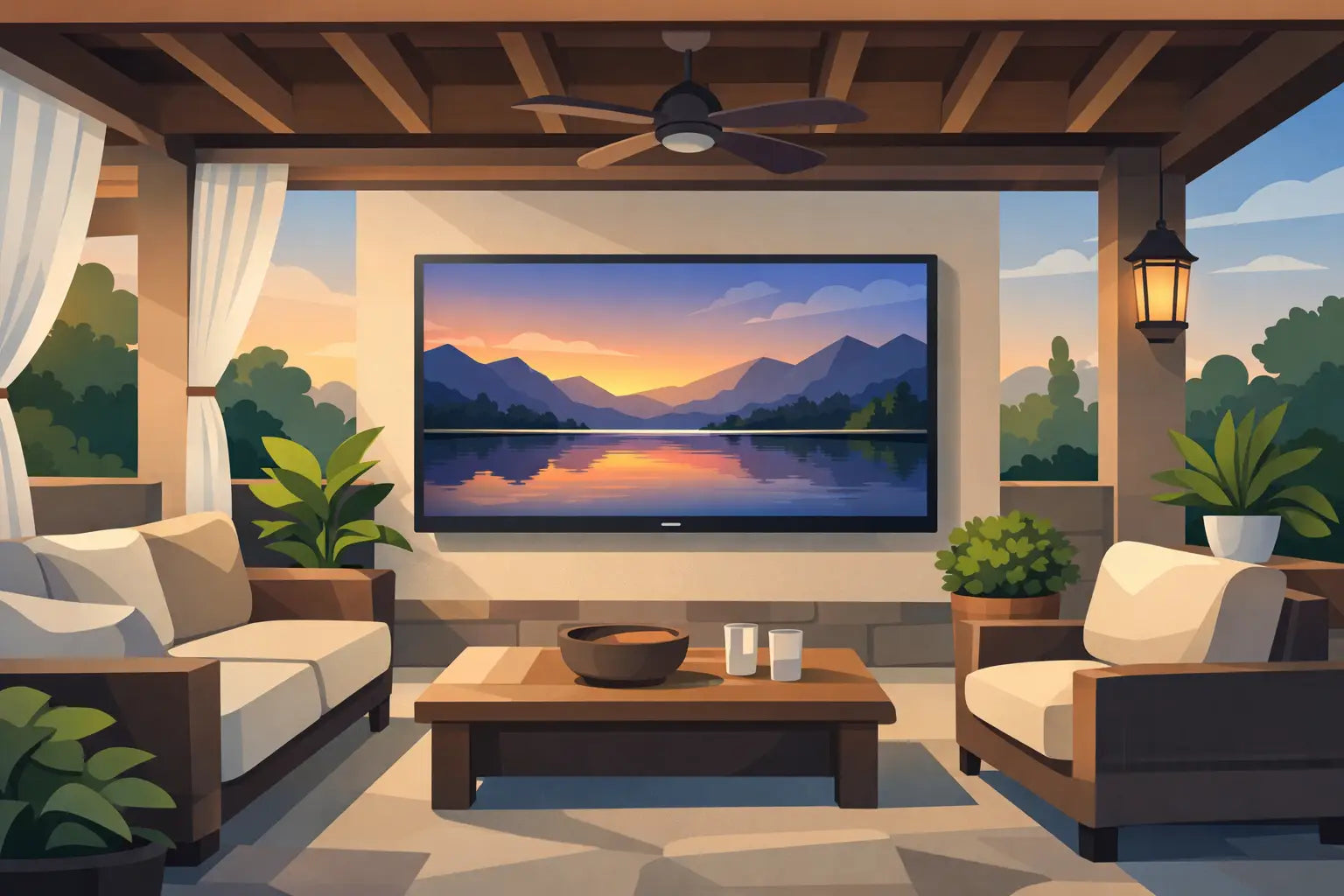
Looking for an Outdoor TV for Your Covered Patio?
Explore our collection of weather-resistant outdoor TVs designed for covered patios, outdoor kitchens, and backyard entertainment. As an authorized dealer, Open Air Lifestyles offers trusted brands backed by knowledgeable customer support.
👉 Browse Our Outdoor TV Collection
A covered patio sounds like an easy place for a TV until the afternoon glare hits, humidity rolls in, and your indoor set starts looking like a costly mistake. Choosing the right outdoor tv for covered patio use is less about buying any screen labeled weather-friendly and more about matching brightness, durability, and placement to the way you actually relax outside.
For many homeowners, this is not a small impulse purchase. It is part of creating a space where family gathers for the big game, neighbors stay for one more inning, and quiet evenings feel a little more comfortable. That is why it helps to look beyond screen size and focus on how an outdoor TV will perform over time.
What makes an outdoor TV for covered patio use different?
A covered patio gives your TV some protection, but not complete protection. Even with a roof overhead, the screen still deals with heat, cold, moisture, dust, pollen, insects, and changing light throughout the day. That is where many buyers get tripped up. They assume covered means sheltered enough for a standard indoor television, when in reality the environment is still much tougher than a living room.
A true outdoor TV is designed with sealed components, weather-resistant housing, and screens built to remain visible in brighter conditions. On a covered patio, you usually do not need the most extreme full-sun model, but you do need more resilience than an indoor or basic commercial display can offer.
The trade-off is cost. Outdoor TVs are more expensive, and for good reason. You are paying for engineering that helps the set handle real exposure and last longer in a place where ordinary electronics tend to fail early.
Brightness matters more than most people expect
If there is one feature that shapes satisfaction the most, it is brightness. A patio can be shaded and still be bright. Reflected light from a pool, light concrete, nearby windows, or open sky can wash out a dim screen fast.
For a covered patio, partial-shade outdoor TVs are often the sweet spot. They are built for spaces with overhead cover but ambient daylight. That makes them a practical fit for lanais, porches, outdoor kitchens, and entertainment walls under a roofline or pergola.
A brighter screen usually gives you a better daytime experience, but it is not simply a case of buying the highest number available. More brightness can mean a higher price, and if your patio is heavily shaded and mostly used at night, you may not need to overbuy. On the other hand, if you plan to watch sports during sunny afternoons, brightness becomes a feature you will appreciate every single weekend.
Think about your patio at 3 p.m., not just at sunset
Many buyers picture evening movie nights when shopping for a TV. That is understandable, but midday conditions are the real test. If your patio faces west or catches a lot of side light, a screen that looks fine in the evening may struggle badly during the day.
A good rule is to evaluate where the sun sits during the hours you watch most. If your family uses the patio for afternoon games, weekend races, or daytime entertaining, it is worth prioritizing screen visibility from the start.
Weather resistance is about more than rain
Covered patios block direct rainfall, but moisture still finds its way in. Humid summer air, wind-driven mist, condensation, and temperature swings all put stress on electronics. In many parts of the U.S., especially coastal and southern climates, humidity is just as important as precipitation.
That is why weather resistance should be treated as a core feature, not a bonus. Outdoor TVs are built with protective seals and materials that stand up better to corrosion and internal damage. If you live near salt air, a lakefront, or an area with heavy seasonal humidity, that durability matters even more.
Cold weather can matter too. If your patio TV will stay mounted year-round, look at the operating temperature range. Some buyers only think about summer heat, but winter freezes can be just as hard on the wrong equipment.
Size should fit the space, not just the wall
Bigger is appealing, especially when you are designing an outdoor entertainment area. But patio viewing is usually more flexible than indoor viewing. People may be seated at a dining table, standing near a grill, or lounging off to one side. That means screen size should work with both distance and sightlines.
For many covered patios, 55-inch to 65-inch screens hit a comfortable balance. They are large enough for sports and movies without overwhelming the area. If your patio is expansive or part of an outdoor kitchen and seating zone, 75 inches or larger may make sense. Smaller spaces often feel better with a TV that fits the scale of the room and leaves enough wall area for speakers, décor, or ventilation.
Mounting position also matters. A giant screen placed too high can be less enjoyable than a modest screen mounted at the right height. Outside, viewers often sit farther back or at wider angles, so placement deserves just as much attention as size.
Sound is often the missing piece
Even an excellent picture can fall flat if the audio disappears into open air. Patios do not hold sound the way indoor rooms do. Wind, nearby traffic, pool pumps, and conversation all compete with the TV.
Built-in speakers may be acceptable for casual viewing, but they are rarely ideal for a full outdoor entertainment setup. If clear dialogue matters to you, especially for movies, news, or play-by-play commentary, think ahead about audio support. Depending on the space, that may mean a soundbar designed for outdoor conditions or a separate speaker setup protected from the elements.
This is another place where it depends on how you use the patio. If you mainly want background viewing while grilling, basic audio might be enough. If the patio is your main gathering space during football season, stronger sound is usually worth it.
Installation decisions affect long-term performance
A quality TV can still underperform if it is installed poorly. Covered patios need thoughtful mounting, proper power access, and clean cable management. Ventilation is important too. Even weather-ready TVs need space around them to dissipate heat.
The wall itself can influence your setup. Brick, stone, stucco, and siding each require different mounting considerations. If your patio has a fireplace, outdoor kitchen, or recessed niche, heat and airflow become even more important. Mounting above a heat source may look convenient, but it is not always the best choice for comfort or equipment life.
This is where expert guidance can save frustration. For many homeowners, especially those investing in premium outdoor living spaces, having real customer support before purchase makes a difference. It helps ensure the TV you choose actually matches your patio conditions instead of just fitting your budget on paper.
Should you use a cover on an outdoor TV?
Even with a covered patio and a weather-rated television, a fitted cover can still be helpful when the TV is not in use. It can reduce exposure to dust, pollen, salt air, and debris, especially during storms or off-seasons.
That said, a cover is not a substitute for buying the right TV in the first place. Putting a cover on an indoor television does not turn it into an outdoor model. Think of a cover as extra protection, not primary protection.
Buying for value, not just price
Outdoor TVs usually cost more than indoor sets of the same size, and that can cause sticker shock. But value should be measured over years of use, not just at checkout. A lower-cost indoor TV may seem tempting for a covered patio, yet replacing it after exposure damage can erase any savings quickly.
For many buyers, especially active adults and homeowners upgrading an outdoor living space, peace of mind matters. Authorized dealer support, manufacturer warranty protection, and access to knowledgeable help all add real value when you are making a higher-ticket purchase. Open Air Lifestyles focuses on that kind of confidence because the best outdoor setup is one you can enjoy without second-guessing every weather change.
How to choose the right outdoor tv for covered patio living
Start with how and when you watch. Daytime sports viewing calls for more brightness than occasional evening movies. Next, look honestly at your environment. Shade overhead does not eliminate glare, moisture, or seasonal temperature swings.
Then consider the experience as a whole. Screen size, sound, mounting height, and the layout of your seating area all affect whether the patio feels comfortable and inviting. The right choice is not always the biggest or most expensive model. It is the one that fits your space, your habits, and your expectations for long-term performance.
A covered patio should make outdoor time easier to enjoy, not create another project to troubleshoot. When your TV is matched to the space from the start, you spend less time worrying about weather, glare, and durability - and more time living your best outdoor life.