Bow Mount Trolling Motor Setup Made Simple
Explore our collection of freshwater and saltwater trolling motors from trusted brands. As an authorized dealer, Open Air Lifestyles offers knowledgeable customer support to help you choose the right motor for your boat.
👉 Browse Our Trolling Motor Collection
A good day on the water can start getting frustrating before the boat even leaves the trailer if your bow mount trolling motor setup is awkward, underpowered, or wired poorly. When the motor deploys hard, the steering feels off, or the battery gives up too early, you notice it right away. A well-planned setup changes that. It makes boat control easier, fishing more enjoyable, and time on the water a lot more relaxing.
For many anglers and recreational boaters, the best setup is not the biggest motor with every feature. It is the one that matches the boat, the way you fish, and the amount of weight and complexity you actually want on board. That matters whether you run a bass boat, a jon boat, or a multi-species fishing rig used for long mornings on the lake.
What a good bow mount trolling motor setup should do
At its core, a bow mount trolling motor setup should give you precise control from the front of the boat. That bow-first position helps with tracking, boat positioning, and holding on structure in a way a transom motor usually cannot match. If you fish shorelines, docks, weed edges, brush piles, or windy points, that extra control is a real advantage.
The setup should also feel balanced. A trolling motor that is too small struggles in wind and current. One that is oversized can add cost, battery demand, and weight you may not need. The right fit depends on how large the boat is, how heavily it is loaded, and where you typically boat.
Ease of use matters too. If the mount is awkward to deploy, the pedal placement is uncomfortable, or the wiring runs are messy, even a premium motor can become a daily annoyance. This is one of those purchases where details make the difference between liking your equipment and fighting it.
Start with thrust, shaft length, and voltage
Most setup problems begin with sizing mistakes. Before you think about GPS features, wireless remotes, or brand preferences, get the basic motor specs right.
Thrust should match the boat and conditions
A lightweight jon boat on a small lake does not need the same motor as a fully rigged 20-foot fishing boat in windy conditions. More thrust helps with control, especially when the boat is loaded with gear, passengers, and batteries. But higher thrust usually means moving from a 12-volt system to 24-volt or 36-volt, which adds battery cost, weight, and charging requirements.
For many smaller fishing boats, 12-volt systems can work well. For midsize and larger bass boats or serious all-day anglers, 24-volt is often the practical sweet spot. If you regularly fish big water, strong wind, or current, 36-volt may be worth it. The trade-off is simple - more authority on the water, but more investment in the battery system.
Shaft length matters more than many buyers expect
A shaft that is too short can cause the prop to ventilate in chop or when the bow rises. Too long, and you may end up with unnecessary shaft sticking up in front of the deck. The goal is to keep the motor head and shaft appropriate for your bow height and typical water conditions.
This is especially important for boats with higher freeboard, rougher water use, or seasonal changes in load. If you fish calm inland lakes most of the time, you may get by with a shorter shaft than someone running larger reservoirs or coastal backwaters.
Voltage affects endurance and performance
Voltage is not just a power number on a product page. It shapes the entire setup. A 12-volt system is simpler and lighter. A 24-volt or 36-volt system generally delivers stronger, more efficient performance for larger boats and longer outings.
If you want long run time without constantly watching battery levels, it is often worth sizing the system with some margin. Many boaters regret going too small more than they regret having a bit of extra capability.
Bow mount trolling motor setup and battery planning
A trolling motor is only as dependable as the power behind it. Battery planning is where a lot of otherwise good installs fall short.
Choose the right battery type for how you use the boat
Traditional lead-acid deep cycle batteries remain common and can be a cost-effective option. Lithium batteries are lighter, charge faster, and often provide more usable power, but they come at a higher upfront price. For some boaters, especially active adults who want easier handling and less maintenance, lithium can be a very appealing upgrade.
The right answer depends on budget, storage habits, charging routine, and how often the boat is used. If lifting heavy batteries is becoming less convenient, battery weight alone can become a major factor.
Use the correct wire size and protection
Long cable runs and undersized wire create voltage drop, heat, and reduced performance. This is not the glamorous part of a setup, but it is one of the most important. Heavy-gauge marine wiring, proper circuit protection, and clean terminal connections all help the motor perform as intended.
Skipping these basics can lead to weak performance that gets blamed on the motor itself. In reality, the rigging may be the issue. A neat, protected installation is safer, easier to troubleshoot, and usually more reliable over time.
Charging should fit your routine
An onboard charger is one of the most convenient additions to a trolling motor system. If your boat lives in a garage or storage space with power access, plugging in after each trip makes ownership much easier. If you trailer often and fish multiple days in a row, charging speed and battery recovery become even more important.
This is one area where buying from a knowledgeable, authorized dealer can help. Matching batteries, charger output, and motor requirements takes some guesswork out of the process and gives you more confidence in the complete system.
Mounting location and deck layout
The bow mount itself needs more thought than simply finding a flat spot and bolting it down. You want the motor to deploy and stow cleanly, clear navigation lights and cleats, and sit securely without stressing the bow panel.
Check bow shape and clearance
Some bows offer generous flat mounting surfaces. Others are tighter, curved, or crowded by hardware. The motor should sit far enough forward to deploy properly, but not so far that the mount lacks support. Backing plates or reinforced mounting areas may be needed, especially on lighter aluminum boats or older hulls.
If your boat cover is used regularly, think about that too. A setup that interferes with storage or trailering can become irritating fast.
Foot pedal and control access should feel natural
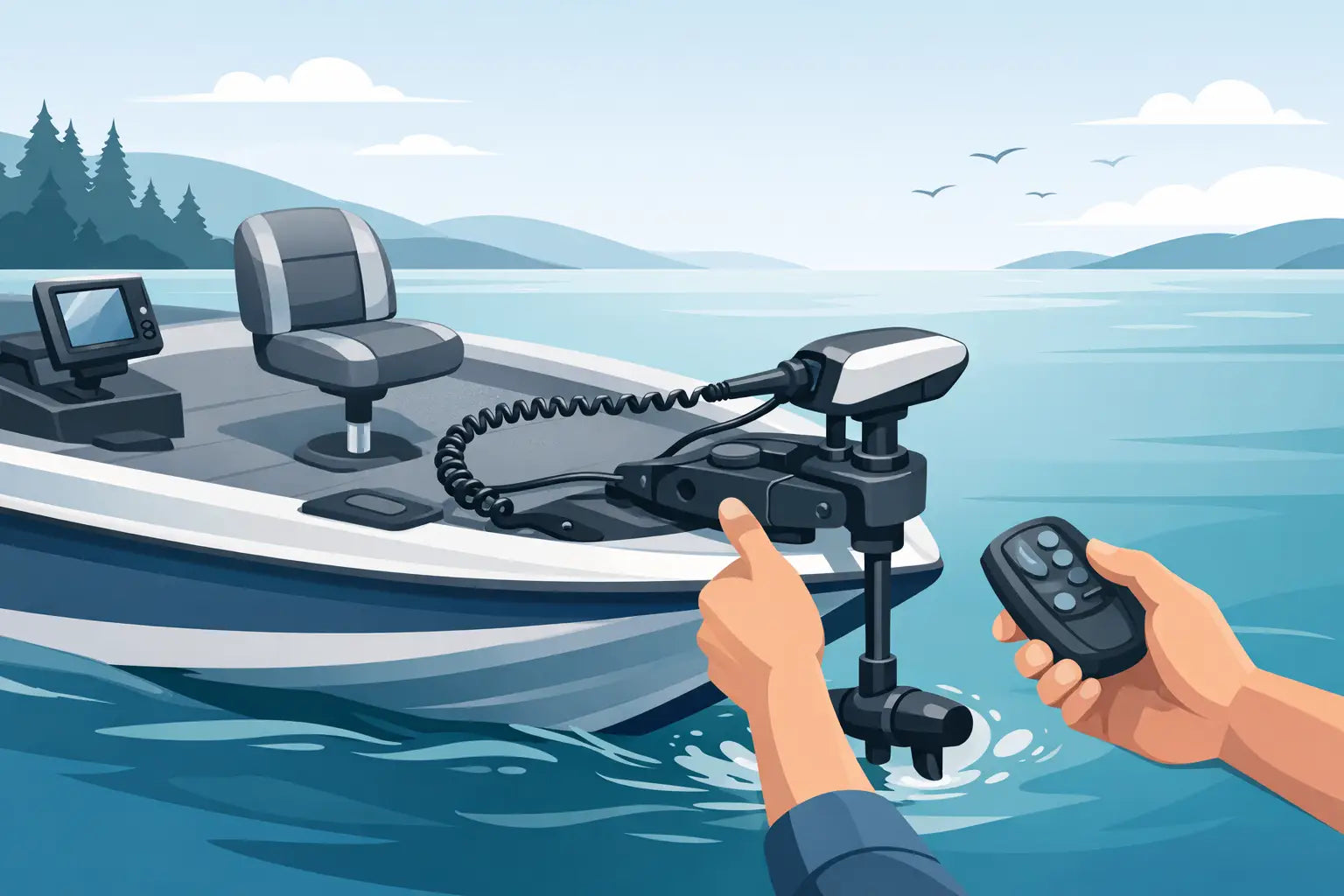
A cable-steer pedal and an electric-steer pedal create different deck experiences. Cable-steer systems are popular for direct response. Electric-steer motors often offer more features and can reduce effort, especially when paired with GPS anchoring and remote control.
It depends on how you fish. Anglers who want instant feel underfoot may prefer cable steer. Boaters who value convenience, easier operation, and advanced control features may lean electric. If comfort and ease matter as much as quick maneuvering, electric steer often makes a strong case.
Features worth paying for and features you may not need
Modern trolling motors can do far more than move the boat quietly. GPS anchoring, heading lock, route recording, and wireless control can make boat positioning much easier. For many anglers, spot-lock style anchoring is one of the most useful upgrades available. It helps hold position over structure without dropping a physical anchor and can reduce fatigue during windy days.
Still, more features are not always better for every buyer. If you fish simple lakes a few times a month, a straightforward, dependable motor may serve you better than a top-tier model packed with functions you rarely use. On the other hand, if staying on points, ledges, or bridge pilings is a regular part of your day, those advanced controls can feel well worth the investment.
A smart buying decision comes down to how you actually boat, not just what looks impressive in a feature chart.
Common setup mistakes to avoid
One of the biggest mistakes is undersizing the system to save money upfront. The second is ignoring battery and wiring quality. Another common issue is choosing a shaft length based on guesswork instead of the boat’s bow height and real operating conditions.
Poor mounting placement is also common. If the motor bangs the rub rail, blocks hatches, or deploys at an awkward angle, the setup will never feel right. These are easier problems to prevent than to correct after drilling holes in the deck.
Finally, many buyers focus only on the motor and overlook support after the sale. Warranty coverage, replacement parts access, and real installation guidance matter, especially with higher-ticket marine electronics and propulsion equipment. That is one reason many customers prefer working with a specialty retailer like Open Air Lifestyles rather than sorting through generic listings with limited product guidance.
When it makes sense to ask for help
Some experienced boaters are comfortable planning their own bow mount trolling motor setup from start to finish. Others would rather confirm the match before buying, and that is often the smarter choice. It helps to talk through boat length, bow design, wiring needs, battery space, and the kind of water you fish most.
That conversation can save you from ordering a motor with the wrong shaft, building around too little thrust, or ending up with a battery system that does not support full-day use. For many buyers, especially those investing in premium gear they expect to keep for years, expert guidance is part of the value.
A well-matched setup should make your boat feel easier to control and more enjoyable to use, not more complicated. When the motor deploys cleanly, tracks well, and runs with confidence in the conditions you actually face, you spend less time managing equipment and more time enjoying the water - which is the whole point of living your best outdoor life.