Can Outdoor TVs Stay Outside Year-Round?
Explore our collection of outdoor TVs designed for patios, decks, pool areas, outdoor kitchens, and year-round entertainment. As an authorized dealer, Open Air Lifestyles offers trusted brands backed by knowledgeable customer support to help you choose the right TV for full shade, partial sun, or full-sun environments.
👉 Browse Our Outdoor TV Collection
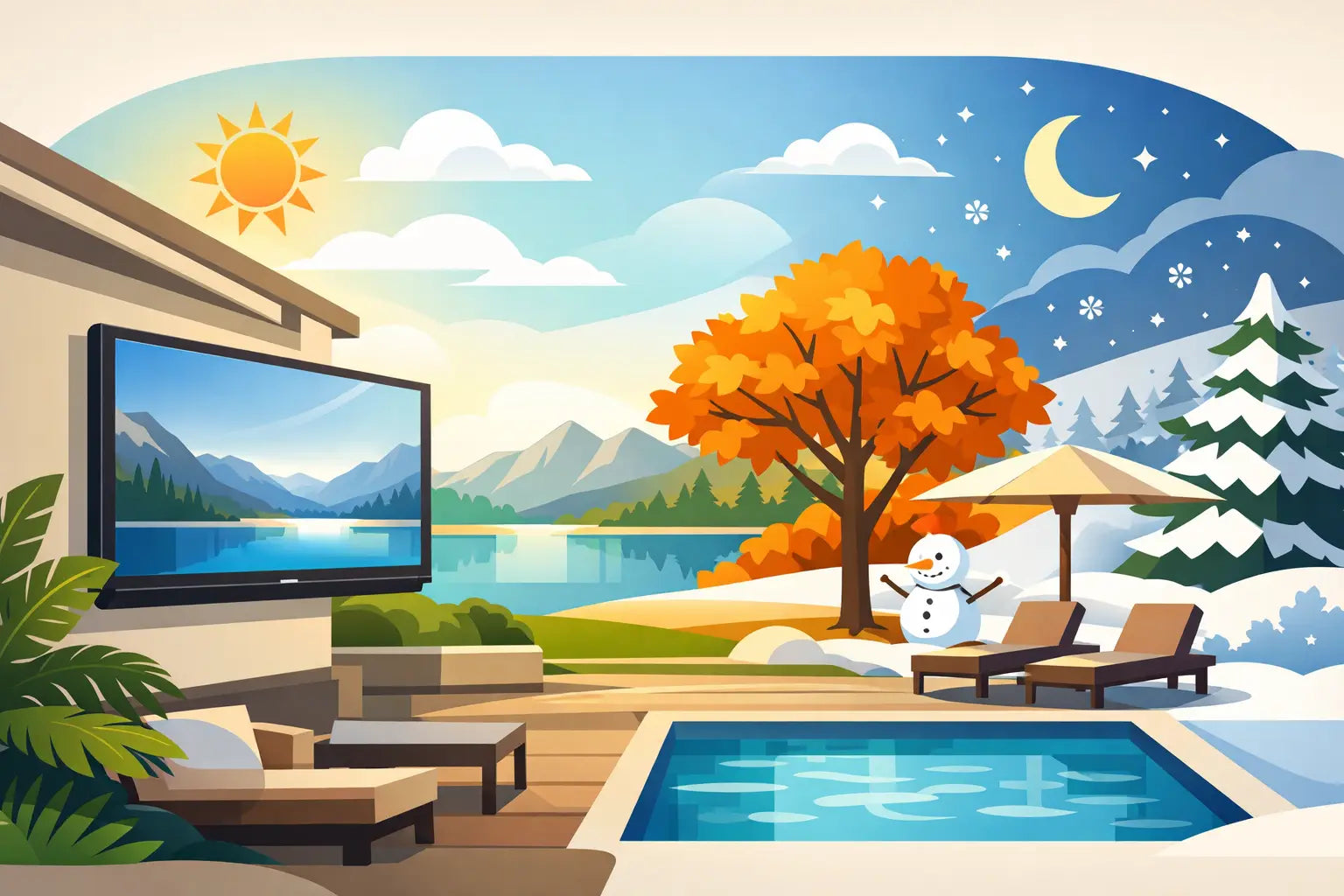
A patio television can turn a quiet evening on the porch, a family cookout, or a big game by the pool into time everyone looks forward to. But can outdoor TVs stay outside year-round without damage? A purpose-built outdoor TV usually can, provided it is correctly installed in a location that matches its weather rating and is treated as durable equipment, not indestructible equipment.
That distinction matters. A regular indoor television may look fine on a covered patio for a while, then fail after repeated humidity, heat, dust, or condensation exposure. Outdoor TVs are designed for the conditions homeowners actually face outside, including changing temperatures and moisture in the air. Choosing the right model and setup protects your investment and helps you spend more time enjoying your outdoor space.
Can Outdoor TVs Stay Outside All Year?
Yes, quality outdoor TVs are made to remain installed outdoors through all four seasons. Their cabinets, internal components, connections, and screens are engineered to handle outdoor moisture, airborne debris, temperature changes, and, depending on the model, direct rain and sun exposure.
Still, “outdoor-rated” does not mean every TV belongs in every outdoor location. A screen installed under a deeply covered lanai has very different demands than one mounted beside an uncovered pool, on a sun-soaked deck, or at a lake house exposed to wind-driven rain. The right answer depends on the TV’s environmental rating, brightness level, operating-temperature range, and the protection offered by your installation area.
It also helps to separate leaving a TV mounted outside from leaving it powered on. An outdoor TV can remain in place year-round, but it should be turned off when not in use, especially before severe weather or an extended absence. A properly installed surge protector and weather-protected outlet add another layer of protection.
Why an Indoor TV Is a Risky Outdoor Shortcut
Moving an indoor TV outdoors for an afternoon is one thing. Making it a permanent fixture on the patio is another. Indoor models are not sealed against humidity and insects, and their ventilation systems are designed for stable, climate-controlled rooms. Even a covered porch can expose them to damp morning air, pollen, temperature swings, and windblown rain.
The trouble is not always immediate. Condensation can form when temperatures change quickly, allowing moisture to reach sensitive electronics. Heat can shorten component life, while cold conditions may affect screen performance and startup. A typical indoor warranty also excludes outdoor use, leaving homeowners with little protection if the set fails.
An outdoor enclosure can offer some help in a sheltered space, but it creates trade-offs. Enclosures may restrict airflow, add glare, complicate remote control use, and make access to ports more difficult. In very hot, humid, or exposed locations, a dedicated outdoor TV is generally the more dependable long-term choice.
Match the TV to Its Outdoor Location
Before choosing a screen size or mounting bracket, take a careful look at where the TV will live. The amount of shade, exposure to rain, and time spent in direct sunlight should guide the purchase.
Full-shade spaces
A full-shade TV is designed for covered areas with little to no direct sunlight, such as screened porches, covered patios, gazebos, and outdoor kitchens beneath a solid roof. These models usually provide the lowest brightness of the outdoor TV categories, but they can still be much brighter and more weather-resistant than an indoor TV.
Full shade does not mean no weather exposure. Open-sided patios can still receive humid air, sideways rain, dust, and insects. Confirm that the model is rated for the conditions in your region, especially if your home experiences freezing winters, desert heat, or frequent coastal storms.
Partial-sun spaces
Partial-sun TVs work well where the screen receives indirect daylight or a few hours of sun. Think of a patio with an awning, a deck that is shaded during part of the day, or a porch that catches late-afternoon light. Their added brightness improves visibility without necessarily requiring the highest-output screen available.
Full-sun spaces
For an uncovered deck, poolside wall, marina setting, or other bright location, a full-sun outdoor TV is often the better fit. These models have much higher brightness so the picture remains visible rather than looking washed out in daylight. They are also intended for more exposed conditions.
Even with a full-sun model, placement is worth planning. Avoid aiming the screen directly into the strongest afternoon sun whenever possible. A small adjustment to the mounting wall or viewing angle can reduce glare and make a major difference in comfort.
Check Weather Protection, Not Just the Word “Outdoor”
Weather resistance is often described with an IP rating, short for Ingress Protection. The first number refers to protection from solid particles such as dust, while the second refers to water resistance. Higher ratings generally indicate greater protection, but the rating should be read alongside the manufacturer’s specific installation instructions.
For example, a TV intended for a covered patio may be able to tolerate moisture and splashes but not constant direct rainfall. Another model may be designed to withstand rain from all directions. That difference matters when a summer storm blows across an open deck.
Also check the operating-temperature range. A TV may be able to stay mounted outdoors during winter but have a minimum temperature for operation. In areas with prolonged extreme cold or extreme heat, following those limits can help preserve picture quality and component life. If weather is unusually severe, shutting down the TV until conditions moderate is a sensible precaution.
Salt air deserves special attention. Homes near the coast, as well as waterfront properties, can expose electronics and mounting hardware to corrosive salt mist. Choose corrosion-resistant hardware, clean the exterior periodically with a soft cloth as directed by the manufacturer, and inspect cables and connections more often than you would inland.
Installation Details That Protect Your Investment
A great outdoor TV needs a great installation. Start with a mount rated for the TV’s size and weight, attached to a structurally sound surface. Outdoor-rated hardware is preferable because ordinary indoor brackets and fasteners can corrode over time.
Power should come from a properly grounded, GFCI-protected outdoor outlet. This is not a place for an extension cord running across a patio. Have a qualified electrician install the outlet if one is not already available. A quality surge protector is equally valuable, particularly in areas known for lightning and power fluctuations.
Every cable path deserves attention. Use outdoor-rated HDMI, Ethernet, antenna, and power accessories where applicable, and keep connections protected from direct water exposure. Neat cable management improves the appearance of the space, but more importantly, it reduces strain, trip hazards, and opportunities for water to reach a connection.
If you plan to connect streaming devices, a soundbar, or a cable box, give those components the same protection as the TV. Many homeowners place them in a nearby weather-protected cabinet or use a device designed for outdoor conditions. A television may survive the elements while an unprotected streaming stick or power adapter does not.
Simple Care for Every Season
Outdoor TVs are built for real outdoor living, but a few habits will support years of enjoyment. Wipe away dust, pollen, and salt residue using manufacturer-approved methods. Keep the vents and exterior free of leaves, spider webs, and debris. Check the mount and visible cabling once or twice each year, especially after storms.
A fitted cover can be useful when the TV will not be used for several weeks, but it should be breathable and sized for the model. Never cover a TV while it is operating or still warm. In damp climates, avoid covers that trap moisture against the cabinet for long periods.
Before hurricane-force weather, major wind events, or a long seasonal absence, turn off the TV and disconnect it according to the manufacturer’s guidance. A cover may provide extra protection from dirt and debris, but no television should be expected to withstand every extreme event simply because it is outdoor-rated.
Buy for How You Actually Entertain
The best outdoor TV is not always the largest screen or the highest-brightness model. It is the one that fits your viewing distance, light conditions, local climate, and the way you use your patio or deck. A shaded outdoor kitchen may call for a full-shade screen and comfortable seating. A pool area that hosts daytime gatherings may justify a brighter, more exposed-location model.
For higher-ticket outdoor equipment, authorized dealer support and manufacturer warranty coverage can make the decision much easier. At Open Air Lifestyles, real customer support can help homeowners compare outdoor TV categories, understand installation considerations, and choose equipment with confidence.
A well-chosen outdoor TV can stay outside through the seasons and become a natural part of the home you enjoy most. Give it the right location, safe power, and a little routine attention, then settle in and enjoy more memorable moments under the open sky.