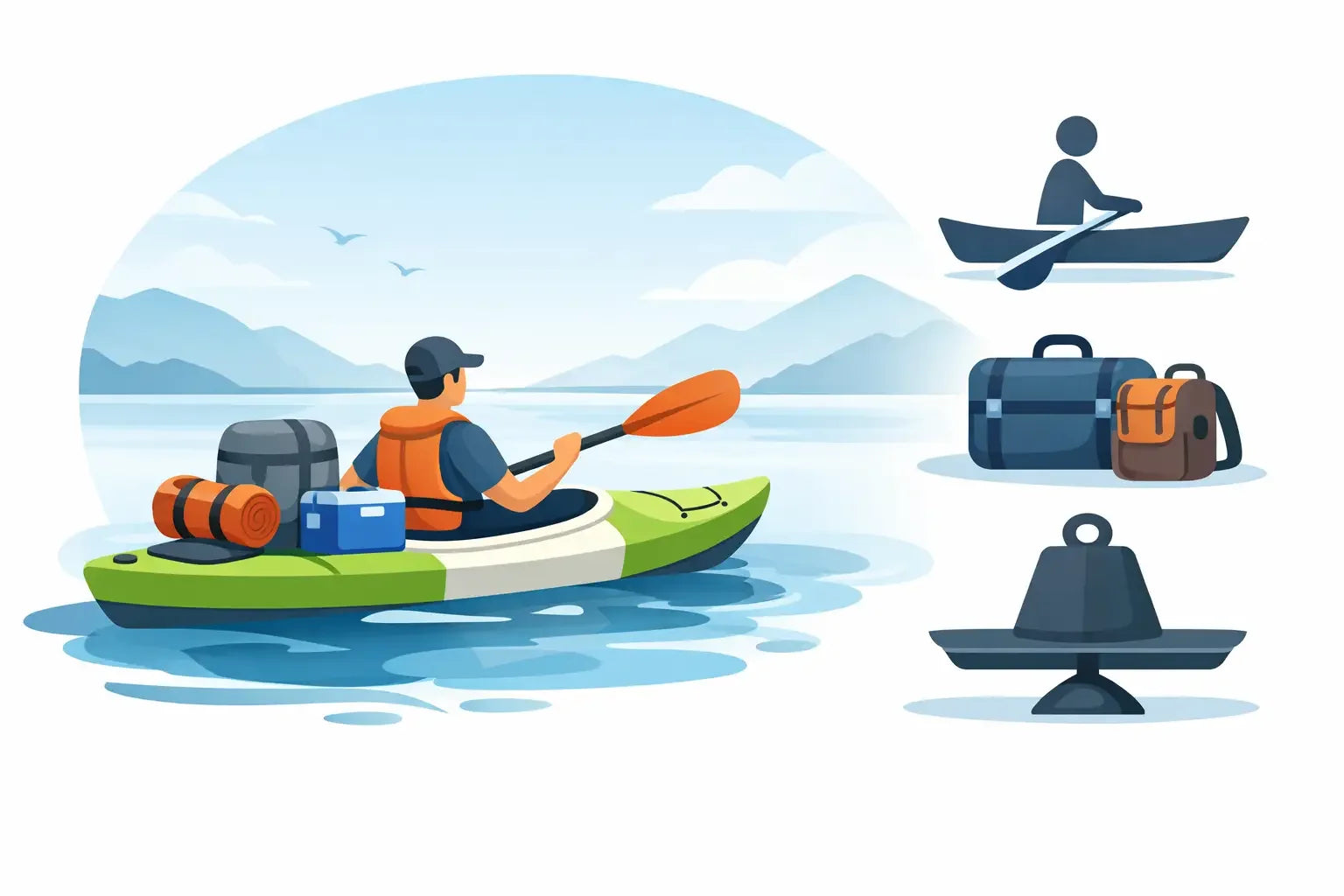
Kayak Weight Capacity Guide: Choose With Confidence
Explore recreational, fishing, and inflatable kayaks with the stability, capacity, and comfort for the way you want to paddle. Compare options for relaxed cruising, fishing, longer outings, and everything you want to bring along.
👉 Explore Our Kayak Collection
A kayak can technically hold its published maximum load and still feel slow, wet, and less stable than you expected. That is why a good kayak weight capacity guide is about more than matching your body weight to a number on a product page. It is about accounting for the person, the gear, the water, and the kind of day you want to have.
For relaxed lake paddling, a kayak loaded near its limit may be manageable. For fishing, photography, longer trips, moving water, or paddlers who value an easy entry and exit, more capacity creates a noticeably better experience. Choosing the right margin helps you get out on the water with confidence and ease.
What Kayak Weight Capacity Really Means
A kayak's weight capacity is the maximum total load the manufacturer says the boat can support. That total includes the paddler, personal flotation device, paddle, seat, cooler, tackle, dry bags, anchor, electronics, clothing, water, and any accessories mounted to the kayak.
For a tandem kayak, capacity includes both paddlers and all shared gear. If you bring a dog, that counts too. It is easy to overlook the smaller items, but a fishing crate, battery, tackle trays, and a cooler can add 40 to 80 pounds quickly.
The stated capacity is usually a flotation limit, not a promise that the kayak will perform at its best at that weight. As the hull sits lower in the water, it becomes harder to paddle, more likely to take on splash, and less responsive when turning. On a sit-on-top model, water may begin collecting around the scupper holes or seat area when the kayak is heavily loaded.
Think of maximum capacity as the ceiling, not the target. For the most comfortable and predictable ride, many paddlers prefer to stay meaningfully below it.
How to Use This Kayak Weight Capacity Guide
Start with your fully loaded weight, not your weight after stepping out of the house. Put together a realistic list of what comes with you on a normal outing. A basic recreational trip may only add a PFD, paddle, water bottle, and small dry bag. A full fishing setup may include a high-back seat, crate, tackle, anchor, fish finder, lithium battery, cooler, and extra clothing.
Use this simple calculation:
Total kayak load = paddler weight + clothing and PFD + gear + accessories + food and water + pet or passenger
Once you have that number, compare it with the kayak's listed capacity. A healthy amount of unused capacity is especially valuable for larger paddlers, beginners, anglers, and anyone paddling in changing conditions. It gives the hull more freeboard - the height between the waterline and the edge of the kayak - and makes the boat more comfortable when you shift position, reach for gear, or climb back aboard after a swim.
There is no one percentage that works for every hull design. Still, if your loaded weight is close to the published maximum, it is wise to look at a higher-capacity model. A kayak with room to spare will generally track, turn, and drain better than one loaded to the limit.
A practical example
Suppose a paddler weighs 215 pounds. Add a 12-pound PFD and clothing allowance, a 6-pound paddle, 15 pounds of water and lunch, and 35 pounds of fishing gear. The actual on-water load is about 283 pounds.
A kayak rated for 300 pounds may float that load, but it offers very little room for changes in conditions or additional equipment. A model rated for 350 to 400 pounds is likely to feel more composed, remain drier, and give the paddler greater confidence getting on and off the water.
Why Extra Capacity Improves the Ride
Capacity affects much more than whether a kayak sinks. It directly influences comfort and control.
A lightly to moderately loaded kayak sits at the waterline its designers intended. That allows the hull shape to do its job: providing predictable stability, decent speed, efficient tracking, and room for water to drain through scuppers on many sit-on-top designs. The bow and stern also remain more capable of rising over small wakes and chop.
Overloading changes that balance. The kayak rides lower, increasing drag and making each paddle stroke work harder. Water can wash over the deck more easily. A heavily loaded boat may also feel more tippy when you move around, even if its hull is wide, because there is less reserve buoyancy available.
For active adults and retirees, this extra margin can be particularly helpful. A stable, properly sized kayak makes launching, landing, standing up, and returning to the seat less demanding. Comfort is not a luxury in this case. It is part of staying safe and enjoying more time outdoors.
Capacity Is Not the Same as Stability
A large capacity rating does not automatically mean a kayak is the most stable choice. Hull width, shape, length, seat height, and where weight is placed all matter.
Wider recreational and fishing kayaks often feel very stable initially, which is reassuring when boarding from a dock or reaching into a cooler. Longer, narrower touring kayaks may have lower initial stability but can move more efficiently and feel secure once leaned into a turn. Inflatable kayaks often offer generous capacity and a broad, stable platform, though they can be affected more by wind and may not track like a rigid hull.
Seat position matters as well. A raised fishing seat is comfortable and provides a better view, but it lifts your center of gravity. A higher-capacity, wider kayak can help offset that trade-off. If standing to fish is a priority, choose a model specifically designed with a stable standing platform rather than relying on a high capacity number alone.
Match Capacity to Your Kind of Paddling
The best capacity range depends on where and how you paddle. A compact recreational kayak can be a great fit for calm ponds, protected coves, and short outings with minimal gear. It may not be the right choice for an angler who carries a cooler, electronic fish finder, and a full crate of tackle.
For day touring, look beyond the paddler's weight and make room for layers, safety gear, food, water, and dry storage. If you paddle coastal areas or bigger lakes, the ability to handle wind chop and a bit of extra gear is worth considering.
Fishing kayaks deserve an especially careful load estimate. Accessories are one of their greatest strengths, but they are also easy to underestimate. A motor, battery, anchor system, gear tracks, crate, rods, and a cooler can transform the loaded weight of a kayak. The same applies to pedal kayaks, where the drive unit is part of the total load.
For tandem paddling, do not simply divide capacity in half. Consider the combined weight of both people, the difference between their weights, gear placement, and whether one person may occasionally paddle solo. Some tandem kayaks handle a solo paddler well; others trim poorly unless weight is positioned thoughtfully.
Load Your Kayak for Better Balance
Even when you are comfortably below the capacity limit, poor weight distribution can hurt performance. Keep heavy items low and close to the center of the kayak whenever possible. A battery or packed cooler placed far behind the seat can make the stern sit low, while too much weight forward can push the bow into waves and make steering feel sluggish.
Use dry bags and storage compartments to secure gear rather than leaving loose equipment on the deck. A shifting cooler or crate can change the kayak's balance at exactly the wrong moment. Secure loading also protects your gear if you capsize.
Before a longer outing, test your fully loaded setup close to shore on calm water. Notice whether the scuppers are sitting unusually low, whether water gathers in the cockpit, and whether the kayak responds normally to turns. This short test can reveal whether you need to reduce gear or choose a larger platform.
Do Not Forget the Kayak's Carry Weight
Weight capacity tells you what the kayak carries on the water. Kayak weight tells you what you must lift, roll, transport, and store on land. These are separate specifications, and both deserve attention.
A high-capacity fishing kayak can be wonderfully stable but may weigh 90 pounds or more before accessories. That can be a fine choice if you use a cart, trailer, assisted loading system, or waterfront launch. If you need to lift a kayak onto an SUV by yourself, a lighter recreational or inflatable model may lead to more frequent use.
The right choice is the one that works from driveway to launch point, not just once it reaches the water. Planning for a cart, proper tie-downs, and a manageable loading routine makes outdoor recreation easier to enjoy for years.
Choose for the Day You Want to Have
A capacity rating is one of the clearest clues to whether a kayak will support your plans comfortably. Add up your real on-water load, leave room below the maximum, and consider the stability, seat height, hull style, and transport demands that fit your lifestyle.
If you are comparing premium kayaks and are unsure how a particular model will handle your weight and gear, Open Air Lifestyles can help you sort through the practical details before you buy. The goal is simple: choose a kayak that feels capable, comfortable, and ready for more days spent Living Your Best Outdoor Life.