Trolling Motor vs Outboard: Which Fits You?
Explore our collection of trolling motors and electric outboard motors designed to match the way you enjoy the water. Whether you're fishing quiet coves, exploring lakes, or powering a small boat, Open Air Lifestyles offers trusted brands backed by knowledgeable customer support to help you choose with confidence.
👉 Browse Our Motors & Propulsion Collection
Quiet matters more than most boaters expect.
If you are comparing a trolling motor vs outboard, you are probably trying to solve a real on-the-water problem, not win a spec-sheet debate. Maybe you want to fish shallow water without spooking bass. Maybe you want a reliable way to move a small boat, kayak, or jon boat without dealing with fuel. Or maybe you need enough power to cover distance comfortably and get home before the weather changes. The right choice depends less on which motor is "better" and more on how, where, and how often you use your boat.
Trolling motor vs outboard: the core difference
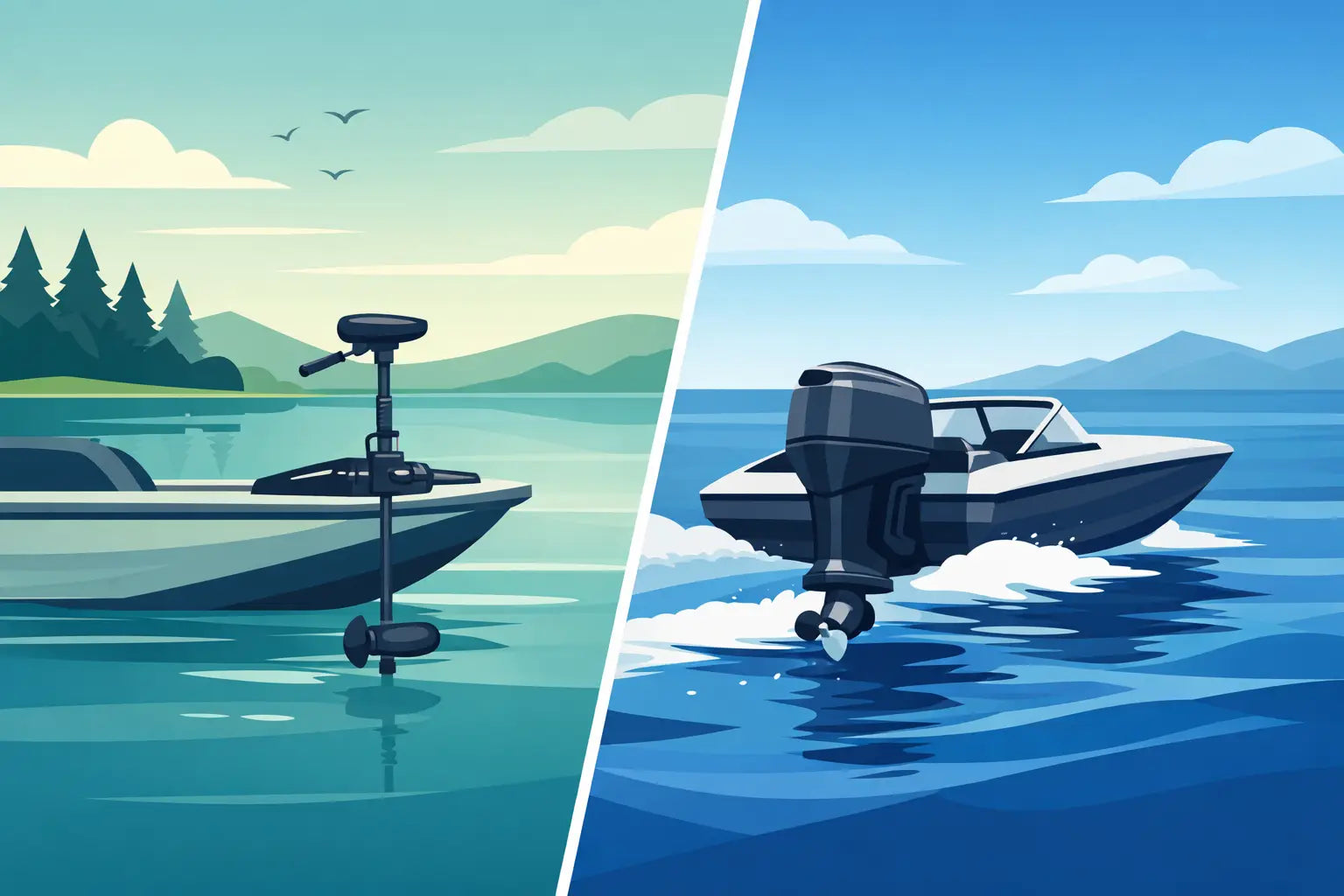
The simplest way to think about it is this: a trolling motor is built for control, while an outboard is built for propulsion.
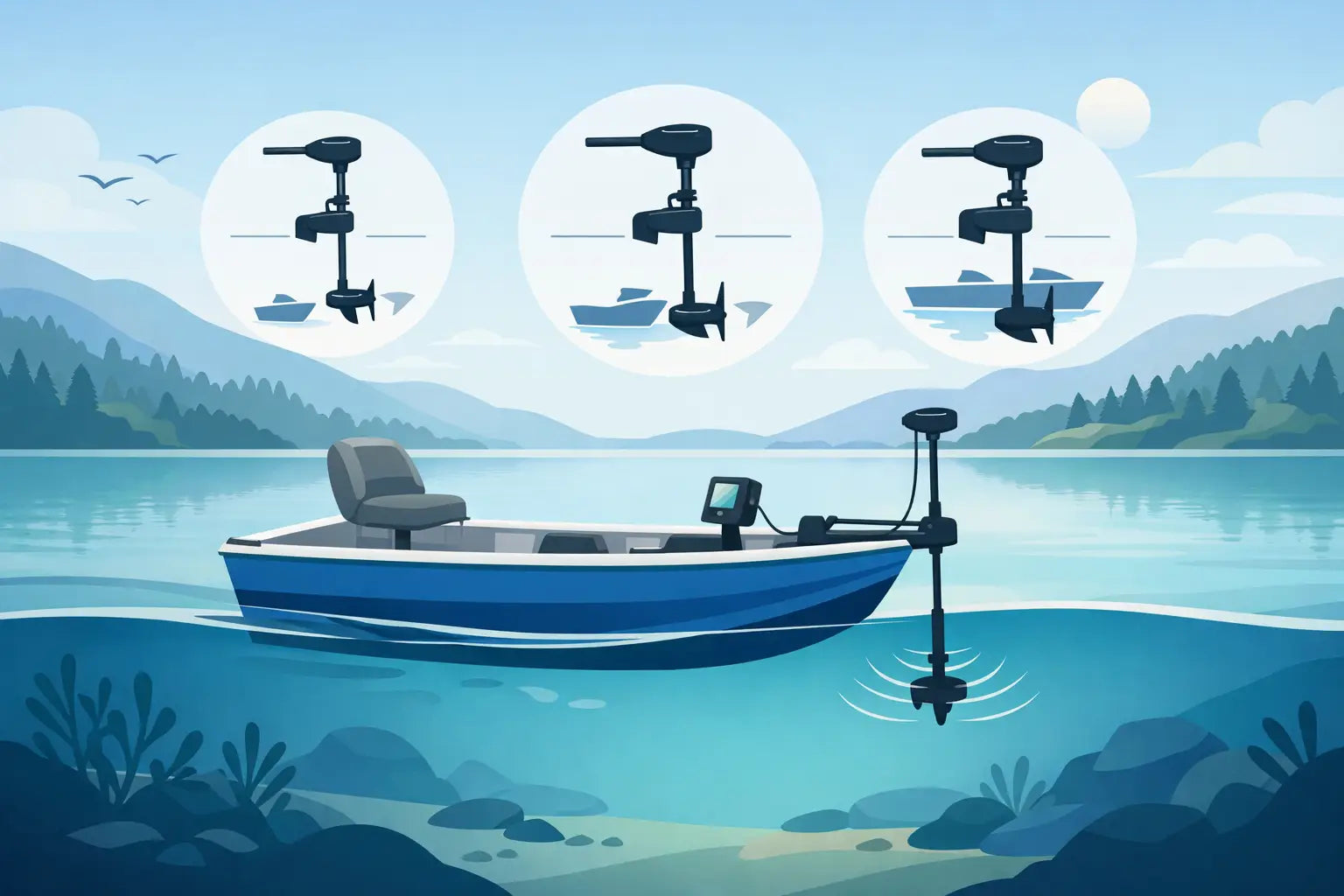
A trolling motor is usually electric and designed for low-speed maneuvering. It helps you move quietly, hold position, and make fine adjustments when fishing or navigating tight areas. That is why anglers value them on lakes, reservoirs, and calm inshore water. They are especially useful on kayaks, inflatables, and smaller fishing boats where noise, precision, and convenience matter.
An outboard, on the other hand, is meant to push a boat farther and faster. Outboards can be gas or electric, though many people still picture a gas-powered unit first. If your priority is getting across a larger body of water efficiently, carrying more load, or handling changing conditions with more authority, an outboard usually makes more sense.
Neither one replaces the other in every situation. In fact, many experienced boaters use both because each solves a different problem well.
When a trolling motor makes more sense
A trolling motor shines when you want quiet, simplicity, and close control.
For fishing, that advantage is obvious. You can approach structure slowly, work a shoreline carefully, and make constant small corrections without firing up a louder engine. On a kayak or compact fishing setup, that can completely change the experience. You spend less time fighting wind and drift and more time focusing on the water in front of you.
There is also the comfort factor. Electric trolling motors are easy to use, and they typically require less routine maintenance than gas-powered engines. There is no fuel to mix, fewer moving parts to worry about, and no pull-start frustration. For active adults and retirees who want outdoor equipment to feel enjoyable rather than complicated, that ease can be a major selling point.
The trade-off is speed and range. Trolling motors are not built for long runs at higher speeds. Battery life matters, and performance depends on factors like boat weight, wind, current, and how aggressively you run the motor. If you regularly cover big water, a trolling motor on its own may feel limiting.
When an outboard is the better choice
An outboard is the practical answer when your day on the water involves distance, speed, or heavier loads.
If you use a skiff, jon boat, or utility boat to move between spots, cross a larger lake, or carry passengers and gear, an outboard gives you much more push. It gets you on your way faster and can handle a broader range of conditions with less strain. For boaters who value efficient travel as much as time spent fishing or cruising, that matters.
Outboards also tend to be the stronger choice when weather can change quickly. Extra power gives you more confidence when wind picks up or when you need to return to the launch without creeping along. That does not mean every outboard is the right fit for every small craft, but it does mean they offer a different level of capability.
The trade-off is noise, maintenance, and complexity. Gas outboards need fuel, seasonal care, and regular service. They are not as discreet in shallow fishing situations, and they can feel like more machine than some casual boaters really need. Electric outboards reduce some of those concerns, but they still serve the same broader role: moving the boat with more authority than a trolling motor can.
Speed, thrust, and horsepower are not the same thing
This is one area where buyers can get tripped up. Trolling motors are usually rated in pounds of thrust, while outboards are generally rated in horsepower. Those numbers do not translate directly.
A higher-thrust trolling motor does not suddenly become an outboard equivalent. It may move a small boat very effectively at low speed, but it is still designed around slow, controlled movement. Likewise, a modest outboard may not seem powerful on paper compared with a high-thrust electric motor, but it is engineered for a different performance range.
If your goal is subtle positioning while casting, thrust is the metric that matters. If your goal is covering water and moving a loaded boat with confidence, horsepower becomes more relevant.
Battery power vs fuel convenience
Power source often ends up being the deciding factor.
A trolling motor typically runs on one or more batteries, and that can be wonderfully convenient if your trips are shorter and your charging routine is simple. Plug in at home, head to the ramp, and enjoy a quiet day on the water. For many small-boat owners, especially those using kayaks or inflatables, that is exactly the kind of easy ownership they want.
Still, battery planning is part of the deal. You need to think about runtime, charging time, battery weight, and whether your setup has enough capacity for wind, current, or a full day of use. If your boating style is spontaneous and all-day long, you need to be realistic about energy demands.
Gas outboards have a different advantage: quick refueling and longer operating range. You do not have to wait for batteries to recharge, and on bigger water that flexibility can feel reassuring. The downside, of course, is dealing with fuel, fumes, storage, and maintenance.
Electric outboards sit somewhere in the middle. They offer quieter operation and simpler ownership than gas, but they still require a close look at battery capacity and real-world range.
Best fits by boat type
For kayaks, paddle craft, and compact inflatables, trolling motors are often a natural match. They keep the setup lighter, quieter, and easier to manage. If your main goal is fishing, exploring calm water, or adding convenience without overcomplicating the boat, a trolling motor usually fits the lifestyle well.
For jon boats and small fishing boats, the answer depends on how you use them. If you fish smaller lakes and want maximum boat control, a trolling motor may be all you need or may work best as a secondary motor. If you run across open water to reach coves or remote banks, an outboard often becomes the primary engine.
For utility boats or setups carrying more people and gear, outboards generally offer the capability most owners expect. A trolling motor can still be a great addition for positioning and fishing control, but not usually the only propulsion source.
Cost is more than the purchase price
At first glance, a trolling motor can look like the more affordable option, and often it is. But total cost depends on the full system.
With a trolling motor, you may need batteries, a charger, mounting hardware, and possibly electronics integration if you want advanced features. Those costs add up, especially if you want longer runtime or premium control functions.
With an outboard, the upfront investment may be higher, and ownership costs can include fuel, service, winterization, and parts over time. On the other hand, if you need the speed and range an outboard provides, buying less motor than your use requires rarely saves money in the long run.
This is where real customer support matters. Matching the motor to the boat, the water conditions, and your expectations is often more valuable than chasing the lowest price.
How to choose with confidence
A good decision starts with three simple questions. How far do you usually travel on the water? How quiet do you need to be? And how much convenience matters once the trip is over?
If your boating is mostly calm-water fishing, close-range exploration, and precise maneuvering, a trolling motor may be exactly right. If your days involve distance, heavier loads, or changing conditions, an outboard will likely serve you better. If you want both quiet control and strong primary propulsion, using both can be the smartest setup of all.
For many buyers, especially those investing in higher-quality outdoor equipment, confidence comes from talking through the details before purchase. Boat size, transom capacity, battery setup, storage space, and local water conditions all affect what will work best. That is one reason many customers prefer buying from knowledgeable, authorized dealers rather than rolling the dice on a generic listing. With the right guidance, you are not just buying a motor. You are setting yourself up for easier launches, better days on the water, and fewer regrets later.
The best motor is the one that makes you want to get outside more often, use your boat with less hassle, and enjoy the water with confidence and ease.