What Size Trolling Motor Do You Need?
Explore our collection of trolling motors designed for kayaks, jon boats, fishing boats, pontoons, and more. As an authorized dealer, Open Air Lifestyles offers trusted brands backed by knowledgeable customer support.
👉 Browse Our Trolling Motor Collection
A trolling motor that is too small feels fine at the dock and frustrating on the water. You point the bow into a breeze, tap the power, and realize your boat is not really moving where you want it to go. If you are asking what size trolling motor you need, the right answer comes down to more than just boat length. Weight, wind, current, and how you actually fish or cruise all matter.
For most boaters, sizing a trolling motor means getting three things right: thrust, shaft length, and voltage. Miss any one of those, and even a premium motor can feel underpowered or awkward to use. Get them right, and your time on the water becomes easier, quieter, and a lot more enjoyable.
What size trolling motor really means
When shoppers ask about trolling motor size, they are usually talking about thrust. Thrust is measured in pounds and tells you how much pushing power the motor has. A higher thrust rating helps move heavier boats, handle wind better, and maintain control in current.
But size also includes shaft length and battery voltage. A motor with the right thrust but the wrong shaft length may cavitate in chop or sit too deep in calm water. A motor with enough thrust but the wrong voltage setup may not deliver the runtime or efficiency you expect.
That is why the best fit is not simply the biggest motor your budget allows. More power can be helpful, but it also means more battery demand, more weight, and sometimes more cost than your boat really needs.
How to choose what size trolling motor by thrust
A common starting point is this rule: you want at least 2 pounds of thrust for every 100 pounds of fully loaded boat weight. That loaded weight should include the hull, motor, fuel, batteries, gear, passengers, and a realistic amount of tackle or supplies.
If your total loaded weight is 2,000 pounds, that rule suggests a minimum of 40 pounds of thrust. If the loaded weight is 3,000 pounds, you would look for at least 60 pounds.
That formula is useful, but it is only a baseline. Many boaters are happier sizing up, especially if they fish larger lakes, deal with afternoon wind, or want better boat control around docks, points, weed lines, and structure. A motor that only meets the minimum can work on calm days, but it may feel strained when conditions get less friendly.
A practical thrust guide
Small kayaks, canoes, and lightweight jon boats often do well with 30 to 45 pounds of thrust. These setups are lighter, easier to push, and usually used in protected water.
Mid-size aluminum fishing boats and many small bass boats often land in the 45 to 55 pound range, though some benefit from 55 pounds or more if they carry extra gear or fish in windier conditions.
Larger bass boats, deeper V fishing boats, and heavier multi-person setups often need 70 to 80 pounds of thrust or more. Once you step into bigger boats or more demanding water, the extra control is worth it.
If you are deciding between two sizes, the larger option is often the better long-term choice. It gives you a reserve of power without forcing you to run the motor at maximum all the time.
Boat length matters, but weight matters more
Boat length is often used as a quick reference because it is easy to know. A 12-foot jon boat and a 12-foot fully rigged fishing skiff, however, may behave very differently on the water. Hull design, gear load, freeboard, and passenger count all affect how hard the motor has to work.
A longer boat is not automatically harder to move than a shorter one. A heavy boat with more wind resistance is usually the bigger challenge. If you only shop by length, you can end up undersized.
That said, length still helps narrow your options. Smaller boats under about 14 feet usually pair with lower-thrust motors. Boats in the mid-teen range often need more thrust, especially when loaded for a full day. Boats 17 feet and above generally benefit from stronger 24V or even 36V systems, depending on use.
What size trolling motor shaft do you need?
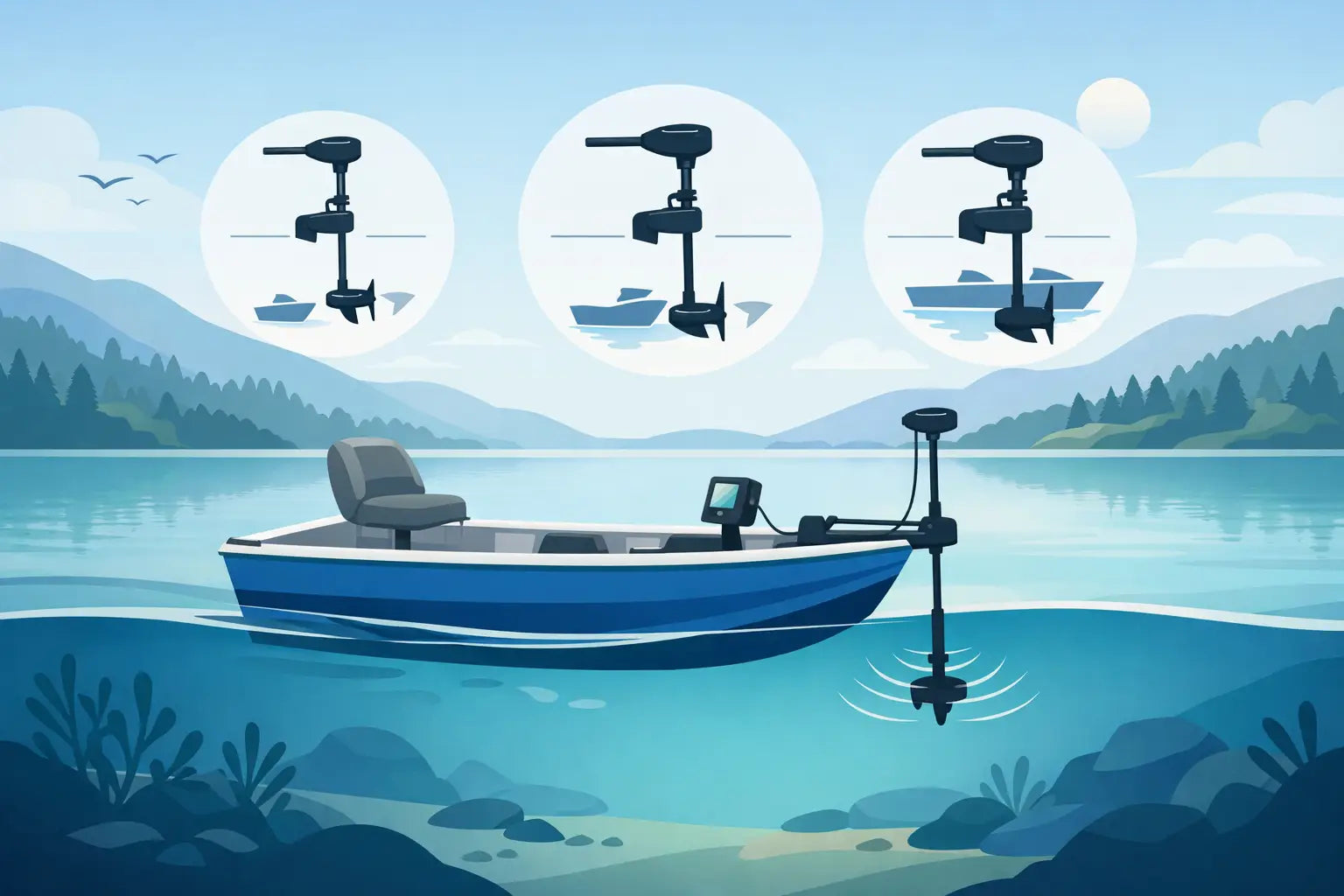
Shaft length is just as important as thrust. If the shaft is too short, the prop can come out of the water in waves or when the bow rises, which causes poor control and lost efficiency. If it is too long, the motor can be awkward to stow and may sit deeper than necessary.
For most bow-mount trolling motors, the goal is to keep the motor head above the mount while placing the prop deep enough below the waterline to stay submerged in typical chop. A common rule is to measure from the mounting surface to the waterline and then add enough length to keep the motor submerged in rougher conditions.
In general, smaller boats in calmer water may do well with shorter shafts around 36 to 45 inches. Many bass boats and fishing boats use 45- to 52-inch shafts. Boats with higher bows, rough-water use, or deeper fronts often need 54 inches or more.
For transom-mount motors, the same principle applies. Measure carefully and think about where and how the boat will be used. A little extra shaft length is usually better than coming up short.
12V, 24V, or 36V?
Voltage affects both power and efficiency. In simple terms, higher-voltage systems support higher-thrust motors and can offer better performance for larger boats or tougher conditions.
A 12V trolling motor is common for lighter boats and lower thrust ratings, often around 30 to 55 pounds. These systems are simpler and usually cost less upfront. They are a good fit for casual use, small lakes, and lighter watercraft.
A 24V system is a strong step up and is common in the 70- to 80-pound thrust range. If you fish larger water, want better control in wind, or run a heavier boat, 24V often feels like the sweet spot.
A 36V system is typically used for high-thrust applications on larger boats. It gives serious boaters more control, especially when they spend long days on the water or need dependable positioning around current and structure.
The trade-off is battery space, weight, and cost. More voltage usually means more batteries, and that matters if storage room is limited.
Freshwater vs. saltwater use
If you boat in saltwater or brackish conditions, the motor needs corrosion-resistant components designed for that environment. Size still depends on your boat and conditions, but saltwater users often benefit from sizing a little more generously because tide, chop, and wind can change quickly.
Even in protected bays or estuaries, current can make a properly sized motor feel small in a hurry. If your boating includes coastal use, do not size only for your calmest day.
Where and how you use the boat changes the answer
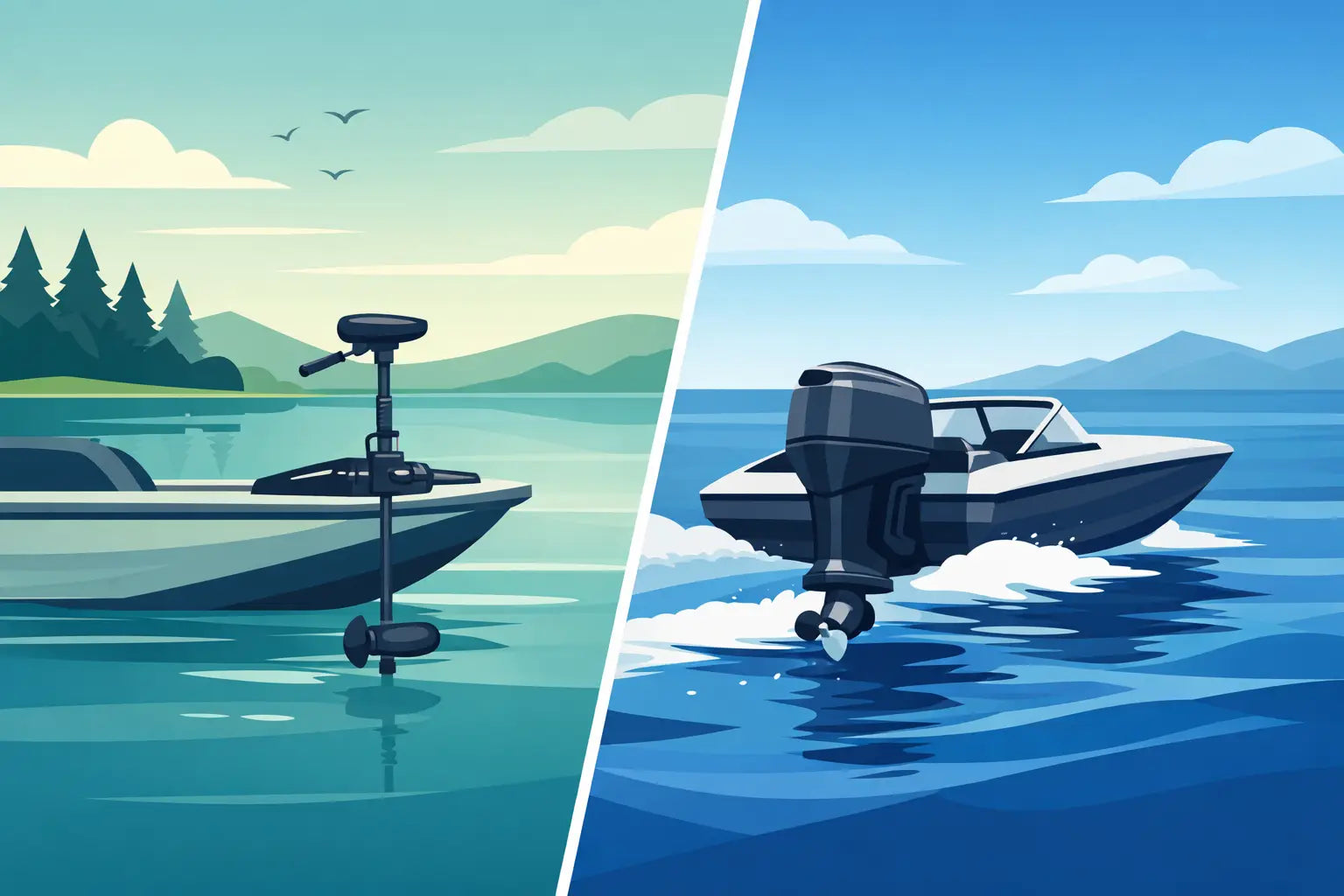
A quiet electric motor on a calm farm pond has a very different job than one holding a fishing boat on a windy point all afternoon. That is why usage matters so much.
If you mostly use a small boat for leisurely cruising in protected water, you can stay closer to the minimum thrust recommendation. If you fish seriously, rely on boat positioning, or regularly deal with current and wind, it makes sense to go up a size.
This is especially true for active adults and retirees who want equipment that feels easy to use rather than barely adequate. A little extra thrust reduces strain, improves control, and helps you enjoy the day instead of fighting the boat.
Common sizing mistakes
The most common mistake is underestimating loaded weight. People often calculate the hull weight and forget batteries, fuel, coolers, gear, and passengers. That missing weight adds up fast.
Another common issue is buying for perfect conditions. Calm mornings can turn into windy afternoons, and a motor that seemed fine at first can start to feel underpowered.
Shaft length is also easy to overlook. Many boaters focus so much on thrust that they forget the motor still has to stay properly submerged to perform well.
Finally, some buyers choose the cheapest setup that meets the minimum. That can work, but if you spend a lot of time on the water, the better value is often a motor that gives you room to handle changing conditions with confidence.
A better way to choose with confidence
If you want a dependable answer to what size trolling motor is best, start with your loaded boat weight, then think honestly about your typical water conditions. Add in your boat style, where the motor will mount, and whether you value basic movement or precise control.
For a small, lightly loaded boat in calm water, a modest 12V motor may be all you need. For a mid-size fishing boat or regular use in wind, moving up in thrust and voltage usually pays off. For larger boats, bigger water, or all-day use, extra capacity is rarely a regret.
This is one of those purchases where expert guidance can save time and prevent frustration. At Open Air Lifestyles, many customers want more than a spec sheet. They want real customer support, warranty-backed products, and help matching a motor to the way they actually spend time outdoors.
The right trolling motor should make your day easier from the first launch to the last cast. Choose one that fits your boat, your water, and your expectations, and you will spend less time second-guessing your setup and more time living your best outdoor life.