Full Sun Outdoor Television Buying Guide
Explore our collection of weather-resistant outdoor TVs designed for full sun patios, pool decks, outdoor kitchens, docks, and backyard entertainment spaces. As an authorized dealer, Open Air Lifestyles offers trusted brands backed by knowledgeable customer support.
👉 Browse Our Outdoor TV Collection
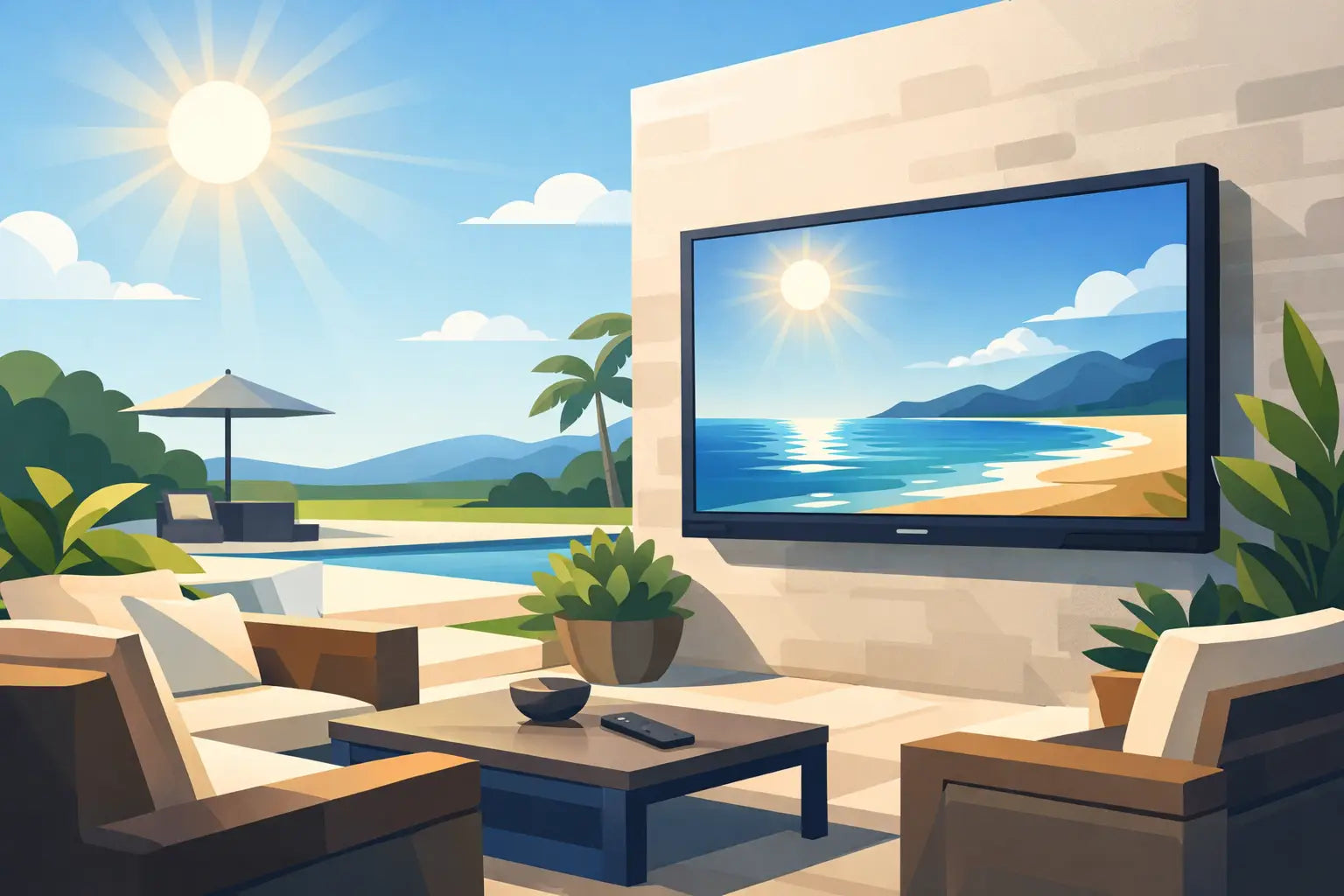
A backyard TV sounds simple until you picture the real conditions - direct afternoon glare, summer heat, humidity, wind, pollen, and the occasional storm rolling in faster than expected. A full sun outdoor television is built for exactly that kind of environment, which is why it matters far more than taking an indoor TV outside and hoping for the best.
If your patio, pool deck, outdoor kitchen, or dockside seating area gets little to no shade during the day, this category is usually the right place to start. The goal is not just to have a screen outdoors. It is to have one you can actually watch comfortably at noon, trust through changing weather, and enjoy for years without second-guessing the purchase.
What makes a full sun outdoor television different?
The biggest difference is brightness. Indoor TVs are designed for living rooms, bedrooms, and media spaces where glare can be controlled. In direct sunlight, even a good indoor screen can look washed out and frustrating. A full sun outdoor television uses a much brighter display so the picture remains visible even when the sun is hitting the screen area.
That higher brightness is only one part of the story. Outdoor models are also built with weather-resistant enclosures, better temperature management, and materials designed to handle exposure that would shorten the life of a standard TV. Depending on the model, that can include protection against rain, dust, insects, humidity, and wide temperature swings.
For many homeowners, this is where the value becomes clear. You are not paying only for a brighter screen. You are paying for a product engineered for outdoor use, backed by a real warranty for that environment, and built to reduce the risk that comes with a higher-ticket purchase.
When you truly need full sun performance
Not every outdoor space needs the brightest category. Some covered porches and screened patios do perfectly well with a TV designed for partial sun or full shade. But if the installation area gets direct sun for much of the day, choosing anything less can lead to disappointment.
This is especially common around pools, uncovered decks, rooftop lounges, open patios, and outdoor kitchens with western exposure. Morning sun can be manageable in some spaces. Late-day sun can be much harsher, especially when it reflects off water, light concrete, glass railings, or pale stone surfaces. In those settings, brightness becomes less of a luxury and more of a requirement.
A good rule is simple: if you regularly squint in the seating area during the day, your TV will be fighting that same glare.
How to choose the right full sun outdoor television
The best choice depends on where the TV will live and how you plan to use it. Sports on the patio call for a slightly different setup than casual streaming beside a pool or evening movies from an outdoor lounge.
Brightness comes first
If your viewing area gets direct sunlight on the screen or around it, brightness should be one of your top filters. This is what helps preserve color, contrast, and visibility during daytime use. For many buyers, it ends up being the feature that determines whether they enjoy the TV every weekend or only after sunset.
At the same time, brighter is not always better in every location. If your space has more cover than you first assumed, you may be paying for performance you do not fully need. That is why it helps to look honestly at your lighting conditions across the full day, not just at sunset when the patio feels most comfortable.
Weather resistance matters beyond rain
Outdoor TVs face more than wet weather. Heat buildup, humidity, airborne debris, salt air near the coast, and dramatic temperature changes can all affect long-term performance. A proper outdoor unit is designed to manage these conditions more effectively than an indoor model.
If you live in a hot southern climate, cooling and heat tolerance deserve extra attention. In colder areas, low-temperature operation may also matter if you plan to use the TV through football season and beyond. The environment around the home should shape the decision just as much as screen size or smart features.
Screen size should fit the outdoor space
Bigger is popular, but outdoor viewing distance and layout matter. A TV mounted above an outdoor fireplace may need a different size than one installed across from a large seating area by the pool. In bright spaces, a screen that is too small can feel even smaller because ambient light competes with the image.
Many homeowners do best by measuring the seating area first, then thinking through the most common use case. If the TV will be the main event for game day, a larger screen often makes sense. If it is part of a wider outdoor entertaining area, balance may matter more than maximum size.
Sound is often overlooked
Outdoor spaces absorb sound differently than indoor rooms. There are no walls to contain audio, and wind, pool pumps, conversations, and neighborhood noise can compete with the TV. Even an excellent picture can feel underwhelming if the sound is weak.
Some buyers are satisfied with built-in speakers, especially in smaller or quieter spaces. Others may want an outdoor-rated audio solution for clearer dialogue and fuller sound. This depends on how social or open your space is, and whether the TV is for background enjoyment or focused viewing.
Placement can make or break the experience
A full sun outdoor television gives you more flexibility, but placement still matters. Even the brightest screen benefits from smart positioning. If possible, avoid mounting the TV where the sun hits the screen directly at the exact time you plan to watch most often.
It also helps to think about viewing angle, seating comfort, and nearby reflections. A pool behind the seating area can throw extra glare toward the screen. Stainless appliances in an outdoor kitchen can do the same. A slight change in wall location or mount position can improve visibility more than many people expect.
Height matters too. Mounting the TV too high may feel natural outdoors, especially above a fireplace or under a patio cover, but it can strain the neck during longer viewing sessions. Comfortable sightlines still count, even in a casual backyard setup.
Why indoor TVs usually fail outdoors
It is tempting to save money by using a standard television outside, especially if it is a spare from inside the home. In most cases, that short-term savings creates long-term frustration.
Indoor TVs are not designed for moisture, direct UV exposure, heat stress, or airborne debris. Even if they work for a little while, picture quality often suffers badly in daylight, and internal components can wear out much faster than expected. More importantly, manufacturer warranties generally do not cover outdoor use.
That warranty issue deserves real attention. For many homeowners, a backyard entertainment upgrade is not an impulse buy. It is part of a larger investment in comfort, entertaining, and time spent outside. Buying the right category from the start offers far more confidence.
Features worth considering before you buy
Smart TV functions, streaming compatibility, and multiple input options all matter, but they are secondary to outdoor durability and visibility. Start with the environment first, then narrow down the feature set.
If you watch live sports, response performance and picture clarity during motion may matter more than extra apps. If the TV is part of a vacation home or second residence, ease of use and reliability may take priority over bells and whistles. If several family members will use it, a familiar smart interface can make the setup more enjoyable from day one.
This is also where expert guidance helps. Outdoor TVs are more specialized than standard electronics, and the right recommendation often depends on details that are easy to overlook online, such as sun exposure by time of day, local climate, intended mounting area, and typical viewing habits.
Buying with confidence matters with specialty products
When you shop for a full sun outdoor television, product quality is only part of the decision. Support before and after the sale matters too. This is a category where authorized dealer relationships, manufacturer warranty coverage, and access to knowledgeable help can make the process much easier.
For customers investing in a premium outdoor setup, that reassurance matters. You want clear answers, dependable product information, and confidence that the TV you choose is built for your specific conditions. That is one reason many buyers prefer working with a specialty outdoor retailer like Open Air Lifestyles rather than sorting through generic marketplace listings with limited guidance.
The right outdoor TV should fit the way you actually live outside - whether that means poolside afternoons, patio dinners, football weekends, or quiet evenings on the deck. Choose for your real sun conditions, not the best-case scenario, and you will end up with a setup that feels easy to enjoy every time you step outside.