What Is Pedal Assist? A Clear E-Bike Guide
A headwind on the way home, a long hill to the trailhead, or an extra few miles you would rather not skip can change how a ride feels. So, what is pedal assist? It is the e-bike system that adds motor power while you are pedaling, helping your own effort carry you farther, more comfortably, and with less strain.
Pedal assist does not turn a bike ride into a motorcycle ride. You still choose the route, steer, balance, brake, shift, and pedal. The motor simply responds to your pedaling and supplies a selected level of support. For many riders, that makes neighborhood rides, rail trails, campground loops, and errands more practical without giving up the satisfying feeling of riding a bike.
What Is Pedal Assist on an E-Bike?
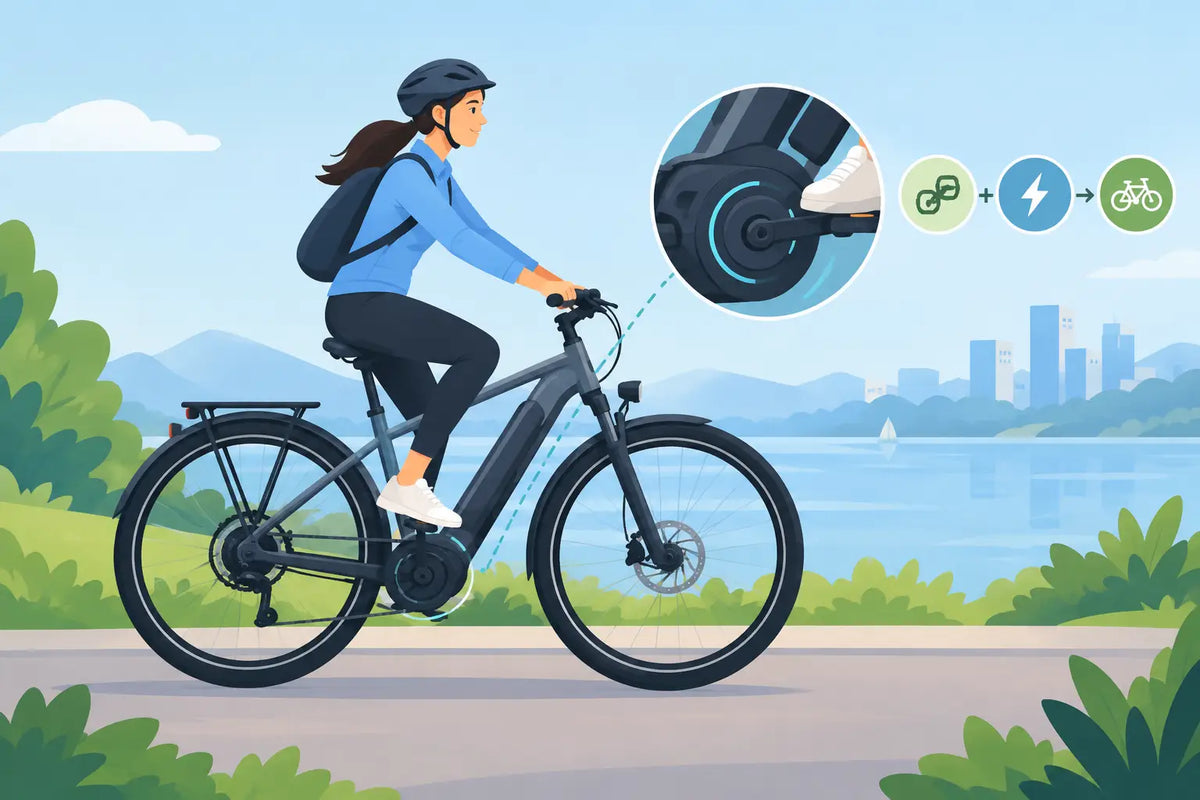
Pedal assist, often called PAS, is an electric bike feature that activates the motor when it detects that you are pedaling. Most e-bikes let you select an assistance level from a handlebar display or controller. A lower setting provides a gentle boost, while a higher setting supplies more power for hills, wind, heavier cargo, or days when your legs need a little help.
Think of it as having a helpful riding partner who matches part of your effort. You can pedal lightly in a higher assist mode and let the motor do more of the work, or pedal with purpose in a lower mode for a more traditional cycling feel. The precise experience depends on the bike, its motor, its sensors, and the setting you select.
Pedal assist is especially valuable for active adults who want to stay outdoors longer without turning every climb into a test of endurance. It can help couples with different fitness levels ride together, make it easier to keep up with friends or family, and reduce the worry of getting too tired far from home.
How Pedal Assist Knows When to Help
An e-bike uses sensors to recognize your pedaling. The two sensor types you will see most often are cadence sensors and torque sensors. Neither is automatically better for every rider, but they create noticeably different ride experiences.
Cadence sensors
A cadence sensor detects whether the pedals are turning. Once it senses rotation, it signals the motor to deliver power based on the selected assist level. This system is common on many approachable, value-focused e-bikes.
Cadence-based pedal assist can feel very easygoing. Begin pedaling, and the bike starts helping after a brief moment. At higher settings, the assistance may feel more pronounced, which many riders appreciate when starting from a stop or tackling a hill. The trade-off is that the motor does not measure how hard you are pressing on the pedals, so the response can feel less natural than a torque-sensing system.
Torque sensors
A torque sensor measures how firmly you are pushing on the pedals. Press gently, and the motor provides a lighter response. Pedal harder on an incline or when accelerating, and the motor adds more support.
This usually creates a smooth, intuitive feel that experienced cyclists often enjoy. It also encourages an active style of riding because your effort directly influences the assistance. On the other hand, riders who want substantial help with very little pedal pressure may prefer the simpler, stronger feel of some cadence-sensor bikes.
Some premium e-bikes combine sensor inputs or use refined software to make power delivery smoother. A test ride, when available, remains one of the best ways to decide which response feels right for you.
Pedal Assist Levels: What the Numbers Really Mean
Most e-bikes offer three to five assist levels, though some have more. The names vary by brand - Eco, Tour, Sport, Turbo, or simply Level 1 through Level 5 - but the basic purpose is the same. Higher levels provide more motor support and use more battery power.
Low assist is a smart choice for flat paths, casual rides, and maximizing range. It preserves much of the traditional bike feel while taking the edge off rolling terrain. Medium assist is often the everyday sweet spot, giving reliable help without draining the battery as quickly. High assist is useful for sustained hills, strong headwinds, hauling gear, or getting a quick boost when traffic conditions call for confident acceleration.
The highest setting is not necessarily the best setting. If you always ride in maximum assist, you will generally cover fewer miles per charge and may miss the chance to use the bike's gears efficiently. Shifting to an easier gear before a hill and increasing assist only as needed can make the ride smoother for both you and the bike.
Pedal Assist vs. a Throttle
Pedal assist requires you to pedal for the motor to help. A throttle, by contrast, can activate the motor without pedaling, depending on the e-bike's design. Some bikes have pedal assist only; others include both pedal assist and a thumb or twist throttle.
A throttle can be convenient when starting from a stop, moving a loaded bike, or taking a short break from pedaling. Pedal assist is often preferred for longer rides because it feels more like cycling and gives you more opportunity to manage battery use through your own effort.
Local rules matter here. In much of the United States, e-bikes are commonly grouped into three classes. Class 1 bikes provide pedal assist up to 20 mph and have no throttle. Class 2 bikes can have a throttle and are generally limited to 20 mph under motor power. Class 3 bikes provide pedal assist up to 28 mph and typically have additional equipment requirements, such as a speedometer. State and local trail rules can differ, so check the regulations for the roads, parks, and paths where you plan to ride.
What Pedal Assist Means for Battery Range
Battery range is not a fixed promise because real-world riding conditions change constantly. Pedal assist level is one of the biggest factors, but rider weight, cargo, hills, wind, tire pressure, temperature, stop-and-go riding, and even surface type also affect how far you can go.
A rider using Eco mode on paved, relatively flat trails may travel considerably farther than the same rider using high assist on steep terrain. For a more predictable outing, start with a fully charged battery, use moderate assistance when conditions allow, and avoid storing the battery for long periods in extreme heat or cold.
It is also wise to buy an e-bike based on your normal rides, not just its best-case range estimate. If your favorite route is 20 miles with several climbs, choose a battery and motor setup that leaves a comfortable reserve rather than planning to arrive home with a nearly empty charge.
Choosing an E-Bike With Pedal Assist You Will Enjoy
The right pedal-assist e-bike should fit your body, your routes, and your confidence level. Step-through frames can make mounting and dismounting easier, particularly at frequent stops. Wider tires and suspension can add comfort on rough paths, while a lighter commuter-style bike may be easier to maneuver and store.
Pay close attention to the control layout and display. You should be able to see your assist level and battery status without distraction, and the buttons should be easy to operate with gloves if you expect to ride in cooler weather. If hills are part of your regular route, look beyond the headline motor wattage. A well-matched motor, sensible gearing, and responsive sensors often matter more than one large number on a specification sheet.
Comfort is not an accessory. A properly adjusted saddle, suitable handlebar position, and frame size can make the difference between a bike that sits in the garage and one you reach for several days a week. Helmets, lights, mirrors, and a lock are also worthwhile parts of an e-bike plan, especially for riders using public roads or multi-use paths.
A Few First-Ride Tips
Begin in a low assist setting in an open, quiet area. Practice starting, stopping, shifting, and turning before riding near traffic or on a busy trail. Because the motor adds momentum, give yourself extra room to brake and slow down before corners.
When starting on a hill, select an easier gear and a moderate assist level before you stop if possible. Keep both hands steady on the handlebars, begin pedaling smoothly, and let the system build power rather than pushing abruptly. With a little practice, pedal assist becomes second nature.
The best e-bike is not the one with the most settings. It is the one that makes your favorite outdoor time easier to say yes to. When you have questions about fit, features, or the right amount of assistance for your usual rides, knowledgeable guidance and real customer support can help you choose with confidence - then spend more time Living Your Best Outdoor Life.