Best Ebikes for Beach Towns and Coastal Living
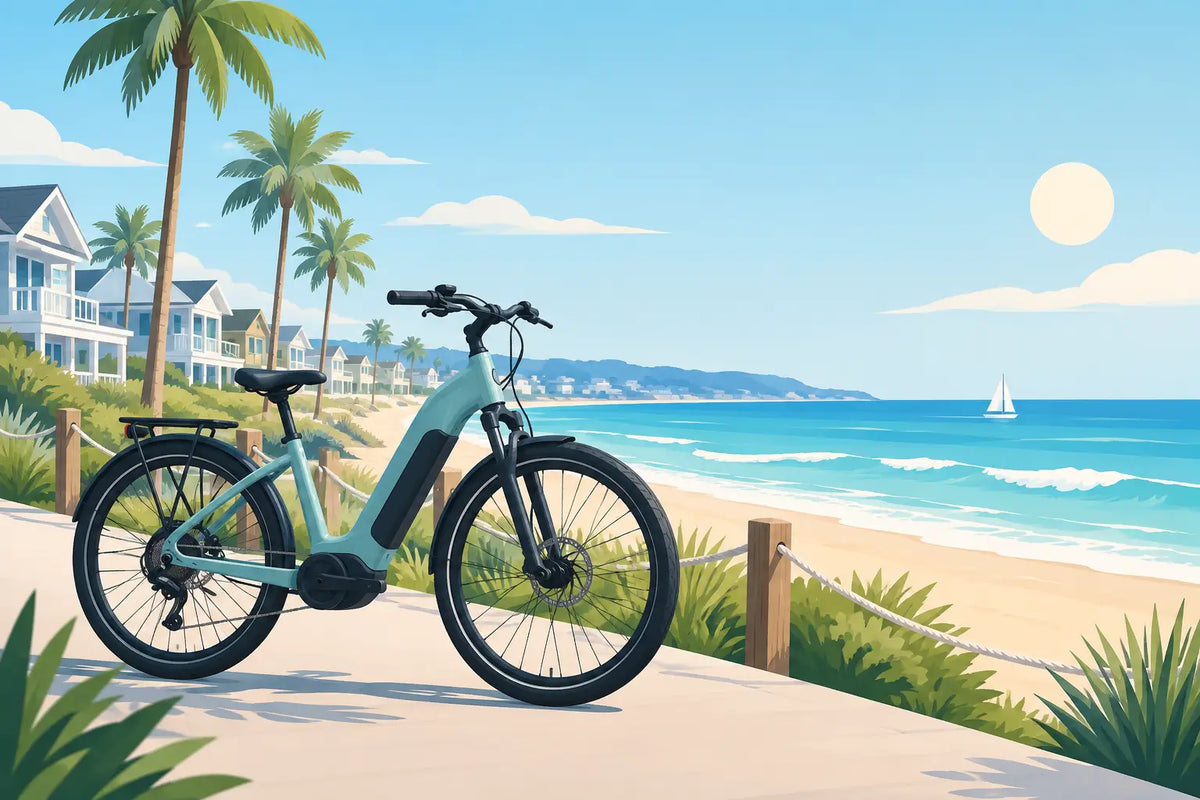
A beach-town e-bike has a different job than an e-bike used only on suburban paths or mountain trails. The best ebikes for beach towns need to make relaxed waterfront rides, quick grocery trips, neighborhood visits, and trips to the marina feel easy, while standing up to salt air, changing weather, and frequent starts and stops.
For many riders, especially active adults and retirees, the right e-bike is less about chasing top speed and more about staying comfortably mobile. It should feel stable at low speeds, be simple to get on and off, have enough range for a full day of errands and sightseeing, and offer dependable support when it is time for service or warranty help.
What Makes an E-Bike Right for a Beach Town?
Coastal riding is often flatter than inland riding, but that does not automatically make every e-bike a good choice. Beach communities bring their own conditions: windy afternoons, humid mornings, sandy driveways, boardwalk rules, narrow lanes, and the persistent effect of salt in the air.
Start by thinking about where you will actually ride. A rider cruising paved bike paths from a condo to the coffee shop has different needs than someone traveling from a waterfront home to a dock, campground, or local market. The best choice is the one that matches those regular trips without adding unnecessary weight, complexity, or maintenance.
Comfort is usually the foundation. An upright riding position gives you a clear view of pedestrians, golf carts, and turning traffic. It also puts less strain on the wrists, shoulders, and neck than a more aggressive, forward-leaning bike. A wide, supportive saddle, ergonomic grips, and adjustable handlebars can make a bigger difference to everyday enjoyment than an extra few miles per hour.
Choose an Easy Step-Through Frame When Convenience Matters
A step-through frame is one of the most practical designs for beach-town living. With a low entry point, riders do not have to swing a leg high over the frame. That is useful when wearing casual clothes, carrying a bag, or getting on and off several times during an afternoon out.
Step-through e-bikes are not just for riders with mobility concerns. They are a smart choice for anyone who values a simple, confident start and stop. At an intersection, on a crowded path, or outside a waterfront restaurant, the ability to put both feet down easily can make riding feel far more relaxed.
A traditional step-over frame can still be a great fit for riders who prefer its look or feel, particularly on longer rides. The key is to be honest about your usual routine. A bike that is slightly easier to mount is often the bike that gets ridden more often.
Motor Power Should Feel Natural, Not Overwhelming
On mostly level coastal roads, a moderate pedal-assist system is usually plenty. It helps you pull away smoothly from stop signs, handle a headwind, and arrive without feeling worn out. The goal is assistance that feels predictable and controllable, rather than a sudden surge of power.
A torque-sensing system adjusts support according to how firmly you pedal, creating a more natural cycling feel. A cadence-sensing system begins assisting when it detects the pedals turning and can be an accessible, comfortable option for casual riding. Neither is automatically better for every person. Riders who want a traditional bicycle-like response may prefer torque sensing, while those who want easy, steady assistance may be perfectly happy with cadence sensing.
A throttle can also be helpful for moving away from a stop, crossing a short stretch of loose gravel, or giving your knees a break. Before choosing one, check local regulations. E-bike access rules can differ between streets, multiuse paths, boardwalks, beaches, and parks, even within the same town.
Range Is About Your Real Day, Not a Number on a Spec Sheet
Battery range varies widely based on rider weight, wind, tire pressure, terrain, cargo, temperature, and the assistance level you choose. Coastal winds deserve special attention. A return ride into a steady sea breeze can use considerably more battery than the calm ride out.
Instead of buying based on the largest advertised range, consider your most common loop. If you typically ride five to 15 miles for errands, sightseeing, or visiting friends, choose a battery that leaves a comfortable reserve after that distance. Extra capacity can bring peace of mind, but it also may add cost and weight.
A removable battery is especially useful in a beach town. You can bring it indoors to charge, avoid leaving it in direct sun, and store it in a dry, temperature-moderate place. That is convenient for apartment residents, RV travelers, and homeowners who prefer not to park a bike next to an outlet.
Look for Coastal-Friendly Details
Salt air does not need to keep you from owning an e-bike, but it does make good care more important. No e-bike is completely immune to corrosion. Components, fasteners, electrical connections, and the drivetrain all benefit from regular attention in coastal environments.
Choose a bike from a reputable manufacturer with quality components and clear warranty support. Fenders are valuable even in sunny regions because they reduce spray from damp roads and puddles. A full chain guard or enclosed drivetrain can reduce the amount of sand and grit that reaches moving parts. Integrated lights are another practical advantage when sunset arrives during a long waterfront ride.
After a ride near saltwater or through salty mist, wipe down the frame and components with a soft, lightly damp cloth. Keep water away from charging ports and avoid using a high-pressure hose, which can force moisture into places it does not belong. Dry the bike, inspect the chain, and use an e-bike-appropriate lubricant as needed. A covered, dry storage space is one of the best investments you can make in the bike's long-term condition.
Tires: Stability and Puncture Protection Matter More Than Size Alone
Fat tires are often associated with beach riding, and they can provide a cushioned, confidence-inspiring ride over uneven pavement, packed paths, and loose surfaces. They are not a requirement for every coastal rider, though. Wider tires can make a bike heavier and may create more rolling resistance, which can reduce range.
For paved streets and bike paths, moderately wide tires with puncture protection are often the sweet spot. They offer stable handling and comfort without making the bike cumbersome to lift, transport, or store. Riders who routinely travel on packed sand or rough access roads may appreciate wider tires and a suspension fork.
Riding directly on soft, dry beach sand is difficult for nearly every e-bike, including many fat-tire models. It can strain the motor, drain the battery quickly, and expose the bike to sand and salt. More importantly, local rules may prohibit motorized travel on beaches. Treat the bike as transportation to the shoreline, not necessarily transportation across it.
Do Not Overlook Weight, Storage, and Cargo
Before purchasing, think through what happens when the ride is over. Can you roll the bike into a garage, elevator, shed, or storage room? Will you need to lift it onto a vehicle rack? Heavier e-bikes can feel wonderfully stable on the road, yet be difficult to maneuver in tight spaces.
A rear rack is one of the most useful features for coastal errands. It can carry a small cooler, beach towels, groceries, or a lock without putting weight on your back. A front basket can be convenient for light items, but avoid overloading it, since excess weight at the handlebars affects steering.
If you split time between home and a vacation property, folding e-bikes may be worth considering. They save space in an RV, boat-adjacent storage area, or compact condo, though folding models often involve trade-offs in wheel size, ride comfort, and total carrying capacity.
Buy for Long-Term Confidence, Not Just the First Ride
An e-bike is a meaningful purchase, and reliable support matters. Authorized dealer relationships, manufacturer warranty coverage, available replacement parts, and access to real customer assistance can be especially valuable when a question comes up months after delivery.
Before deciding, confirm the bike's fit, weight, battery warranty, charging guidance, and service options. If you are comparing models, focus on the features you will use every week: a comfortable frame, practical range, safe handling, lights, racks, and components suited to the way you ride. Premium features only add value when they make your own rides more enjoyable.
The right coastal e-bike makes it easier to say yes to the sunset ride, the farmers market, the marina visit, or coffee with friends across town. Choose one that fits your body, your storage space, and your favorite local routes, then care for it well. That is a simple way to spend more time outside and keep living your best outdoor life.