Marine Radar Versus Sonar for Safer Boating
A calm morning can change quickly when fog rolls across the channel, a squall darkens the horizon, or an unfamiliar shoal sits below your boat. Marine radar versus sonar is not really a contest between two similar tools. Radar helps you understand what is around and ahead of your boat on the surface, while sonar reveals what is happening beneath it. Knowing the difference makes it much easier to choose electronics that support the way you actually boat.
For many recreational boaters, the best setup is not radar or sonar. It is the right combination of navigation tools for your waters, your vessel, and your favorite days on the water.
Marine Radar Versus Sonar: The Core Difference
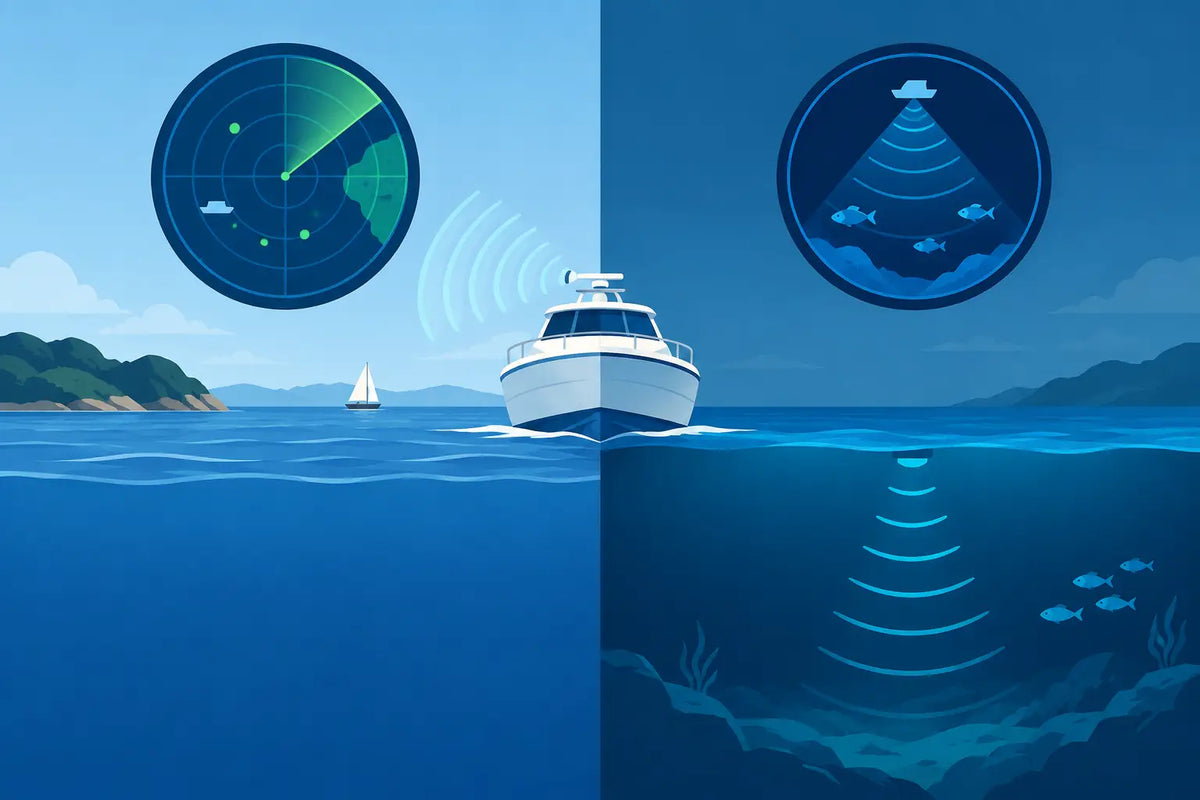
Radar uses radio waves to detect objects above the waterline. A radar antenna sends out pulses, then measures the reflections returning from objects such as shorelines, other vessels, channel markers, docks, bridges, and approaching weather. The result is a picture of surface conditions around your boat.
Sonar uses sound waves transmitted through the water. A transducer sends a signal downward, receives the echo, and turns that information into depth readings and images of the bottom, structure, fish, and sometimes objects in the water column.
Put simply, radar looks outward across the water. Sonar looks downward into it.
That distinction matters because the two systems solve different problems. If you are running home after sunset, crossing a broad bay in haze, or watching for boat traffic beyond visual range, radar can be a valuable awareness tool. If you are fishing a submerged point, checking depth as you enter a cove, or trying to avoid grounding near a shallow shoreline, sonar is the tool that provides useful information.
What Marine Radar Does Best
A marine radar can be especially helpful for boaters who spend time offshore, travel in low light, or operate in areas with changing weather and regular vessel traffic. On a chartplotter display, radar shows returns relative to your boat, often as colored or shaded targets. Modern systems can overlay radar information onto a chart, helping you compare what the radar sees with charted shorelines, aids to navigation, and your planned route.
Radar is most useful for situational awareness. It can help you identify a distant rain cell, verify the outline of land in reduced visibility, or spot larger boats and fixed objects that may be difficult to see. Features such as target tracking, guard zones, and motion trails can add useful context, particularly when you are monitoring traffic around an inlet or anchorage.
It does have limits. Small kayaks, floating debris, low-profile buoys, and vessels close to your boat may produce weak or inconsistent returns. Wave action and heavy rain can create clutter on the screen. Radar also requires proper installation, thoughtful adjustment, and practice before you need it. It is not a replacement for a proper lookout, safe speed, navigation lights, charts, or sound judgment.
For many owners, a compact dome radar is a practical choice. It typically suits cruising boats, center consoles, pontoons, and cabin boats where ease of installation and short-to-medium-range awareness are the priority. Open-array radar units may offer stronger performance at longer ranges, but they require more mounting space and are generally better suited to larger vessels.
When radar is worth prioritizing
Consider radar early in your electronics plan if you regularly boat before sunrise or after dark, navigate in fog-prone coastal waters, cross large lakes where weather can build fast, or travel through busy waterways. It can also bring welcome confidence to boaters who enjoy longer cruises and want another way to monitor their surroundings.
If your boating is mostly daytime cruising on familiar, open water with good visibility, radar may be less urgent than a reliable chartplotter, VHF radio, and depth-capable sonar. That does not make it unnecessary. It simply means its value depends on where and when you operate.
What Sonar Does Best
Sonar is the foundation of depth awareness and fish finding. At its simplest, it tells you how deep the water is beneath the boat. That reading alone is valuable when leaving a dock, following a winding creek, approaching a beach, or boating in areas where water levels change.
Traditional sonar also shows the contour and hardness of the bottom, along with fish arches or targets in the water column. Anglers use this information to locate bait, identify drop-offs, and understand how fish relate to structure. For families and cruisers, the same system can help confirm that there is adequate water beneath the boat as conditions change.
More advanced sonar technologies create clearer views of what lies below and to each side of your vessel. Down imaging can provide detailed, photo-like views of submerged structure directly beneath the boat. Side imaging scans outward to port and starboard, making it easier to locate standing timber, rocks, wrecks, weed lines, and fish-holding areas without passing directly over them.
The trade-off is that sonar is highly dependent on transducer selection and installation. A transducer must be positioned where it receives clean water flow. Improper placement can cause lost readings at speed, interference, or reduced image quality. Hull material, engine configuration, mounting location, and the speeds you typically run all influence what setup makes sense.
When sonar should come first
Most boaters benefit from sonar, even if fishing is not the main goal. A dependable depth reading is useful on nearly every recreational boat, from a kayak with a fish finder to a pontoon, center console, or cruising boat.
Sonar should be a high priority if you fish freshwater lakes, coastal flats, rivers, or nearshore reefs. It also deserves priority if you frequently launch in unfamiliar places, boat on shallow lakes, or need help understanding changing bottom contours. Just remember that sonar reports what is under or near the boat now. It cannot provide the broad, forward-looking surface view that radar delivers.
Choosing Radar, Sonar, or Both for Your Boat
Start with the questions that matter most: Where do you boat? What conditions do you encounter? How large is your boat? And what information would make you more comfortable at the helm?
A weekend angler on inland lakes may get the most immediate value from a chartplotter and a quality sonar package with the right transducer. A coastal cruiser who runs early mornings or returns through afternoon haze may find radar to be a meaningful addition. An owner who fishes offshore, cruises at night, or operates in varied conditions will often benefit from both.
Screen size is another practical consideration. Radar, charts, sonar, engine data, and camera feeds are much easier to use when the display is large enough to view without constantly switching pages. A smaller display may work well for a simple depth and chart setup, while a larger multifunction display can make a combined system more comfortable and useful.
Also consider the total installation, not just the display. Radar needs a secure mounting location with a clear view around the boat. Sonar needs an appropriate transducer and correct placement. Networking components, power requirements, heading sensors, radar mounts, and professional installation can all affect the final investment.
Do Not Treat Electronics as a Substitute for Safe Boating
Marine electronics can provide excellent information, but every screen has blind spots. Charts can be outdated, radar can miss small targets, and sonar only reports what its signal can reach. Conditions can also change faster than a display can explain them.
Continue to use a visual lookout, maintain a safe speed for the conditions, carry required safety equipment, and learn the navigation rules for your waters. If you are new to radar, spend time using it on clear days. Compare the screen with what you see around you, practice adjusting range and gain, and learn how your own boat appears in relation to nearby objects.
That practice turns a feature on a display into a tool you can trust when visibility is not perfect.
Build a Setup That Fits How You Enjoy the Water
The right choice is not necessarily the most complicated electronics package. It is the system that helps you leave the dock with more information and return with more confidence. A simple sonar-equipped chartplotter may be ideal for relaxed lake days and family fishing. Radar can add meaningful awareness for longer coastal runs, changing weather, and low-visibility travel. Together, they provide a more complete picture above and below the waterline.
When choosing higher-value boating electronics, knowledgeable guidance can be as valuable as the equipment itself. Open Air Lifestyles helps boaters compare quality options with real customer support before and after the sale, so you can spend less time second-guessing your setup and more time living your best outdoor life on the water.