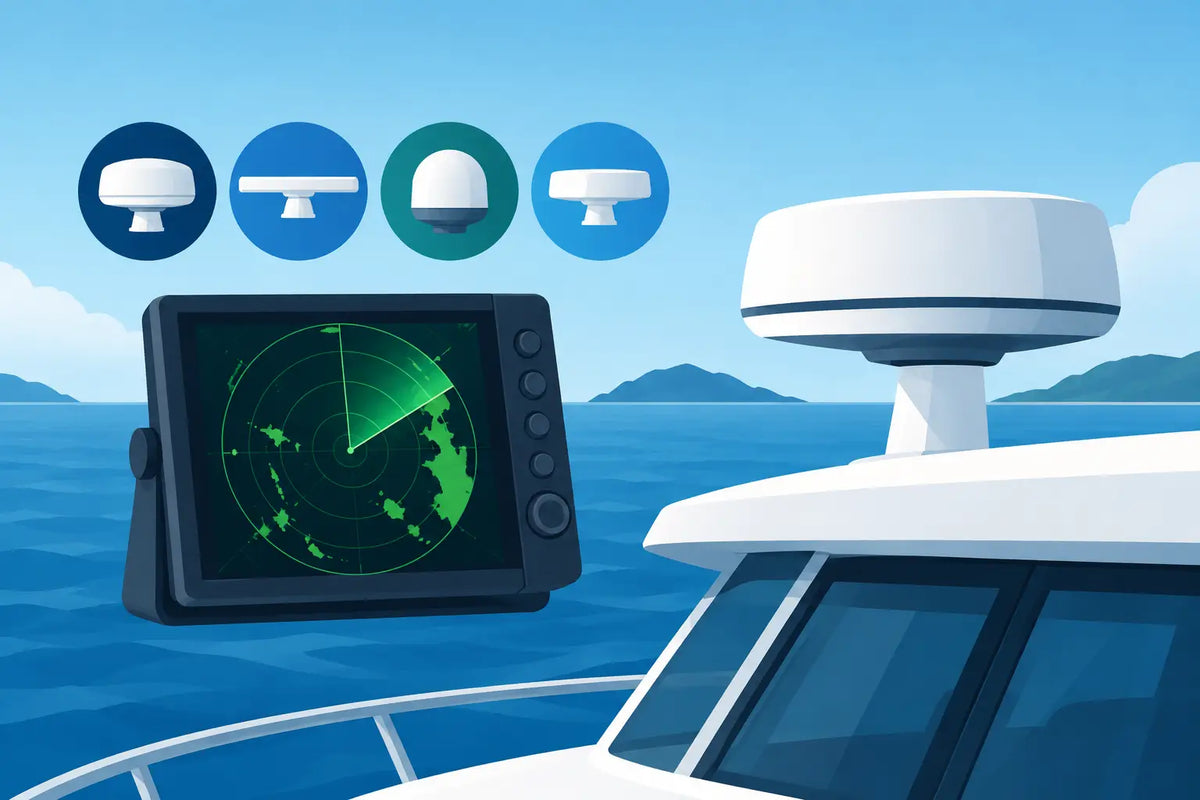
Marine Radar: How to Choose the Right System
A shoreline can disappear quickly in rain, haze, or the soft gray light before sunrise. When visibility drops, marine radar gives boaters another set of eyes - one that can identify land, channel markers, approaching vessels, and weather cells beyond the view from the helm. For anglers heading out early, cruisers returning after sunset, and anyone who values a more confident day on the water, it can be one of the most reassuring pieces of boating electronics aboard.
Radar is not a substitute for a proper lookout, sound signals, charts, or safe speed. It is a practical navigation aid that helps you make better-informed decisions when conditions are less than ideal. Choosing the right system starts with understanding how you boat, where you boat, and which features will actually make your time afloat easier.
What Marine Radar Can Help You See
A radar scanner sends out radio waves and displays the echoes that return from objects around your boat. Large, solid targets such as shorelines, islands, bridges, cargo vessels, and rain squalls usually produce clear returns. Smaller targets, including kayaks, buoys, sailboats, and floating debris, may be harder to detect depending on their size, construction, distance, sea state, and the radar’s settings.
That distinction matters. Radar is exceptionally useful for building situational awareness, but it should not be treated as a guarantee that every object will appear on screen. Rough water can create clutter, heavy rain can obscure targets, and an object hidden behind land or another vessel may not be visible.
Used well, radar helps answer practical questions: Is that dark shape ahead a rain shower or land? Is another boat moving toward your course? Where is the entrance to the harbor when the shoreline lights are difficult to separate? It gives the operator more information, which is especially valuable when paired with a compatible chartplotter, GPS, and AIS information.
Choosing Marine Radar for Your Boat
The best marine radar is not necessarily the model with the longest advertised range. A compact center-console used on inland lakes has different needs than a trawler making coastal passages or a sportfishing boat regularly running offshore. Start with the boat’s size, available mounting location, electrical system, helm display, and the conditions you expect to encounter.
Dome radar for compact, practical coverage
Radome units enclose the antenna inside a protective housing. They are a popular choice for smaller powerboats, pontoons, center-consoles, cabin boats, and many cruising vessels because they are compact, relatively easy to mount, and require less open space than an array antenna.
A dome radar often provides the range and target detail most recreational boaters need. Modern solid-state models also tend to start quickly, use less power, and offer useful features such as automatic target tracking and bird-finding modes. For a boater who wants dependable awareness on early-morning runs, foggy days, or trips home after dark, a radome is often the sensible fit.
Open-array radar for greater detail at distance
Open-array systems use a long, exposed rotating antenna. Their larger antenna size can deliver stronger target separation and more detailed performance at longer distances, making them a common choice for larger yachts, offshore fishing boats, commercial-style vessels, and serious passagemakers.
The trade-off is straightforward: open arrays require more mounting room, more careful installation, and typically a larger budget. They can be a worthwhile investment if you regularly navigate busy coastal waters, run offshore, or want the clearest possible distinction between distant targets. For occasional lake boating, their added capability may be more than you need.
Range Is About More Than the Number on the Box
Radar range ratings can be impressive, but maximum range is rarely the most useful measurement for a recreational boater. Most navigation decisions happen much closer to the vessel. A radar that provides clear returns at a few miles can be more valuable than one rated for many miles if the display is easy to interpret and the unit performs well in the conditions you actually encounter.
Antenna height is a major factor. Radar operates largely by line of sight, so a scanner mounted higher can see farther over the horizon and may avoid some interference from people, gear, or the boat’s structure. Height is not always better, however. The mount must be stable, properly supported, accessible for service, and positioned to avoid hazards from the rotating antenna.
Think about your typical use. If you boat on wide lakes or protected bays, reliable short- to mid-range awareness may be the priority. If you fish offshore, cross large bodies of water, or travel the coast in changing weather, longer-range capability and stronger target separation become more meaningful.
Features That Make Radar Easier to Use
Today’s systems are far more approachable than the radar displays many boaters remember. The most helpful features reduce setup time and make information easier to understand at a glance.
Solid-state radar is a strong option for many recreational boats. It typically powers up quickly, uses less energy than older magnetron-based designs, and can provide good close-range performance. Some solid-state models offer pulse compression, which helps improve target detail across a broader range of distances.
Automatic tuning and clutter controls can also make a real difference. Sea clutter is caused by waves reflecting the radar signal, while rain clutter comes from precipitation. A system that helps manage these returns can make it easier to identify meaningful targets without constant manual adjustment. Manual controls still matter, particularly for experienced boaters who want to fine-tune the display for changing conditions.
Target tracking can show a vessel’s course, speed, and closest point of approach after the radar has acquired it. This is valuable in busy waterways, but it requires careful interpretation. AIS complements radar by displaying information transmitted by equipped vessels, while radar can reveal non-AIS targets such as land, weather, and boats that are not transmitting. The two tools work best together rather than replacing one another.
Some anglers also appreciate bird-finding functions, which can help identify flocks associated with bait activity. That feature is useful offshore, but it should be considered a bonus, not the deciding factor in a purchase.
Installation Can Shape Performance
Even an excellent radar can disappoint when it is mounted poorly. The scanner needs a clear sweep around the boat with as few obstructions as possible. Masts, antennas, hardtops, outriggers, and other equipment can create blind sectors or unwanted reflections.
It should also be mounted where the rotating beam will not pose a safety concern to passengers. Follow the manufacturer’s clearance requirements, especially around people and other electronics. A properly sized radar arch, hardtop mount, or mast mount can make installation cleaner and more reliable.
Before selecting a unit, confirm compatibility with your existing multifunction display or chartplotter. Brand ecosystems, network connections, software versions, and cable requirements can affect what works together. This is one of the areas where speaking with a knowledgeable boating electronics specialist can prevent an expensive mismatch.
Learn the Display Before You Need It
Radar builds confidence only when the operator knows what the screen is showing. Spend time practicing on a clear day near familiar landmarks. Compare radar returns with what you can see outside the boat. Identify your marina entrance, fixed aids to navigation, nearby points of land, and vessels at known distances.
Then practice changing range scales and adjusting gain, sea clutter, and rain clutter. The goal is not to stare at the display constantly. It is to recognize what looks normal so that an unfamiliar return gets your attention when conditions change.
Keep the screen clean, update software when recommended by the manufacturer, inspect the mount and cable connections, and follow the service guidance for your specific model. A little routine attention protects a major investment and helps ensure the system is ready when you need it.
Buy for the Boating You Plan to Do
A marine radar purchase is easiest when it begins with a clear picture of your boat and your habits. Consider your mounting space, the display you already own, whether you cruise at night or in low visibility, and how often you travel beyond protected water. From there, choose the level of range, target detail, and automation that supports your real-world trips.
At Open Air Lifestyles, customers can get real customer support before and after the sale, along with the reassurance that comes from selecting quality equipment through authorized dealer relationships and manufacturer-backed warranty coverage. The right questions before ordering can make installation and ownership much simpler.
A well-chosen radar will not make poor conditions risk-free, but it can make the next decision at the helm feel calmer and more informed. Learn it in fair weather, respect its limits, and let it help you explore with confidence and ease - one more way to spend more time living your best outdoor life.