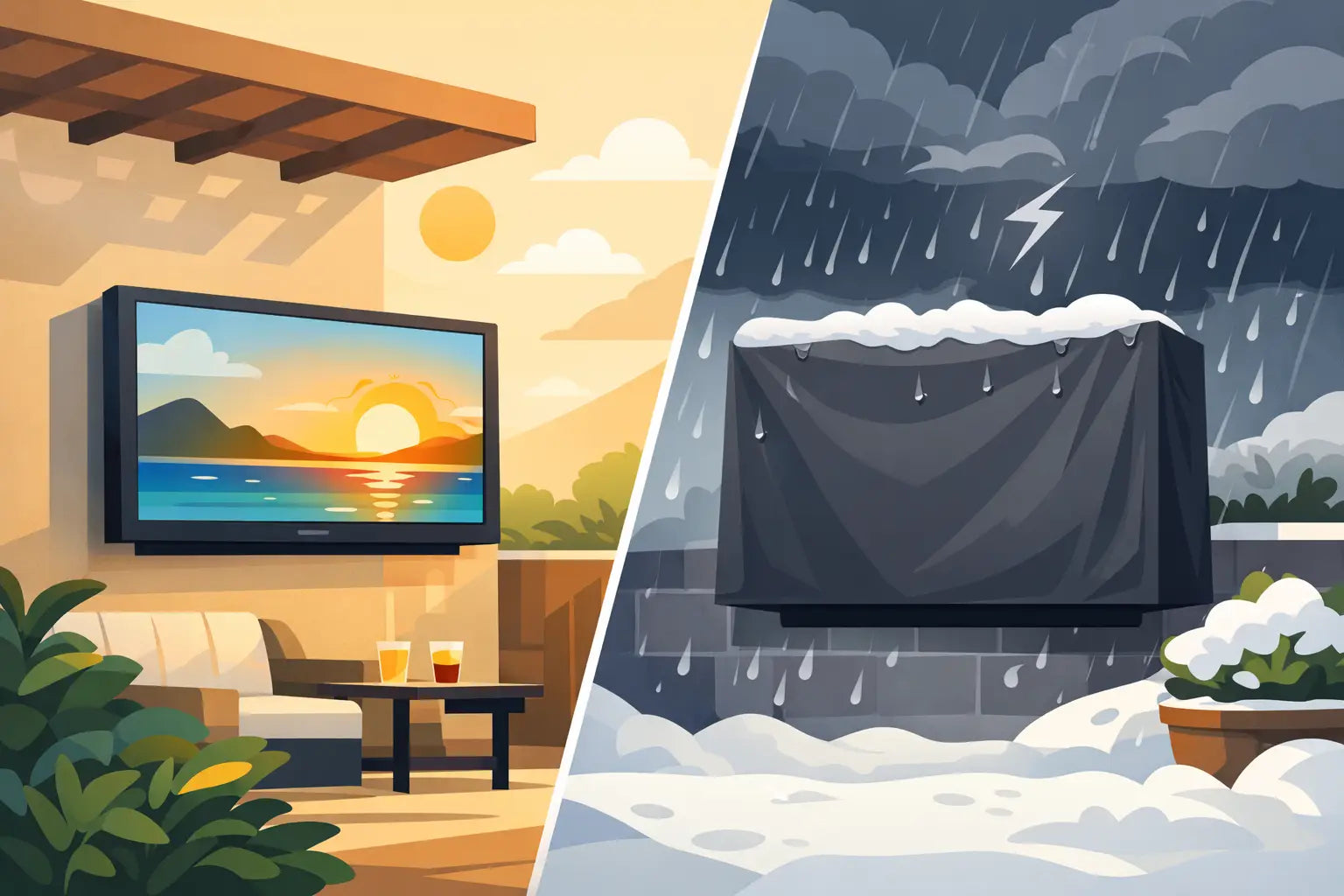
Do Outdoor Televisions Need Covers? The Real Answer
From covered patios to bright poolside entertaining areas, choosing the right outdoor television starts with understanding sun exposure, weather protection, and how you use your space. Explore outdoor TVs designed for real outdoor living and backed by real customer support.
👉 Browse Our Outdoor Televisions
A covered patio can be the best seat in the house until a sudden summer storm, blowing pollen, or a long stretch of winter weather raises one practical question: do outdoor televisions need covers? Usually, a cover is a smart extra layer of protection, but it is not a substitute for buying a TV designed for the environment where you plan to use it. In some situations, putting a cover on at the wrong time can even trap moisture where you do not want it.
The right answer depends on your TV’s outdoor rating, where it is installed, and how often you use the space. A well-chosen cover helps preserve the finish, keeps debris off the screen, and can make seasonal care easier. The key is using it thoughtfully.
Do Outdoor Televisions Need Covers in Every Setting?
Outdoor televisions are built differently from standard indoor TVs. Their cabinets, seals, connection areas, screens, and operating components are designed to better handle humidity, temperature swings, dust, and incidental moisture. That durability is precisely why an outdoor-rated model is the right choice for a patio, deck, pool area, porch, or outdoor kitchen.
Even so, “outdoor-rated” does not mean “maintenance-free.” Rain may not damage a properly rated television, but wind-driven dirt, tree sap, pollen, insects, bird droppings, and prolonged sun exposure can still make the exterior harder to clean and less attractive over time. A cover reduces that day-to-day exposure when the TV is not being used.
For a TV mounted in a fully exposed location, such as an uncovered patio wall or pergola with little protection from wind and rain, a cover is strongly recommended. For a TV on a screened porch or under a deep roof overhang, it is still useful, though the need is less urgent. In a protected three-season room, you may use a cover mainly during extended periods away from home or during the off-season.
A cover should be viewed as helpful insurance, not proof that an indoor television is suitable outside. An indoor TV covered with a tarp or fitted cover is still vulnerable to humidity, condensation, heat, insects, and temperature changes that outdoor models are engineered to manage.
What a Quality Outdoor TV Cover Actually Protects Against
The best covers protect the screen and cabinet from more than rainfall. They limit the grime that builds up during a windy week, reduce direct UV exposure to exterior surfaces, and help keep leaves, dust, and insects out of the areas around the mounting hardware and connections.
A properly fitted cover can be particularly valuable if your outdoor television sits near a grill, pool, lakefront, garden, or mature trees. Grease in the air from an outdoor kitchen, salt air in coastal regions, chlorine mist, and heavy pollen all create cleaning challenges. A cover will not eliminate those conditions, but it gives contaminants less opportunity to settle on the TV.
It also provides a measure of privacy and theft deterrence. While a cover will not secure the television, it makes the screen less visible from a distance and can draw less attention to the equipment when your home is vacant.
When a Cover Can Create Problems
The biggest concern with outdoor TV covers is trapped moisture. If you put a cover on immediately after a humid evening, a rainstorm, or a cleaning session, moisture may remain against the cabinet and screen. In warm, damp conditions, that can encourage mildew on the cover itself and leave water spots or condensation behind it.
Let the television and its mounting area dry before covering it. This matters most in humid regions, near pools, and at waterfront homes. If the TV has been running, allow it to cool down first as well. Covering a warm television can hold heat in longer than necessary.
Avoid generic plastic tarps. They tend to fit poorly, collect water, flap in the wind, and hold humidity against the set. They may also scratch the screen or finish if grit gets caught underneath. Choose a cover made for the size and shape of your television, preferably one with a soft interior and a design that allows limited airflow while still shedding water.
You should also never operate the TV while it is covered. Outdoor televisions need adequate ventilation, and a cover can block the airflow needed to manage heat. Remove the cover fully before turning the set on.
A Cover Cannot Fix a Poor Installation
An outdoor-rated TV deserves an outdoor-ready installation. The mounting surface should be stable, the mount should be rated for outdoor use, and cables and power connections should be protected according to local electrical requirements. A cover will not solve water entering an improperly protected outlet or connection box.
Placement matters, too. Even a weather-resistant television will last longer when it is not facing the harshest afternoon sun or taking the full force of prevailing wind and rain. If possible, mount it under an overhang, on a covered porch, or in a location with natural shade. This improves viewing comfort, helps control glare, and reduces unnecessary exposure.
Choosing the Right Cover for an Outdoor Television
Fit is more useful than extra bulk. Measure the television’s width, height, and depth, including any soundbar or mounting arrangement that the cover needs to accommodate. A cover that is too tight can strain seams and be difficult to remove. One that is too loose may blow around, collect water, or let dust enter from below.
Look for weather-resistant material, secure closures, and a soft lining that will not abrade the screen. Velcro straps, drawstrings, or buckles can help keep the cover in place during windy weather. A bottom opening or access panel can be convenient, but it should close securely when the TV is not in use.
Color is mostly a personal choice, although darker covers may show dust and pollen more readily. More important is regular inspection. Shake out leaves and debris, wipe down the outside of the cover, and allow it to dry thoroughly after heavy rain. A dirty, damp cover does not provide the same protection as a clean, dry one.
Seasonal Care Makes the Biggest Difference
If you enjoy outdoor football, movie nights, and family gatherings year-round, your TV may be uncovered frequently. That is perfectly reasonable. Simply cover it after use once the set is cool and dry, especially if storms, pollen, or extended downtime are expected.
For homeowners who use their outdoor space mainly from spring through fall, winter is the time to be more deliberate. Keep the TV covered, inspect the mount and connections periodically, and remove accumulated snow or ice from around the installation. Do not chip ice directly off the cabinet or screen. If your location sees severe winter weather, follow the manufacturer’s storage and operating temperature guidance.
Before the entertaining season starts again, clean the screen with a soft microfiber cloth and a cleaner approved for electronics. Check that the cover has not trapped debris, inspect cable connections, and confirm that the mount remains secure. These small habits protect a premium purchase and help ensure the TV is ready when friends or family arrive.
Is It Better to Remove the TV for Winter?
In most cases, no. A quality outdoor television is designed to remain installed outdoors within its specified environmental range. Removing a wall-mounted TV every season can introduce unnecessary handling risk and make it harder to maintain a secure installation.
There are exceptions. If a TV is installed in a temporary setup, stored at a seasonal property, or exposed to conditions beyond its manufacturer rating, bringing it indoors may be sensible. The owner’s manual is the final word on permitted operating and storage temperatures, as well as any maintenance practices that could affect warranty coverage.
A Simple Protection Routine
For most households, the best approach is straightforward: select an outdoor-rated TV for the location, install it correctly, keep it clean, and use a fitted cover whenever it will sit unused through bad weather or for more than a few days. Remove the cover before use, and never put it on while the set is hot or wet.
If you are choosing between outdoor TV models or planning a new patio installation, real product guidance can prevent costly mismatches between the television, the location, and the local climate. Open Air Lifestyles helps homeowners choose outdoor entertainment equipment with the confidence that comes from knowledgeable support and warranty-backed products.
Your outdoor TV should make it easier to linger on the porch, cheer through the game, or enjoy a quiet movie under the stars. A good cover is a small part of that experience, helping keep the equipment ready for the moments that make living your best outdoor life worthwhile.