How to Choose a Recreational eBike That Fits
Explore our collection of electric bikes designed for comfortable recreational riding, everyday adventures, and more time outdoors. Compare step-through, cruiser, commuter, and recreational models to find the right combination of comfort, range, and easy handling.
👉 Browse Our Electric Bikes Collection
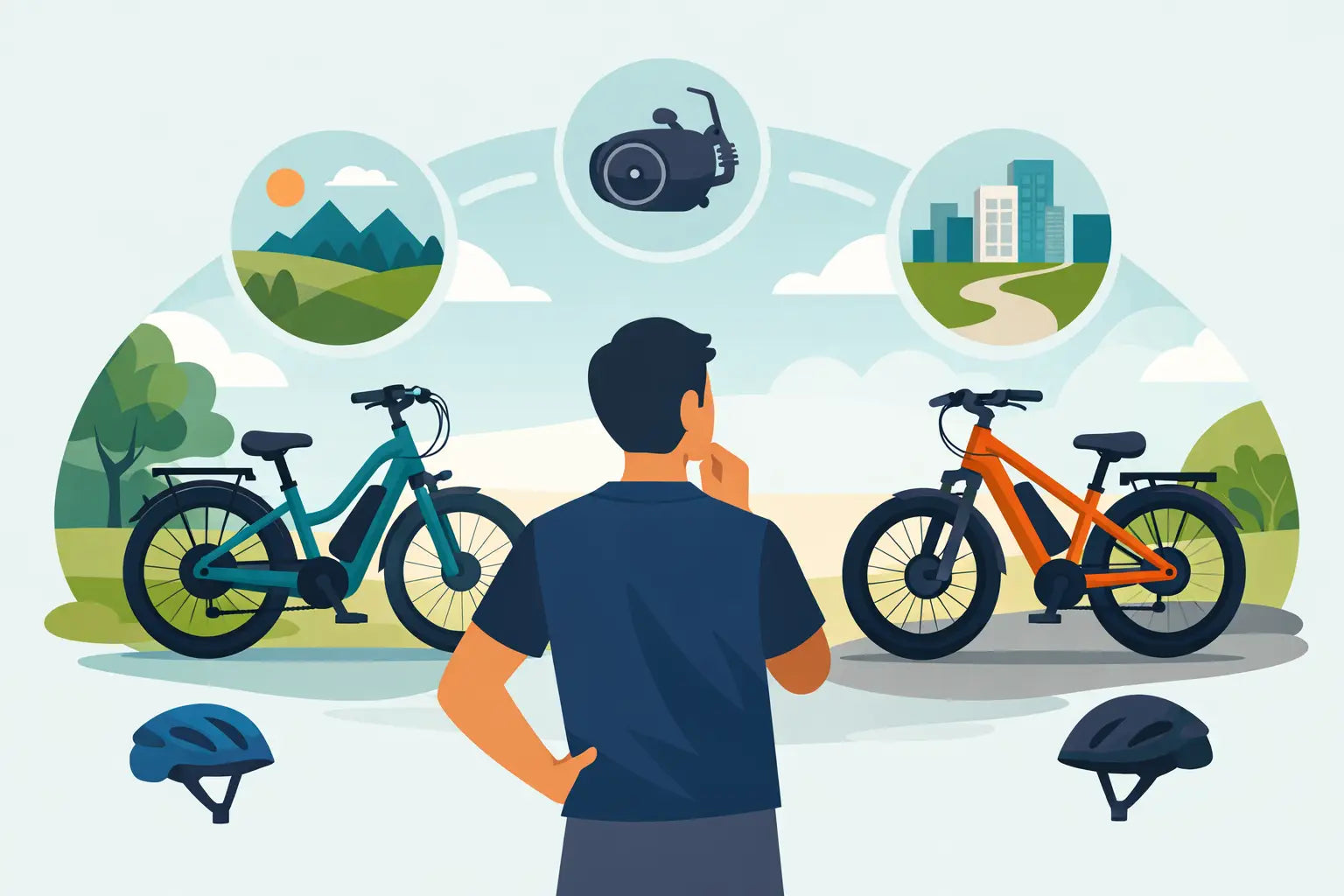
The right eBike can turn the ride to the coffee shop, the campground loop, or a favorite waterfront trail into the best part of the day. Learning how to choose a recreational ebike starts with a simple question: where do you want it to take you? For most leisure riders, comfort, confidence, and dependable everyday performance matter far more than racing speed or highly specialized components.
A recreational eBike should make getting outside feel easier, not more complicated. The best choice is one you can mount comfortably, handle with confidence, transport when needed, and enjoy often enough to make it a natural part of your outdoor routine.
Start With the Rides You Actually Plan to Take
It is tempting to shop by the biggest battery, highest motor wattage, or longest list of features. Those details matter, but your usual riding environment should lead the decision. Picture a normal Saturday morning, not an ambitious ride you might take once a year.
For paved neighborhood streets, bike paths, boardwalks, and rail trails, a comfortable commuter or cruiser-style eBike is often an excellent fit. These bikes typically favor an upright riding position, predictable handling, and practical features such as fenders, lights, and rear racks. They are well suited to riders who want fresh air, gentle exercise, and the freedom to cover more ground without arriving exhausted.
If your routes include packed gravel, uneven park paths, or country roads, consider a model with wider tires, a suspension fork, and stable geometry. Wider tires provide more comfort and traction, though they can add rolling resistance and weight. Riders who want to bring an eBike on RV trips, boating weekends, or vacations may prefer a folding model, provided its folded size and weight work for their vehicle and storage space.
True mountain eBikes are built for more demanding terrain. They can be a worthwhile choice for regular trail riders, but they are not automatically the best recreational option. Their aggressive riding position, specialized components, and higher price may not add much value on pavement and gentle trails.
How to Choose a Recreational eBike by Fit and Comfort
Fit is the feature you notice on every ride. A bike that looks great online can still feel awkward if the frame is too large, the handlebars place too much weight on your hands, or the saddle does not support your riding style.
Many recreational riders appreciate a step-through frame. With a lower opening between the seat and handlebars, it is easier to get on and off at stoplights, trail crossings, and parking areas. This design can be especially reassuring for riders with limited hip flexibility, knee concerns, or a preference for a more relaxed mount and dismount. Step-over frames remain a good option for riders who prefer their traditional feel or need a larger frame size.
Look for an upright or moderately upright position rather than a long, forward-leaning posture. You should be able to see ahead comfortably, reach the bars without straining, and place a foot down securely when stopped. Adjustable handlebars and seatposts can make a meaningful difference, but they cannot fully correct the wrong frame size.
Saddles are personal. A wide, well-cushioned saddle may feel welcoming on shorter, casual rides, while some riders find a firmer, properly shaped saddle more comfortable over longer distances. Suspension seatposts and front suspension can soften bumps, although they also add cost and some weight. If comfort is a priority, these are often worthwhile features to consider.
Choose Motor Assistance for Your Terrain, Not Your Ego
Recreational eBikes generally use either a hub motor or a mid-drive motor. Both can provide enjoyable, reliable assistance, but they feel different on the road.
Hub motors, positioned in the front or rear wheel, are common on recreational and cruiser eBikes. They are often quiet, smooth, and cost-effective. A rear hub motor can provide a gentle pushing sensation that many new riders find intuitive. For flat to moderately rolling terrain, a quality hub-motor eBike can be an excellent value.
Mid-drive motors sit near the pedals and work through the bike's drivetrain. They tend to feel more natural as you pedal and are particularly effective on frequent or steep hills. They are usually found on higher-priced bikes and can add complexity, but riders in hilly areas often appreciate their balanced handling and climbing ability.
Do not focus on wattage alone. Motor tuning, torque, rider weight, tire type, and hills all affect real-world performance. Instead, ask whether the bike can help you start smoothly, maintain a comfortable pace, and climb the inclines on your regular routes. A test ride, when available, tells you more than a specification sheet.
Pedal assist is the heart of the experience. Most recreational eBikes offer several assistance levels, allowing you to choose light support for exercise or stronger support when the wind picks up or the ride home is uphill. Some bikes also include a throttle. A throttle can be convenient for getting started from a stop or taking a short break from pedaling, but local rules may affect where and how it can be used.
Think About Battery Range in Real Life
Published range estimates are useful starting points, not promises. A battery advertised for 40 to 60 miles may deliver less range when riding into headwinds, climbing hills, carrying cargo, using high assist levels, or riding in cold weather. A lighter rider on flat pavement using low assist may go farther.
For many recreational riders, the practical goal is not the largest possible battery. It is having enough range to complete your favorite ride with a comfortable margin. If you usually ride 15 to 25 miles, a well-sized battery that can reliably cover that distance and leave reserve capacity may be more useful than a larger, heavier battery you rarely need.
Pay attention to charging convenience. Can you remove the battery and charge it indoors? Is there a secure, dry location near an outlet? Removable batteries are especially helpful for apartment dwellers, RV travelers, and anyone who stores the bike in a garage or shed without easy power access. Use the charger supplied by the manufacturer, and follow its guidance for storage and temperature.
Do Not Overlook Weight, Brakes, and Everyday Practicality
eBikes are heavier than conventional bicycles, often by a significant amount. That weight contributes to a planted, stable feel on the road, but it also matters when lifting the bike onto a vehicle rack, moving it through a garage, or carrying it up steps. Before buying, think honestly about how you will store and transport it.
A hitch-mounted rack rated for the bike's weight is often the simplest transportation solution. If you plan to use a folding eBike, confirm that you can comfortably lift and position its folded weight. There is no benefit in owning a travel-friendly bike that is difficult to load.
Reliable brakes are nonnegotiable. Hydraulic disc brakes usually offer strong, consistent stopping power with less hand effort, which is valuable on heavier eBikes and for riders who want added confidence on hills. Mechanical disc brakes can also perform well and may be easier for some local shops to service. Either way, brake quality and proper adjustment deserve more attention than flashy accessories.
Practical equipment can make the bike more enjoyable from the first ride. Integrated lights improve visibility, fenders keep road spray off clothing, a rear rack carries a small cooler or market bag, and puncture-resistant tires can reduce roadside frustrations. A sturdy lock, helmet, and mirror are smart additions for regular recreational use.
Buy for Long-Term Support, Not Just the Initial Price
An eBike is a transportation and recreation investment with electrical, mechanical, and battery components that may eventually need service. Buying from an authorized dealer gives you a clearer path to manufacturer warranty support, accurate product information, and assistance if questions arise after delivery.
Before deciding, review the warranty terms, battery coverage, replacement-part availability, and service options in your area. Ask whether the bike uses recognized components and whether a local bike shop is likely to work on it. The lowest price is not always the best value if it leaves you without support when you need a replacement charger, brake adjustment, or technical guidance.
At Open Air Lifestyles, real customer support is part of helping riders choose equipment they will enjoy for years. A knowledgeable conversation can help match frame style, motor type, range, and accessories to the way you want to ride.
Take a Confident First Ride
Once you have chosen your eBike, start in a quiet, open area and spend a few minutes learning the controls. Practice braking, shifting, starting with low pedal assist, and turning at slow speed before heading onto a busy trail. The extra weight and instant assistance can feel different at first, but most riders adapt quickly.
Choose a bike that invites you out the door on a sunny afternoon, makes the longer route feel possible, and leaves you smiling when you roll back home. That is what living your best outdoor life can look like - one comfortable, confidence-building ride at a time.