What Kayak Is Easiest to Use for Beginners?
Explore our collection of inflatable kayaks designed for stability, comfort, and easier days on the water. Whether you're new to kayaking or simply want something that's easier to transport, store, and enjoy, you'll find options for relaxed paddling, fishing, and exploring.
👉 Browse Our Inflatable Kayaks Collection
A kayak that feels easy on the first launch is rarely the narrowest, fastest, or most feature-packed model. For most new paddlers, the answer to what kayak is easiest to use is a stable recreational sit-on-top kayak with a comfortable seat, a simple cockpit area, and a manageable weight. It lets you focus on the water, your paddle stroke, and a good afternoon outside instead of worrying about tipping, getting in and out, or complicated adjustments.
The best choice still depends on where you paddle, how you will transport the kayak, and what makes you feel confident. A calm neighborhood lake, a slow-moving river, and a protected coastal bay can all be enjoyable places to begin, but they call for slightly different equipment. The right kayak should make getting on the water feel inviting, not like a strenuous project before the outing even starts.
What kayak is easiest to use on calm water?
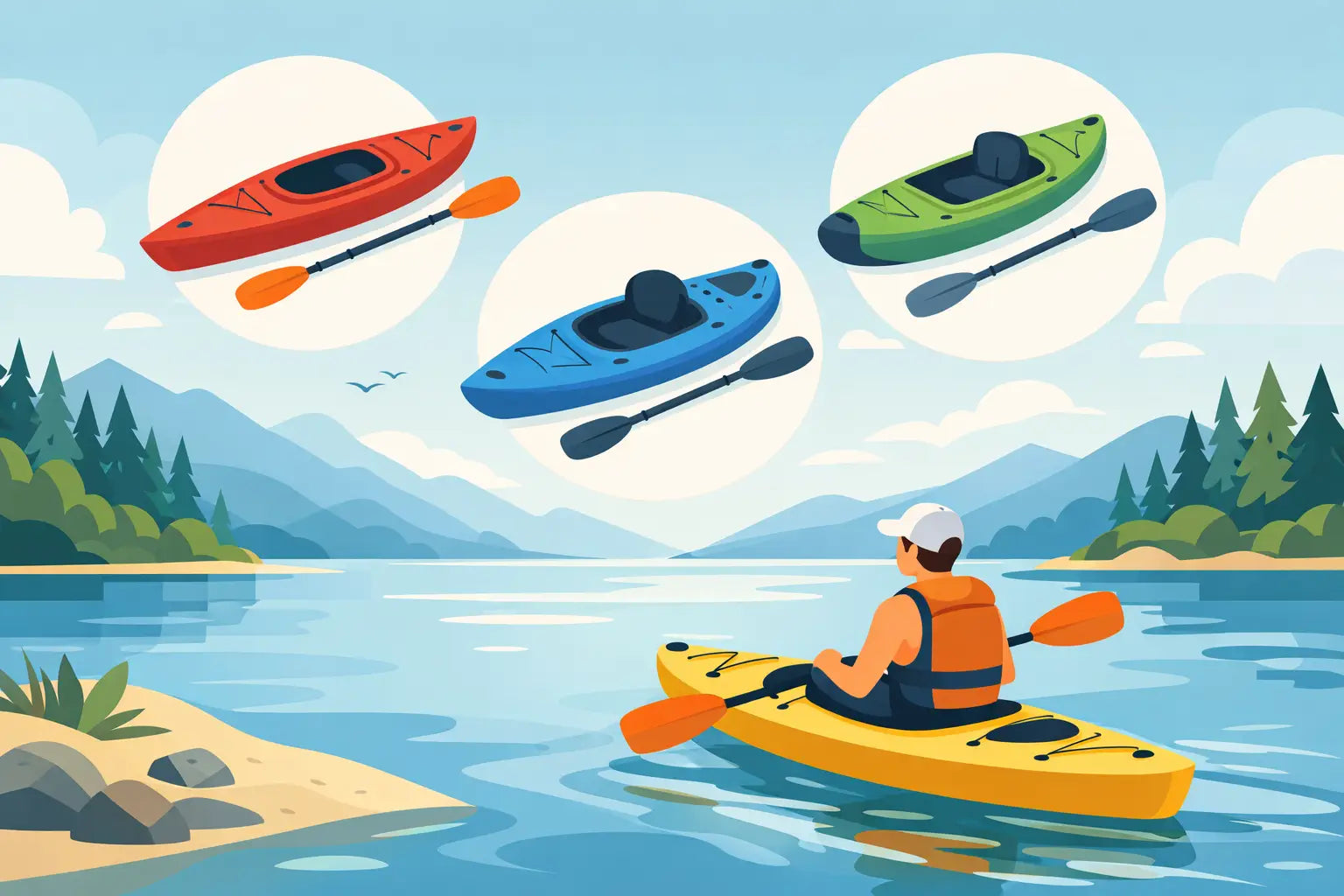
For many adults and first-time paddlers, a recreational sit-on-top kayak is the easiest overall design to use. These kayaks have an open deck rather than an enclosed cockpit. You sit in a molded or framed seat above the waterline, with your legs in front of you. Getting aboard from a dock, shoreline, or shallow water is straightforward, and stepping off at the end of the day is just as simple.
A sit-on-top is also reassuring because it does not feel confining. If water splashes onto the deck, it drains through small openings called scupper holes. If you do happen to fall in, reentering is generally easier than it is with a traditional enclosed kayak. That peace of mind matters, especially when you are learning balance and paddle control.
Look for a recreational model that is roughly 10 to 12 feet long and has a wide, steady hull. Width contributes to what paddlers call initial stability - the stable, planted feeling you notice when sitting still or moving slowly. A wide kayak will not be as quick as a narrow touring kayak, but it is much more forgiving while you build skills.
That said, “wide” should not mean oversized for your body. You should be able to reach the water comfortably with your paddle. A kayak that is too wide can make each stroke feel awkward and tiring, particularly for smaller paddlers.
Why inflatable kayaks can be the easiest choice
An inflatable kayak may be the easiest kayak to own if lifting, storage, or vehicle transport is the main obstacle. A quality inflatable can fit in a storage bag, travel in the trunk or back seat of many vehicles, and avoid the need for roof racks, a trailer, or a garage wall rack. For homeowners with limited storage and retirees who prefer not to lift a rigid boat overhead, that convenience can make a real difference.
Modern premium inflatables can feel surprisingly stable on flat water. Many have wide beam widths, supportive seats, and rigid floor designs that help them track better than basic pool-style inflatables. They are a practical choice for lakes, sheltered rivers, and relaxed family outings.
The trade-off is setup. You will need to inflate the kayak, secure the seat, and allow time for drying and packing it after use. A high-pressure hand pump can be a workout, although an electric pump can simplify the process. Inflatable kayaks are also typically slower and more affected by wind than comparable rigid models.
If your goal is casual paddling a few times each season and easy storage is essential, an inflatable is often the most approachable option. If you plan to paddle frequently and want the simplest launch-to-water routine, a lightweight rigid sit-on-top may be more satisfying over the long term.
Sit-on-top vs. sit-inside: which feels more comfortable?
A sit-inside recreational kayak is another beginner-friendly option, especially for quiet lakes and cooler mornings. In this design, your lower body sits inside an open cockpit. The hull can protect your legs from wind and spray, and the lower seating position can feel secure to some paddlers.
However, getting in and out takes a little more practice. You need to lower yourself into the cockpit, keep your balance, and swing your legs in or out without pushing the boat away from shore. A sit-inside kayak can also feel restrictive for anyone with limited hip or knee mobility, concerns about feeling enclosed, or a preference for changing position during the day.
For those reasons, sit-on-tops are usually easier for beginners who prioritize access and confidence. Sit-insides can be easier for someone who wants a lighter recreational boat, prefers a protected seating position, and will paddle mainly on calm, sheltered water. Neither design is automatically better. The easiest one is the model you can enter, exit, carry, and paddle without hesitation.
Features that make a kayak easier, not just fancier
Comfort affects how easy a kayak feels more than many new buyers expect. A supportive, adjustable seat with good back support can turn a 20-minute test paddle into a relaxed two-hour outing. Padded or adjustable foot braces are equally useful because they give your legs a stable point of contact and make efficient paddle strokes easier.
A few well-chosen features are worth prioritizing:
- A stable hull with enough capacity for your body weight, clothing, water, and gear
- A comfortable seat with adjustable back support
- Easy-to-reach side handles for carrying and launching
- A flat, uncluttered deck or roomy cockpit for getting in and out
- Secure storage for a small cooler, dry bag, phone, and personal items
Do not assume more accessories always mean an easier kayak. Fishing mounts, pedal drives, large storage systems, and advanced rudders can be excellent for specific uses, but they add weight, cost, and setup. A simple kayak that you use often is a better first purchase than a heavily equipped model that feels difficult to move or launch.
Weight may be the deciding factor
The easiest kayak to paddle is not necessarily the easiest kayak to transport. This is where many buyers benefit from slowing down before making a decision. A 65-pound kayak may feel very stable on the water, but it can be a challenge to load alone, carry across a parking area, or lift onto a vehicle rack.
Before choosing, think through the complete outing. Where will the kayak live? Can you roll it from storage to the vehicle? Will you launch from a dock, a sandy shoreline, or a steep ramp? Are you paddling alone, or will someone reliably help with loading?
A lighter kayak can reduce the friction that keeps people from going out. If you love the idea of spontaneous early-morning lake paddles, a boat you can manage independently is often the best investment. Kayak carts can help tremendously on longer walks to the water, but they do not eliminate the need to lift the kayak on and off a vehicle.
Choose for your water, not just the showroom
A stable recreational kayak is designed for protected water, not challenging open-water conditions. Wind can build quickly on large lakes and bays, and a current can make a quiet-looking river more demanding than expected. Beginners should start close to shore, watch the forecast, and avoid paddling alone whenever possible.
For sheltered lakes and slow rivers, a 10- to 12-foot sit-on-top or inflatable recreational kayak is usually an excellent match. For coastal paddling, larger open lakes, or destinations where wind and waves are common, you may need a longer, more capable kayak and additional skills. In those settings, “easy” means choosing equipment that has the right safety margin for the conditions, not simply choosing the widest boat.
Always wear a properly fitted U.S. Coast Guard-approved personal flotation device. Keep it on while paddling rather than stowing it behind the seat. A whistle, water, sun protection, and a dry bag for essentials are small additions that make a first outing safer and more comfortable.
A practical first-kayak recommendation
If you want the clearest answer, start with a stable, lightweight-to-moderate-weight recreational sit-on-top kayak with an adjustable seat. Choose a length that is easy to handle, enough capacity for you and your gear, and a hull built for the calm water you plan to enjoy most often. If storage and lifting are your biggest concerns, choose a quality inflatable recreational kayak instead.
A knowledgeable outdoor retailer can help confirm fit, capacity, transport needs, and the features that matter for your plans. At Open Air Lifestyles, real customer support can help take the guesswork out of a higher-value purchase, so you can choose with confidence and spend more time Living Your Best Outdoor Life.
The best first kayak is the one that makes you look at a clear morning, a quiet shoreline, or a free afternoon and think, “I can get out there today.”