Inflatable Kayak vs Hard Shell: Which Is Best?
Explore our collection of inflatable, recreational, fishing, and tandem kayaks designed for convenient transport, dependable performance, and enjoyable days on the water. As an authorized dealer, Open Air Lifestyles offers trusted brands backed by knowledgeable customer support to help you choose the kayak that best fits your storage, transportation, comfort, and paddling goals.
A kayak can turn a quiet morning on the lake, a fishing trip, or a day exploring a sheltered coastal inlet into a favorite part of your routine. But the inflatable kayak vs hard shell decision changes more than how your boat looks on the water. It affects where you store it, how you transport it, how quickly you can launch, and how it feels with every paddle stroke.
For many active adults and homeowners, there is no universally better choice. The right kayak is the one that makes it easier to go. A hard shell may reward the paddler who has room for a rack and wants crisp performance. A quality inflatable can be the clear winner for someone who lives in a condo, travels in an SUV, or wants a boat that is ready when the opportunity arises.
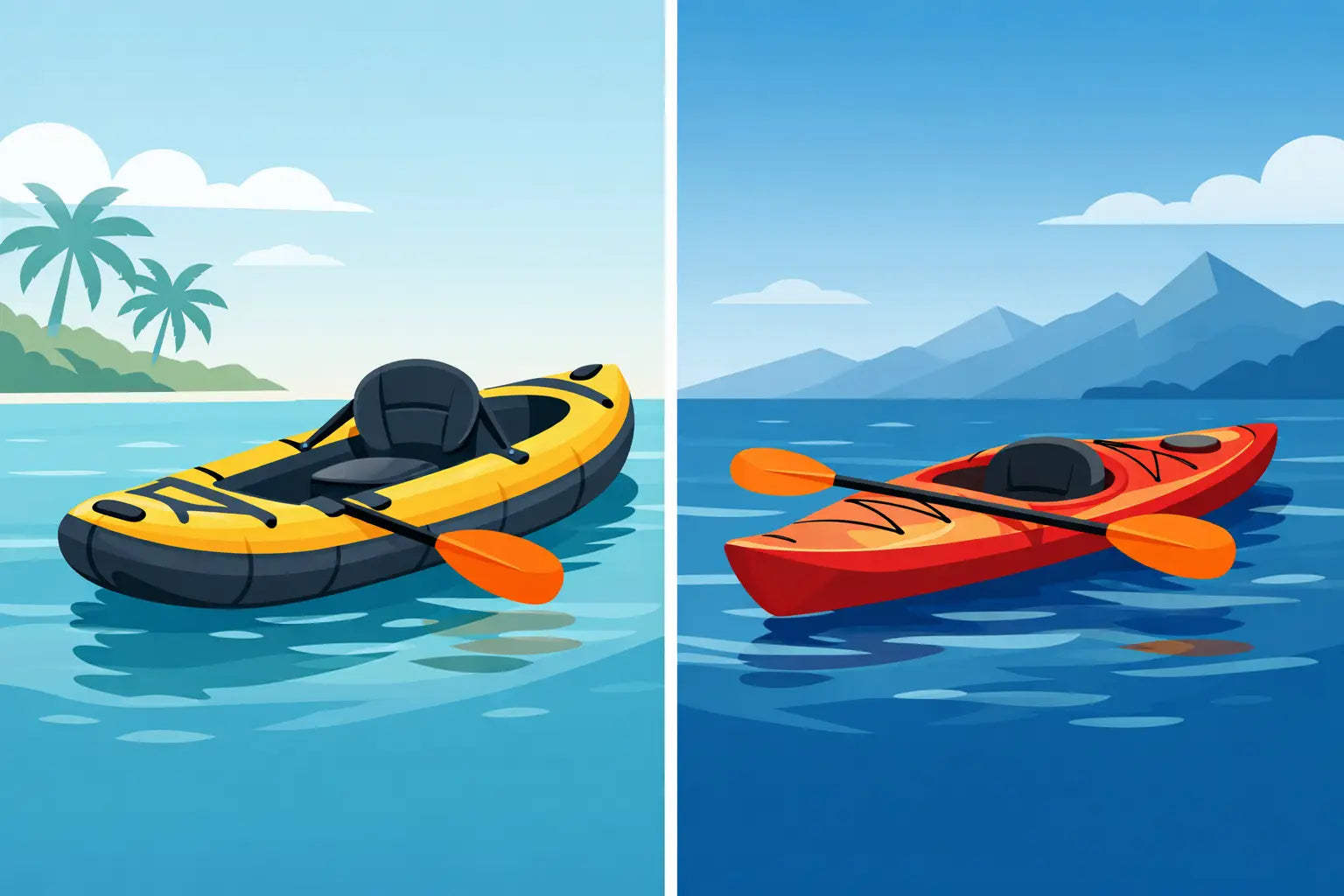
Inflatable Kayak vs Hard Shell: The Core Difference
Hard-shell kayaks have a rigid hull, typically made from rotomolded polyethylene, composite materials, or thermoformed plastic. Their fixed shape gives them a direct, responsive feel on the water. They are available in recreational, touring, fishing, whitewater, and sit-on-top designs, with specialized hulls for specific conditions.
Inflatable kayaks use multiple air chambers and durable reinforced fabrics to create their structure. Premium models are far removed from the soft pool toys some people picture. Many use high-pressure drop-stitch floors, rigid or semi-rigid panels, and shaped bows and sterns that improve tracking and stability. When deflated, they fit into a carrying bag that can be stored in a closet, vehicle trunk, or garage corner.
That distinction leads to the main trade-off: hard shells generally deliver more immediate speed and precision, while inflatables offer unmatched convenience and portability.
Storage and Transportation Often Make the Decision
A hard shell is simple to use once it is at the water. Load it onto a roof rack, trailer, or truck bed, secure it properly, and it is ready to launch. For homeowners with garage space and a vehicle equipped to carry a kayak, that routine can be very manageable.
The challenge is what happens between paddling days. A 10- to 14-foot kayak needs a protected place to live, and lifting it overhead or onto a vehicle can become the biggest barrier to getting out. Even a relatively light recreational kayak can feel awkward when you are handling it alone in wind or around a tall SUV.
An inflatable kayak removes much of that friction. It can ride in the back of a car, travel in an RV, or come along on a trip without a roof rack. For couples, retirees, apartment dwellers, and anyone who does not want to wrestle a full-size boat into storage, this convenience is meaningful. The best kayak is not necessarily the fastest one. It is often the one you will use most often.
Inflation does require a little planning. Depending on the model and pump, setup can take roughly 5 to 15 minutes, plus a few minutes to dry and pack the boat after use. An electric pump with an automatic shutoff can make that process much easier, though most boaters still appreciate having a manual pump as a backup.
Performance on the Water
Hard shells have a natural advantage in efficiency. Their rigid hulls hold their designed shape, which generally helps them glide farther with each stroke. They respond quickly to edging and steering input, and touring-oriented models often track well over longer distances. If your idea of a great outing includes covering miles, paddling in wind, or developing your technique, a hard shell is likely to feel more satisfying.
Inflatable kayaks have improved dramatically, especially in the premium category. A well-designed model with a high-pressure floor and removable fin can track smoothly on lakes, slow-moving rivers, and protected bays. Wider inflatable hulls are also reassuringly stable, which is valuable for relaxed sightseeing, casual fishing, bringing a dog, or simply building confidence as a newer paddler.
Still, the water conditions matter. Inflatables can be more affected by wind because they tend to sit higher on the water. They may also feel less precise when turning or paddling hard. That does not make them unsuitable for adventure. It simply means they are best matched to the waterways and pace you actually enjoy.
For calm lakes and easy rivers
Both types work well. Choose an inflatable if easy transport and storage are your priorities. Choose a hard shell if you want a more traditional paddling feel and expect to go out frequently from the same location.
For longer tours and open water
A hard shell, particularly a touring kayak with appropriate safety features, is usually the stronger choice. Its efficiency, lower profile, and control in variable conditions are valuable when distances increase. Paddlers should always select a boat suitable for the water, weather, and their experience level.
For fishing and relaxed recreation
Either can work, but stability and usable deck space matter more than outright speed. Inflatable fishing kayaks can be exceptionally comfortable and easy to transport. Hard-shell fishing kayaks offer more options for mounting accessories and often provide a firmer platform for standing, depending on the model.
Durability Is More Nuanced Than It Seems
Hard-shell kayaks are tough. Polyethylene boats tolerate routine contact with docks, beaches, and shallow launches very well. They can, however, scratch, fade from prolonged sun exposure, deform if stored incorrectly in extreme heat, and require more space to protect from the elements.
Quality inflatables are built with abrasion-resistant materials and separate air chambers, so a problem in one chamber does not necessarily leave you without flotation. They handle normal lake and river use well, but they are not invincible. Sharp hooks, exposed nails, jagged rocks, and careless dragging can damage the outer material. Proper inflation pressure also matters. Underinflation can make the kayak feel sluggish, while overinflation in hot sun can put unnecessary stress on the seams.
With either type, rinse away sand, mud, and saltwater after use. Let an inflatable dry thoroughly before long-term storage to help prevent mildew. Keep a repair kit onboard or in your vehicle, and inspect valves, seams, handles, and hull surfaces before a trip.
Comfort, Capacity, and Getting In and Out
Comfort is where buyers should look beyond the boat category and study the details. A supportive, adjustable seat can make a bigger difference on a two-hour outing than a small difference in hull speed. Taller paddlers should check cockpit length, legroom, and seat positioning. Larger paddlers should pay close attention to the manufacturer’s capacity rating, leaving room for water, safety equipment, and fishing gear rather than treating the stated maximum as a target.
Inflatable kayaks often have wide, open interiors that make entry and exit easier. This can be especially appealing for paddlers who prefer not to slide into a tight cockpit. Many also have adjustable seating positions that work well for solo use, tandem outings, or carrying a cooler and gear.
Hard shells range from open sit-on-top designs to snug enclosed cockpits. A sit-on-top can be convenient for warm-weather recreation and easy re-entry after a swim. An enclosed recreational or touring kayak offers more protection from splashes and wind, but it should fit properly and feel comfortable before you commit.
Cost and Long-Term Value
Entry-level options exist in both categories, but a lower price should not be the only deciding factor. For an inflatable, look for dependable valves, strong seams, a capable pump, a comfortable seat, and a warranty from a recognized manufacturer. For a hard shell, consider hull design, weight, seating, storage hatches, carry handles, and the real cost of transportation accessories if you need them.
A premium inflatable may cost more than a basic hard-shell kayak, yet be the better value if it eliminates the need for a roof rack or makes travel possible. Conversely, a hard shell can be an excellent long-term investment for the dedicated local paddler who values performance and has an easy way to transport and store it.
Buying from an authorized dealer adds confidence with higher-ticket equipment. Clear warranty support, product knowledge, and real customer assistance can be especially helpful when you are comparing capacities, accessories, or the features that will make your boat more enjoyable over time.
Choose the Kayak That Removes Obstacles
Choose an inflatable kayak if portability, compact storage, travel flexibility, and easy access to calm water are at the top of your list. Choose a hard shell if you have reliable storage and transportation, want the most responsive paddling experience, or plan to cover longer distances in changing conditions.
Before purchasing, picture your entire outing: loading the boat, carrying it to the launch, getting comfortable in the seat, paddling your preferred water, and putting everything away afterward. That honest picture usually provides a clearer answer than any specification sheet. At Open Air Lifestyles, the goal is simple: help you explore with confidence and ease, so more of your time is spent Living Your Best Outdoor Life on the water.