Pedal Assist Versus Throttle for E-Bike Riders
Explore electric bikes with pedal assist, throttle control, and rider-friendly features designed for comfortable neighborhood rides, longer adventures, errands, and everyday outdoor enjoyment.
A quiet neighborhood hill, a breezy rail trail, a quick ride to the farmers market - these are the moments when the pedal assist versus throttle decision becomes more than a spec-sheet detail. The right e-bike should make getting outside feel easier and more enjoyable while still matching the way you naturally want to ride.
Both systems use an electric motor to reduce effort, but they deliver power differently. One encourages a traditional cycling feel with helpful assistance; the other offers power at the push or twist of a control. Understanding that distinction can help you choose an e-bike that supports your comfort, confidence, and favorite kind of adventure.
Pedal Assist Versus Throttle: The Core Difference
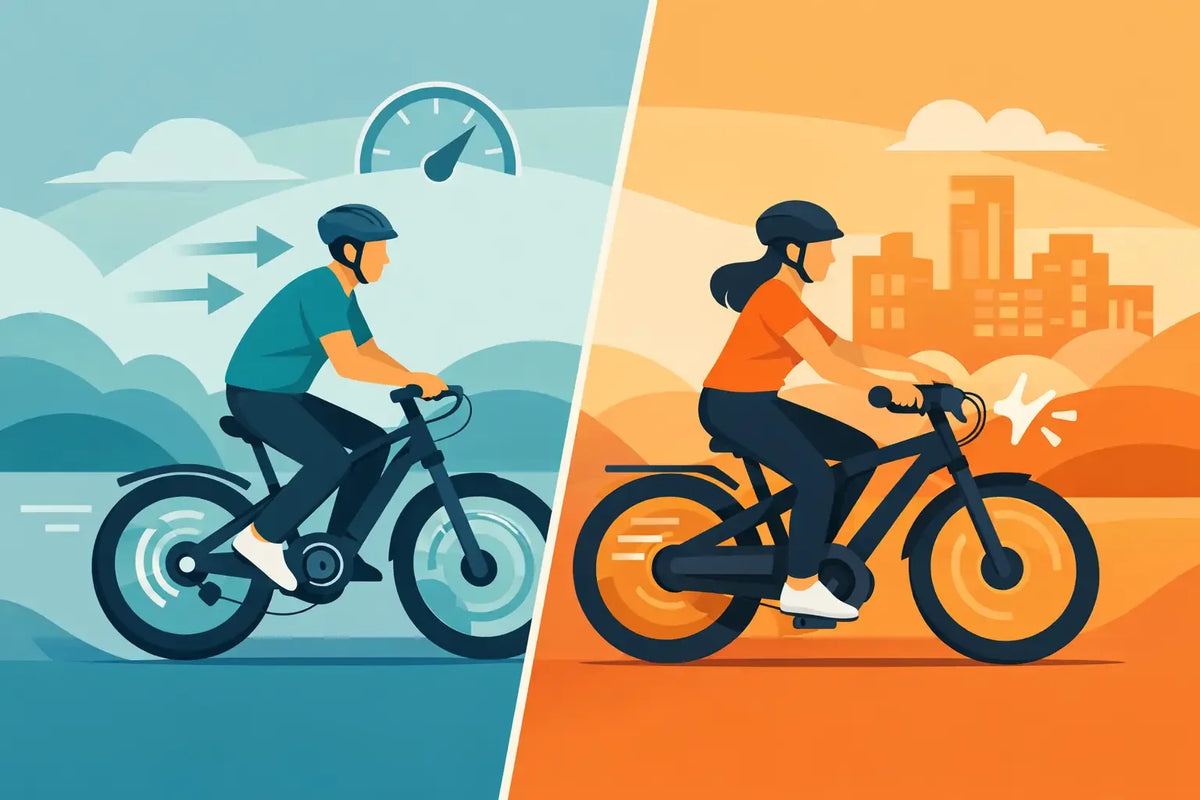
Pedal assist, often called PAS, provides motor power only while you are pedaling. Sensors recognize your pedal movement and tell the motor to add assistance. Depending on the e-bike, you can select a lower setting for a more active ride or a higher setting when you want extra help into a headwind, up a hill, or toward the end of a longer outing.
A throttle provides motor power without pedaling. It is commonly operated with a thumb lever, twist grip, or small handlebar control. Press it, and the bike moves forward. On many e-bikes, the throttle can help from a stop, offer a quick boost on an incline, or let you coast along briefly when your legs need a break.
Many riders assume they must choose one system or the other. In fact, plenty of e-bikes include both pedal assist and a throttle. The question is less about which feature is universally better and more about which one will help you enjoy your rides with confidence and ease.
Why Pedal Assist Feels More Like Cycling
For riders who enjoy the rhythm of pedaling, pedal assist is usually the natural fit. You are still turning the pedals and participating in the ride, but the motor makes each stroke go farther. It can be especially appealing for active adults who want to stay moving without letting steep grades, longer distances, or tired legs limit where they can go.
Pedal-assist systems vary in how they respond. A cadence sensor detects whether the pedals are turning and then supplies power. This design is straightforward and often feels generous at lower effort levels, though there can be a slight delay before assistance begins.
A torque sensor measures how firmly you are pedaling. Push gently and receive gentle help; push harder and get more power. Many experienced riders appreciate this smooth, intuitive response because it closely resembles riding a conventional bicycle, just with stronger legs.
Pedal assist also tends to make battery use more predictable. Because you are contributing some of the effort, you may be able to stretch range farther than you would by relying heavily on a throttle. Actual range still depends on rider weight, terrain, tire pressure, wind, cargo, assist level, and battery capacity, so published range estimates should always be treated as helpful benchmarks rather than guarantees.
When a Throttle Makes the Ride Easier
A throttle is about convenience, control, and reassurance. It can be particularly helpful when pulling away from a stop sign, crossing an intersection, or starting on an uphill grade. Rather than needing a strong first pedal stroke, you can bring the bike up to speed before settling into a comfortable cadence.
For riders with knee discomfort, reduced stamina, or occasional balance concerns at low speeds, that gentle launch assistance can be meaningful. A throttle is not a substitute for choosing the right frame size, saddle, handlebar position, and braking system, but it can make an e-bike feel less demanding in everyday situations.
It is also handy when you are carrying a few groceries, a small cooler, or other gear. Extra weight makes starts more difficult, especially on a sloped driveway or packed campground lane. A brief throttle boost can help the bike get moving smoothly.
There are trade-offs. Frequent throttle-only riding typically uses the battery more quickly than pedaling with moderate assistance. It can also feel less like a bicycle workout, which may matter if staying active is part of why you want an e-bike. Some riders love having a throttle available but use it only for starts, hills, and moments when they need relief.
Think About Where You Will Ride
Your usual route should guide the decision. For paved bike paths, scenic rail trails, and neighborhood fitness rides, pedal assist may be all you need. It keeps the experience active while making distance and rolling terrain more approachable.
For errands around town, rides that involve frequent stops, or areas with steep driveways and hills, a throttle can add real convenience. Riders who plan to share an e-bike with a spouse, family member, or visiting friend may also appreciate the flexibility of a bike with both options. Different people can choose the level of effort that feels right for them.
Trail access and local regulations deserve attention as well. In the United States, many e-bikes are grouped into three classes. Class 1 models provide pedal assistance up to 20 mph and have no throttle. Class 2 models can provide throttle-assisted power up to 20 mph. Class 3 models are generally pedal-assist bikes that assist up to 28 mph, though details can vary by state and local rule.
A path, park, trail manager, or community may set its own e-bike access policies, even where state law permits a particular class. Before buying for a specific destination, check the rules for the places you expect to ride. This is particularly worthwhile for multiuse trails, state parks, beach communities, and managed trail systems.
Comfort Matters More Than the Motor Control Alone
It is easy to focus on pedal assist and throttle features while overlooking the rest of the bike. Yet long-term comfort often comes down to fit and practical design. A step-through frame can make mounting and dismounting easier. Wider tires may add confidence on uneven pavement or crushed gravel. An upright riding position can reduce strain on your wrists, shoulders, and back.
Consider how you will store and transport the bike, too. E-bikes are heavier than traditional bikes because of their motor and battery. If you need to lift one onto a vehicle rack, bring it up steps, or fit it into a compact storage area, weight and frame design should be part of the conversation from the beginning.
Reliable brakes, a battery from an established manufacturer, clear controls, and dealer-backed warranty coverage are equally worth considering. A premium e-bike is an investment in more comfortable outdoor time, so support after the purchase matters. Buying from an authorized dealer gives you a clearer path for manufacturer warranty service and knowledgeable answers when questions arise.
How to Choose With Confidence
Start by picturing a typical ride, not an idealized one. Are you pedaling along a waterfront trail for an hour? Heading three miles to lunch? Navigating hills around your neighborhood? Carrying gear to the marina or campground? Your honest answer will point toward the features that will serve you best.
Choose pedal assist if you want the most bicycle-like experience and expect pedaling to be part of nearly every ride. Consider a throttle if easy starts, occasional no-pedal power, or extra help on difficult days would make you more likely to ride. Choose both if you value flexibility and want an e-bike that can adapt to errands, leisure rides, hills, and changing energy levels.
A good e-bike does not pressure you to ride harder than you want. It gives you the freedom to take the long way home, say yes to one more mile, and spend more time enjoying the outdoors. With the right guidance and a bike that fits your needs, you can keep Living Your Best Outdoor Life one comfortable ride at a time.