How to Choose a Patio Television for Your Space
Explore outdoor televisions designed for covered patios, partial-sun spaces, and brighter outdoor areas. Compare screen sizes, brightness levels, weather protection, and features to find the TV that fits your space and the way you enjoy it.
A great patio television can turn a quiet evening outside into movie night, make game day feel like a true gathering, or give you a comfortable way to follow the news while enjoying the fresh air. But learning how to choose a patio television means looking beyond screen size and price. Outdoor light, changing temperatures, moisture, installation, and viewing distance all shape whether your investment delivers years of easy enjoyment.
Start With Where the TV Will Live
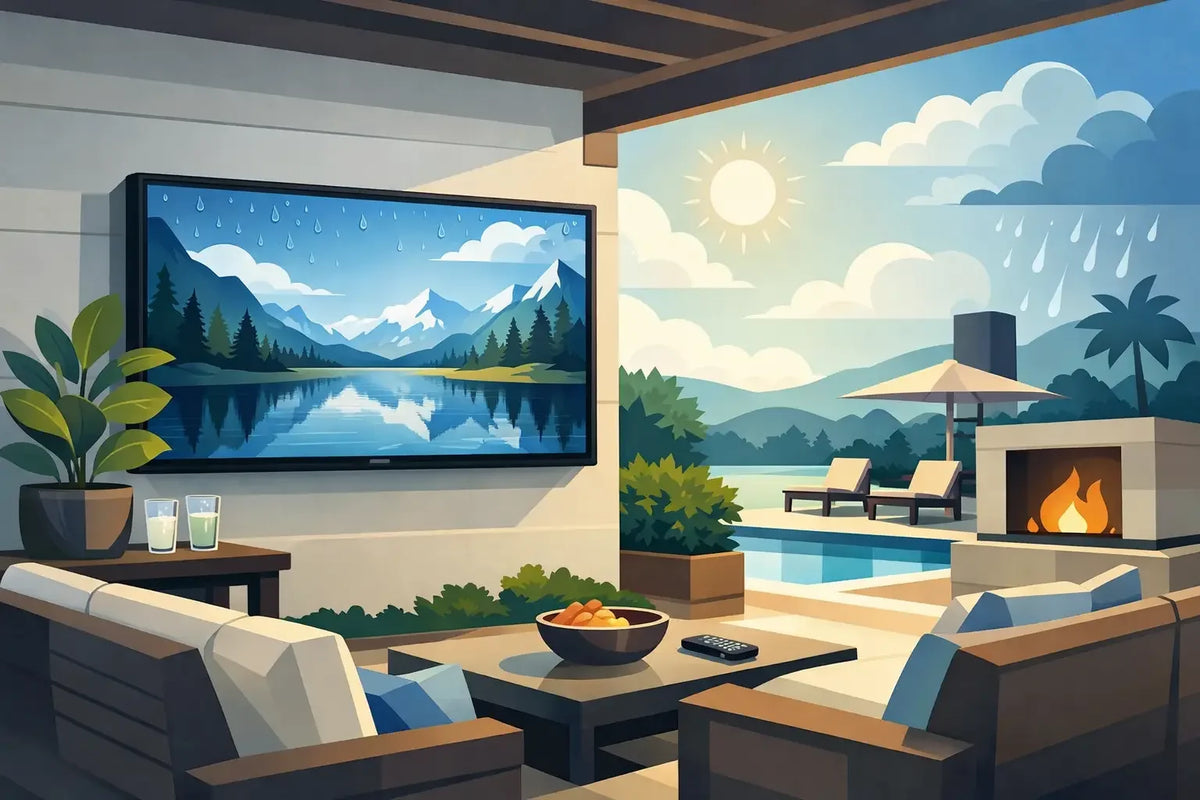
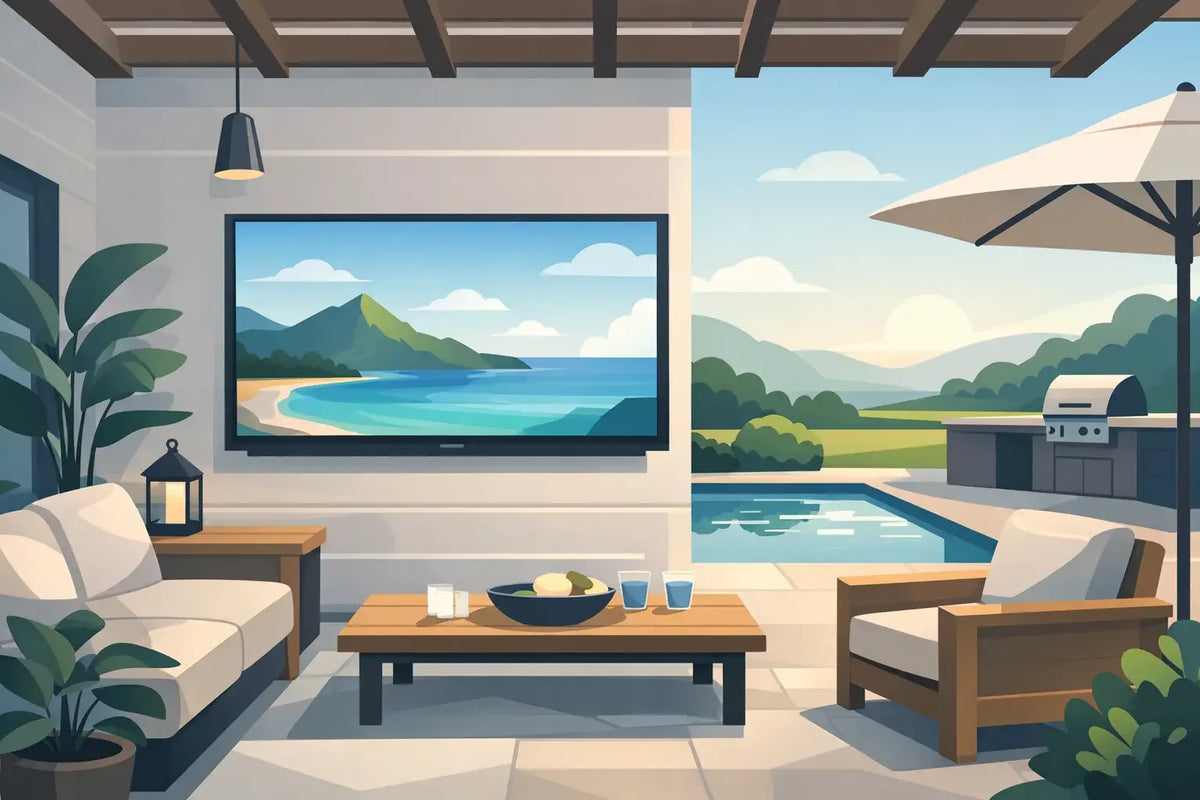
The first decision is not which television you like best. It is where it will be installed. A covered porch, open patio, poolside lounge, outdoor kitchen, and screened-in lanai may all be outdoors, but they create very different conditions for a television.
Think about rain exposure, wind-driven moisture, direct sunlight, heat, cold, dust, insects, and salt air if you live near the coast. A television mounted under a deep roof overhang has more protection than one on an uncovered deck, but it can still face humidity, condensation, pollen, and temperature swings that an indoor TV was never designed to handle.
Outdoor televisions are built with weather-resistant enclosures, protected connections, and operating ranges suited to outdoor conditions. Their durability is a major reason they cost more than an indoor model. For a permanent patio installation, that added protection is often the better long-term value than replacing a standard TV after a season or two.
Choose the Right Weather Rating
Look for an outdoor TV designed for the conditions in your specific location. Many models are intended for fully shaded or partially shaded areas, while others are engineered for brighter, more exposed spaces. The right choice depends on how much direct sun and precipitation the screen will receive.
If your patio is enclosed on three sides with a roof overhead, a shaded outdoor television may be appropriate. If the screen will sit near a pool, on an open deck, or where afternoon storms can blow through, choose a model with stronger all-weather protection. Coastal homeowners should also consider products designed to stand up better to salt air and corrosion.
Do not assume a weatherproof cover turns an indoor television into an outdoor one. Covers are useful for keeping dust and debris off a properly rated outdoor TV, but they cannot fully solve the heat, moisture, and ventilation concerns of an indoor model.
Match Brightness to Your Patio Light
Brightness is one of the most overlooked parts of how to choose a patio television. A large screen is not very enjoyable if it looks washed out whenever the sun comes around the corner.
Outdoor TVs are generally grouped by the amount of shade available in the installation area. A full-shade model is best for covered patios, porches, or screened spaces where sunlight never reaches the display. A partial-sun model works well where the screen is protected most of the day but faces reflected light or a few hours of sun. Full-sun televisions are designed for highly exposed installations and deliver the strongest brightness for daytime viewing.
Before choosing, spend time in your intended seating area at different hours. Morning glare may come from one direction, while late-afternoon sun can reflect off a pool, light-colored pavers, windows, or metal furniture. These reflections can be just as frustrating as direct sunlight.
Placement can reduce the brightness level you need. Whenever possible, position the screen so it does not face the sun. Mounting it perpendicular to the brightest light source, adding a pergola shade, or using outdoor curtains can improve viewing comfort and help protect the screen from constant direct exposure.
Select a Screen Size That Fits the Seating Area
A patio TV should feel easy to watch, not overwhelming. The ideal size depends on the distance from the screen to your main seating area, as well as how you plan to use it.
For casual viewing from roughly 6 to 8 feet away, a 43- to 55-inch television often feels comfortable. Larger patios with seating 9 to 12 feet away may be better served by a 55- to 65-inch model. If you regularly host game-day gatherings or outdoor movie nights, a 65-inch screen or larger can make sense, provided you have enough wall space and a suitable mounting plan.
Resolution also matters. Most premium outdoor televisions offer 4K resolution, which provides a sharp image at closer distances and helps make sports, movies, and streaming content look more detailed. However, screen placement, glare control, and brightness will usually have a bigger impact on daytime satisfaction than resolution alone.
Keep the screen at a natural viewing height. Mounting it too high over a fireplace, bar, or outdoor kitchen can lead to neck strain. The center of the screen should generally be close to seated eye level, although a slightly higher position may be practical when people will often watch while standing or moving around the patio.
Plan for Sound Before You Install
Patios are open spaces, and sound disappears quickly. Built-in speakers may be perfectly adequate for a quiet covered porch, but they can struggle around splashing water, traffic, conversation, wind, and outdoor kitchen equipment.
If clear dialogue and sports commentary matter to you, plan for sound early. A weather-rated soundbar or outdoor speakers can create a much better experience than turning the TV volume all the way up. This is especially helpful for larger patios, where people may sit farther from the display.
Consider your neighbors, too. Directing sound toward your seating area rather than outward toward property lines helps keep gatherings enjoyable and respectful. An installer or product specialist can help you select audio equipment that fits your patio layout without cluttering the space.
Decide How You Will Mount and Power It
A secure installation protects both the television and the people enjoying your patio. Outdoor-rated wall mounts are available in fixed, tilting, full-motion, and ceiling-mounted styles. A fixed mount is clean and simple, while a full-motion mount can help you adjust the screen to reduce glare or improve sight lines from different seating areas.
Choose a mounting surface that can safely support the television and mount. Brick, stone, solid wood framing, and properly reinforced structures are common options. Avoid mounting directly to decorative trim, thin paneling, or an unsupported exterior surface.
Power and cable management deserve the same attention. Your TV should connect to a properly protected outdoor electrical source, and exposed cords should be minimized. A clean installation may include concealed wiring, weather-rated cable covers, and a surge protector designed for outdoor use. If you plan to stream content, check Wi-Fi strength at the exact mounting location before the TV goes up.
For patios without reliable Wi-Fi, a wired network connection, mesh Wi-Fi extension, or streaming device with downloaded content may be worth considering. The best television cannot make up for a weak connection during the final minutes of a close game.
Consider Smart Features and Everyday Use
Most outdoor televisions include smart TV platforms or can work with popular streaming devices. Think about what your household actually watches. If you enjoy live sports, make sure your preferred streaming service and device are easy to access. If family movie nights are the goal, simple controls and dependable app performance may matter more than advanced picture settings.
An outdoor-rated remote is a practical feature, especially around pools and outdoor kitchens. Some homeowners also appreciate voice control or compatibility with existing home entertainment systems. These conveniences are helpful, but weather protection, brightness, and proper installation should remain the priorities.
It is also wise to consider how the television will look when it is off. A slim display, well-chosen mount, and tidy wire management can help it feel like a natural part of your outdoor living space rather than a piece of equipment added as an afterthought.
Buy for Long-Term Confidence
An outdoor TV is a specialty purchase, and warranty coverage matters. Review what the manufacturer covers, how service is handled, and whether the product is sold through an authorized dealer. This is particularly valuable when you are investing in a larger screen, professional installation, or an outdoor entertainment area you plan to enjoy for many years.
At Open Air Lifestyles, real customer support can help you compare outdoor television options based on your sunlight, climate, patio layout, and viewing habits. The goal is not simply to put a screen outside. It is to create an outdoor space where you can relax, entertain, and keep Living Your Best Outdoor Life with confidence and ease.
The best patio television is the one that suits the way you already enjoy your home - whether that means peaceful coffee on the porch, weekend football with friends, or a favorite movie under the stars.